Li Cunxin - Mao's Last Dancer
Здесь есть возможность читать онлайн «Li Cunxin - Mao's Last Dancer» весь текст электронной книги совершенно бесплатно (целиком полную версию без сокращений). В некоторых случаях можно слушать аудио, скачать через торрент в формате fb2 и присутствует краткое содержание. Жанр: Современная проза, на английском языке. Описание произведения, (предисловие) а так же отзывы посетителей доступны на портале библиотеки ЛибКат.
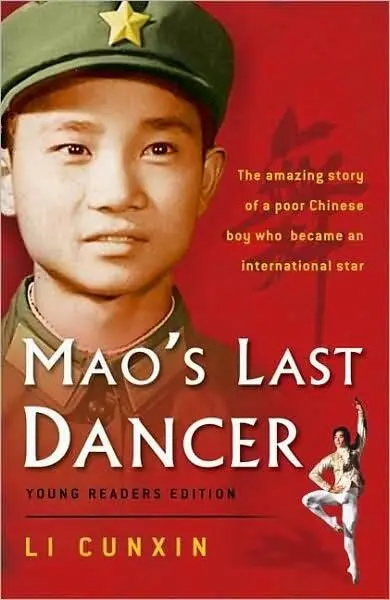
- Название:Mao's Last Dancer
- Автор:
- Жанр:
- Год:неизвестен
- ISBN:нет данных
- Рейтинг книги:3 / 5. Голосов: 1
-
Избранное:Добавить в избранное
- Отзывы:
-
Ваша оценка:
Mao's Last Dancer: краткое содержание, описание и аннотация
Предлагаем к чтению аннотацию, описание, краткое содержание или предисловие (зависит от того, что написал сам автор книги «Mao's Last Dancer»). Если вы не нашли необходимую информацию о книге — напишите в комментариях, мы постараемся отыскать её.
Mao's Last Dancer — читать онлайн бесплатно полную книгу (весь текст) целиком
Ниже представлен текст книги, разбитый по страницам. Система сохранения места последней прочитанной страницы, позволяет с удобством читать онлайн бесплатно книгу «Mao's Last Dancer», без необходимости каждый раз заново искать на чём Вы остановились. Поставьте закладку, и сможете в любой момент перейти на страницу, на которой закончили чтение.
Интервал:
Закладка:
"How do you know what it is like to be loved by a foreigner?" I snapped back.
For a second he wasn't sure what to say. "Have you seen any marriages between Chinese and Americans?"
I couldn't think of any.
"It's not too late to change your mind. You can just tell Elizabeth that you have made a mistake and you want to walk away from it." It was as though he was encouraging me to do something immensely heroic.
"No," I said, "I don't want to divorce Elizabeth. I want to spend the rest of my life with her."
"We are not talking of divorce. As far as we are concerned you were never married. We don't and won't recognise your marriage as legitimate. You don't decide what you're going to do with your life, the Communist Party does! You're a Chinese citizen. You follow Chinese laws, not American laws."
By now I was angry. "If you think Mr Foster has informed me wrongly, let's ask him now," I said.
Consul Zhang looked perplexed. "Mr Foster and your friends have left. They are disgusted with what you have done! You are alone. They are no friends of yours. We're your friends. Everything will be forgiven if you go back to China as planned. You will be loved and respected by all your people!"
I didn't believe for a moment what Consul Zhang said about my friends. But I did think they must have been thrown out of the consulate and that the Chinese government would promise me anything to get me back to China.
There was a knock on the door and Consul Zhang left for a brief discussion with another man. I could hear whispers but I couldn't make out what they were saying. Then Consul Zhang came back. He was trying hard to control his anger. "I want you to think about what we have just discussed and I'll come back soon."
I felt a sense of relief when he closed the door. I needed to regroup, to gather my courage. I felt exhausted but I knew this was only the beginning of a long and nerve-racking night.
A few minutes later the door opened again. This time one of the vice-consuls general entered. He was an older, slightly taller man, and he spoke with a heavy southern-Chinese accent. He was very friendly and offered me something to drink. I politely refused. So he began to try to convince me to go back to China, listing all the benefits there would be for my family. "Think of your parents and all your brothers back home! How proud of you they must have been! You don't want to let them down. You don't want to create any problem for them, do you?"
This was my greatest fear. If anything terrible happened to my family because of what I had done I would never forgive myself. But there was no reason to involve my family! The Chinese government was responsible for my education, not my parents.
"I left my family when I was eleven. I have nothing to do with them and they have nothing to do with me," I tried. I couldn't implicate my family in all of this. My family had no idea what I'd done.
"You're the property of China," the vice-consul general continued. "We have given you everything. We have the power to do anything that we want with you. We don't want to lose our star dancer! You simply have to listen to what we say. It is for your own good. The party knows what's good for you. Have faith in the party. Have you forgotten what the party has done for you? Have you forgotten what you have sworn in front of the Communist Youth Party flag?"
I remembered the years and years of lies about the West. I thought of Minister Wang who had refused to see me about my return to America. I thought of my lack of freedom in China, the desperate poverty which they had made sound so rich and glorious. "I don't want to talk about the party," I said.
"You don't expect the party will listen to you! Do you? The party listens to no one! Everyone listens to the party! Who helped you to get married? Is it Ben?" he asked suddenly.
"No. I made my own decision."
"Tell me the truth!" he raised his voice. "We already have the facts. Don't underestimate your government! Is it Ben? Someone in the American government? Someone in the Taiwanese government?"
Under different circumstances I would have burst into laughter. What he was suggesting was completely ludicrous. "No one has helped me. Would I have come to the consulate if I had a political agenda to hide or if the Americans or the Taiwanese had helped me? Would they have advised me to come tonight?" I asked.
"It's not for you to ask me questions! I'm asking you! Who helped you?"
"Nobody helped me. Didn't you hear me? I won't answer any more of your questions," I replied angrily.
The conversation with the vice-consul general went on for another half an hour, but I spoke little. Then another consulate official replaced him for another half an hour of interrogation and persuasion. It was like musical chairs. Every half an hour another official would take over the interrogation. Each left without any progress. In a strange way, after the initial fear and despair, I felt calmer as time went on. What do I have to fear if I'm about to lose my life? I thought.
A couple of times during the interrogations I touched the scar on my arm, the one I received as a baby, the one that caused so much anxiety for my parents and which had now become a symbol of my niang's love. When I touched it I could feel her love. It gave me comfort. It gave me courage. It reminded me of where I came from and where I wanted to be.
I didn't regret what I had done. In a strange way I felt at peace with myself. Elizabeth was my first love. Our marriage was not a marriage of convenience. I knew I could have stayed in America by qualifying on my own artistic merits. Charles had told me this at our very first meeting. But still I felt a strong sense of sorrow for my parents. I hadn't even sent them a single dollar yet.
I felt the tears pushing upwards through my throat. My poor dear niang. She had suffered enough hardship already. I thought of her wrinkled face and the sorrow she would feel if she never saw me again. Oh, how much I loved her! She was the most innocent and loving niang on this earth. She had given me everything, yet I had nothing to give her in return. Would my niang ever recover from her despair at losing one of her beloved sons? This would surely kill her.
I thought too of my teachers who had invested so much of their time and effort in me, hoping that I would one day put Chinese ballet on the world map. Their hopes would be dashed. I would never see them again. But I was determined not to allow the consulate officials to see my tears or to sense my weakness.
Downstairs, in the main room, everyone was shaken. The consulate officials changed their approach and went back to their pleasantries again, offering everyone drinks and engaging in idle conversation. Charles told me later that he'd sat there, bewildered, but at last he could stand it no longer. "Wait a minute, my client was just dragged out of here and I don't know about the rest of you but I am not leaving until you have released him! You are in violation of US law!"
"I don't understand, Mr Foster," Consul Zhang spoke up with genuine surprise. "You just told us that you strongly supported good US-Sino relations."
"Yes, I did and I do," Charles replied.
"Well, what is good for China and for the United States is for Li to return to China. If he does not, US-Sino relations will be harmed. So will the Houston Ballet and their planned tour to the People's Republic of China."
Charles responded. "While we all may agree with you about what's good for US-China relations, there's one problem with what you say. In the US, Li gets to make that decision."
They then proceeded to have lengthy, almost philosophical conversations about individual rights versus group rights. Charles later said he'd almost enjoyed it, except for the fact that he was concerned about my safety. He was working on the assumption that they would hold me through the night and then take me to the airport and fly me out of America the following morning.
Читать дальшеИнтервал:
Закладка:
Похожие книги на «Mao's Last Dancer»
Представляем Вашему вниманию похожие книги на «Mao's Last Dancer» списком для выбора. Мы отобрали схожую по названию и смыслу литературу в надежде предоставить читателям больше вариантов отыскать новые, интересные, ещё непрочитанные произведения.






Обсуждение, отзывы о книге «Mao's Last Dancer» и просто собственные мнения читателей. Оставьте ваши комментарии, напишите, что Вы думаете о произведении, его смысле или главных героях. Укажите что конкретно понравилось, а что нет, и почему Вы так считаете.