Ha Jin - A Free Life
Здесь есть возможность читать онлайн «Ha Jin - A Free Life» весь текст электронной книги совершенно бесплатно (целиком полную версию без сокращений). В некоторых случаях можно слушать аудио, скачать через торрент в формате fb2 и присутствует краткое содержание. Жанр: Современная проза, на английском языке. Описание произведения, (предисловие) а так же отзывы посетителей доступны на портале библиотеки ЛибКат.
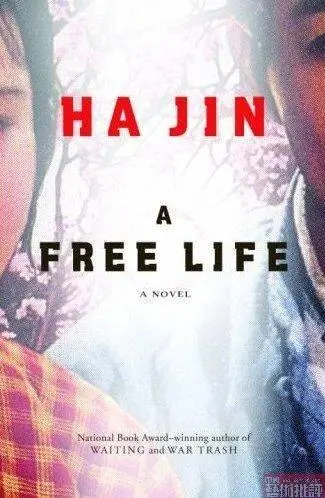
- Название:A Free Life
- Автор:
- Жанр:
- Год:неизвестен
- ISBN:нет данных
- Рейтинг книги:3 / 5. Голосов: 1
-
Избранное:Добавить в избранное
- Отзывы:
-
Ваша оценка:
A Free Life: краткое содержание, описание и аннотация
Предлагаем к чтению аннотацию, описание, краткое содержание или предисловие (зависит от того, что написал сам автор книги «A Free Life»). Если вы не нашли необходимую информацию о книге — напишите в комментариях, мы постараемся отыскать её.
Ha Jin, who emigrated from China in the aftermath of Tiananmen Square, had only been writing in English for 12 years when he won the National Book Award for Waiting in 1999. His latest novel sheds light on an émigré writer's woodshedding period. It follows the fortunes of Nan Wu, who drops out of a U.S. grad school after the repression of the democracy movement in China, hoping to find his voice as a poet while supporting his wife, Pingping, and son, Taotao. After several years of spartan living, Nan and Pingping save enough to buy a Chinese restaurant in suburban Atlanta, setting up double tensions: between Nan's literary hopes and his career, and between Nan and Pingping, who, at the novel's opening, are staying together for the sake of their young boy. While Pingping grows more independent, Nan -amid the dulling minutiae of running a restaurant and worries about mortgage payments, insurance and schooling-slowly snuffs the torch he carries for his first love. That Nan at one point reads Dr. Zhivago isn't coincidental: while Ha Jin's novel lacks Zhivago's epic grandeur, his biggest feat may be making the reader wonder whether the trivialities of American life are not, in some ways, as strange and barbaric as the upheavals of revolution.
***
From the award-winning author of Waiting, a new novel about a family's struggle for the American Dream.
Meet the Wu family-father Nan, mother Pingping, and son Taotao. They are arranging to fully sever ties with China in the aftermath of the 1989 massacre at Tiananmen Square, and to begin a new, free life in the United States. At first, their future seems well-assured. But after the fallout from Tiananmen, Nan 's disillusionment turns him toward his first love, poetry. Leaving his studies, he takes on a variety of menial jobs as Pingping works for a wealthy widow as a cook and housekeeper. As Pingping and Taotao slowly adjust to American life, Nan still feels a strange attachment to his homeland, though he violently disagrees with Communist policy. But severing all ties-including his love for a woman who rejected him in his youth-proves to be more difficult than he could have ever imagined.
A Free Life — читать онлайн бесплатно полную книгу (весь текст) целиком
Ниже представлен текст книги, разбитый по страницам. Система сохранения места последней прочитанной страницы, позволяет с удобством читать онлайн бесплатно книгу «A Free Life», без необходимости каждый раз заново искать на чём Вы остановились. Поставьте закладку, и сможете в любой момент перейти на страницу, на которой закончили чтение.
Интервал:
Закладка:
He and his interpreter sat down on the chairs. He looked rather tired, without the beaming smile he had worn a moment before. "I'm very glad to meet all of you here," he said in halting English. "It's important for us to communicate with each other. I always tell Tibetans, let us talk with Chinese people. Try to make friends with them. Now here we are."
A short, squinty fellow with a crew cut stood up and asked, "Since you left China in 1959, you have attempted to create an independent Tibet, but in vain. Where do you see your movement leading you?"
The interpreter translated the question. The Dalai Lama said solemnly, "There's some misunderstanding here. I have never asked for an independent Tibet. Check my record. You will see I never seek independence from China."
"What do you want, then?" the fellow pressed on in English.
"More autonomy and more freedom for my people so we can protect Tibetan life and culture. We need the Chinese government to help us achieve this goal. The Tibetans are entitled to a better livelihood."
Nan was surprised by the modest but dignified answer. Prior to this occasion he too had assumed that His Holiness demanded nothing but the complete independence of Tibet.
A female graduate student got up and asked, "As a political leader, you can represent the Tibetans in India and elsewhere, but who gave you the right to represent the Tibetans in China?"
A dark shadow crossed His Holiness's face. He replied, "I'm not a political leader, not interested in politics at all. But as a Tibetan, I am obligated to help my people, spiritually and materially. I have to speak for those who are not listened to."
Then a tall man raised his hand. He asked in a thin, funny voice, "What do you think of the slave system in Tibet before 1959?"
His Holiness answered without showing any emotion, "We always had our problems and backwardness. To be honest, I planned to abolish the slave system myself. Like any society, ours was never perfect."
Someone in the back stood up and spoke huskily. "For centuries Tibet has been part of China, and your predecessors used to be the spiritual fathers of the Chinese people. You're wise not to pursue an independent Tibet, which China will never allow, because China has to maintain its territorial integrity. Truth be told, Tibet can never be a vacuum of external power. If it weren't part of China, other countries would occupy it and pose an immediate threat to China…" The voice sounded familiar to Nan. He turned around and to his astonishment found Mr. Liu standing there and speaking. He'd thought the old man had left Atlanta.
The Dalai Lama didn't respond to Mr. Liu directly and said only, "I've heard the same argument before, but it is not based on justice. It's not difficult to rationalize injustice."
Some of the Chinese here were so belligerent, so devoid of empathy, that Nan and Pingping felt embarrassed. Nan could see that the Dalai Lama was miserable and at moments cornered by the questions. His Holiness was obviously a suffering man, totally different from his public image. Nan had come to see his beatific face, but ever since the conversation started, not even once had His Holiness smiled.
A stocky male student asked sharply, "Can you tell us what kind of life you lived before you fled to India?"
Some eyes turned to glare at him and a few voices tried to shush him, but the short fellow seemed impervious to the resentment from the audience, some of whom felt the question was frivolous. The holy man answered calmly, "I lived like my predecessors, well clothed and well fed, but I also worked hard to manage things and earn my food and shelter. Sometimes it can be exhausting to be the Dalai Lama."
Some people laughed; so did His Holiness. The intense atmosphere lightened some.
Then an older man, who looked dyspeptic and professorial, rose and said, "I've always sympathized with you Tibetans, although I'm from China originally. Can you tell us how much Tibetan culture has been lost under the Communist rule?" Many eyes stared at the man, who obviously hated the current Chinese government.
The Dalai Lama sighed. "Some Tibetans just came out and told me, a lot of people don't eat barley and buttered tea anymore. They eat steamed bread-mantou-and rice porridge. Even children curse each other in Mandarin now, and many young people can write only the Chinese characters, not the Tibetan script."
From this point on, the meeting turned lively, and His Holiness laughed time and again. So did the audience. His humble manner and witty words were infectious. Most of the audience could feel the generosity and kindness emanating from him. When the last question was answered, His Holiness said, "Please forgive my old, slow English because the Dalai Lama is old too."
The audience broke into laughter again. Then they all went to the front to take photos with His Holiness. Nan and Pingping stepped forward and stretched out their hands; to Nan's surprise, His Holiness, after shaking their hands, put his left palm on Nan 's shoulder while signing a book a girl held open before him. A crushing force suddenly possessed Nan, as though he were going to collapse under that powerful hand. He was trembling speechlessly. When the hand released him, he still stood there, spellbound. The holy man kept nodding as numerous people surrounded him for a photo opportunity. The crowd pushed the Wus aside.
Mr. Liu came up to Nan and said he appreciated his invitation, but couldn't come to the Gold Wok because he was leaving that very evening. Then he said about the Dalai Lama, "He's quite shrewd."
"But he's a great man, isn't he?" Nan said.
"You're always naive, Nan Wu. With an M.A. in political science, how come you still don't understand politics?" "That's why I quit my Ph.D. candidacy."
Mr. Liu slapped Nan on the shoulder and laughed, saying, "You should be a poet indeed." They shook hands again, for the last time, and said good-bye.
"Let's go." Pingping tugged Nan 's sleeve.
Arm in arm they headed for the garage. "I'm disgusted with some of them," Nan said, referring to the audience at the meeting. "Yes, they're malicious."
"We'd better avoid them." Nan jutted his thumb backward.
"They take pleasure in torturing others."
"They seem to know everything but humility and compassion."
Touched by his meeting with the holy man, for several days Nan felt almost ill, as if running a temperature. What moved him most was that the Dalai Lama had never shown any anger while talking with those bellicose Chinese. He was sweet and strong, probably because he was beyond destructive emotions, though Nan believed that deep inside, His Holiness also suffered like a regular man, and was perhaps even more miserable than most.
24
THE WEEK AFTER the meeting with the Dalai Lama, Nan went to Borders in Snellville to buy a book by His Holiness. There were several volumes on the shelf, and he picked the most recent one, Ocean of Wisdom: Guidelines for Living. It gave him pure pleasure to visit the bookstore, where he'd stay an hour or two whenever he was there. Today he went through books on some shelves, especially the poetry section, to see what books had come out recently. He found Sam Fisher had published a new volume, All the Sandwiches and Other Poems. He bought that book too.
On his drive back, he couldn't help touching his purchases in the passenger seat from time to time. The minute he stepped into the Gold Wok, Pingping handed him a letter and said, "From your dad." Eyes rolling, she stepped away.
On the envelope was a stamp of a red rooster stuck askew. Nan took out the two sheets, pressed them on the counter, and began to read. The old man had written with a brush and in India ink:
August 22, 1993
Nan:
Not having heard from you, your mother is deeply worried. Write us more often from now on. Let Taotao write a few words too.
Читать дальшеИнтервал:
Закладка:
Похожие книги на «A Free Life»
Представляем Вашему вниманию похожие книги на «A Free Life» списком для выбора. Мы отобрали схожую по названию и смыслу литературу в надежде предоставить читателям больше вариантов отыскать новые, интересные, ещё непрочитанные произведения.












Обсуждение, отзывы о книге «A Free Life» и просто собственные мнения читателей. Оставьте ваши комментарии, напишите, что Вы думаете о произведении, его смысле или главных героях. Укажите что конкретно понравилось, а что нет, и почему Вы так считаете.