Ha Jin - A Free Life
Здесь есть возможность читать онлайн «Ha Jin - A Free Life» весь текст электронной книги совершенно бесплатно (целиком полную версию без сокращений). В некоторых случаях можно слушать аудио, скачать через торрент в формате fb2 и присутствует краткое содержание. Жанр: Современная проза, на английском языке. Описание произведения, (предисловие) а так же отзывы посетителей доступны на портале библиотеки ЛибКат.
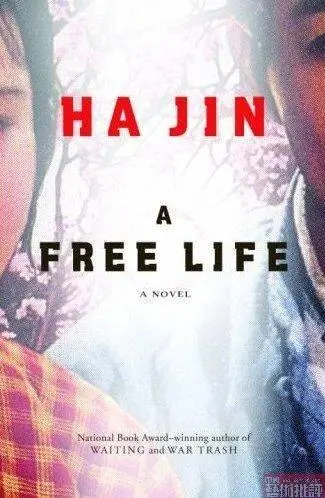
- Название:A Free Life
- Автор:
- Жанр:
- Год:неизвестен
- ISBN:нет данных
- Рейтинг книги:3 / 5. Голосов: 1
-
Избранное:Добавить в избранное
- Отзывы:
-
Ваша оценка:
A Free Life: краткое содержание, описание и аннотация
Предлагаем к чтению аннотацию, описание, краткое содержание или предисловие (зависит от того, что написал сам автор книги «A Free Life»). Если вы не нашли необходимую информацию о книге — напишите в комментариях, мы постараемся отыскать её.
Ha Jin, who emigrated from China in the aftermath of Tiananmen Square, had only been writing in English for 12 years when he won the National Book Award for Waiting in 1999. His latest novel sheds light on an émigré writer's woodshedding period. It follows the fortunes of Nan Wu, who drops out of a U.S. grad school after the repression of the democracy movement in China, hoping to find his voice as a poet while supporting his wife, Pingping, and son, Taotao. After several years of spartan living, Nan and Pingping save enough to buy a Chinese restaurant in suburban Atlanta, setting up double tensions: between Nan's literary hopes and his career, and between Nan and Pingping, who, at the novel's opening, are staying together for the sake of their young boy. While Pingping grows more independent, Nan -amid the dulling minutiae of running a restaurant and worries about mortgage payments, insurance and schooling-slowly snuffs the torch he carries for his first love. That Nan at one point reads Dr. Zhivago isn't coincidental: while Ha Jin's novel lacks Zhivago's epic grandeur, his biggest feat may be making the reader wonder whether the trivialities of American life are not, in some ways, as strange and barbaric as the upheavals of revolution.
***
From the award-winning author of Waiting, a new novel about a family's struggle for the American Dream.
Meet the Wu family-father Nan, mother Pingping, and son Taotao. They are arranging to fully sever ties with China in the aftermath of the 1989 massacre at Tiananmen Square, and to begin a new, free life in the United States. At first, their future seems well-assured. But after the fallout from Tiananmen, Nan 's disillusionment turns him toward his first love, poetry. Leaving his studies, he takes on a variety of menial jobs as Pingping works for a wealthy widow as a cook and housekeeper. As Pingping and Taotao slowly adjust to American life, Nan still feels a strange attachment to his homeland, though he violently disagrees with Communist policy. But severing all ties-including his love for a woman who rejected him in his youth-proves to be more difficult than he could have ever imagined.
A Free Life — читать онлайн бесплатно полную книгу (весь текст) целиком
Ниже представлен текст книги, разбитый по страницам. Система сохранения места последней прочитанной страницы, позволяет с удобством читать онлайн бесплатно книгу «A Free Life», без необходимости каждый раз заново искать на чём Вы остановились. Поставьте закладку, и сможете в любой момент перейти на страницу, на которой закончили чтение.
Интервал:
Закладка:
Recently I read several articles on the Chinese dissidents in the United States. Beyond question those are devious people, whom you must shun. Nobody can be a good human being without loving his country and people, and nobody can thrive for long by selling his motherland. Some of the dissidents are just traitors and beggars, shamelessly depending on the money proffered to them by the American capitalists and the reactionary overseas Chinese. Do not get embroiled with them. Do not do anything that may sully the image of our country. Always keep in mind that you are a Chinese. Even if you were smashed to smithereens, every piece of you would remain Chinese. Do you understand?
I'm also writing on behalf of Uncle Zhao. He has finished a large series of paintings lately. He wants you to help him hold a show in America. Nan, Uncle Zhao has been my bosom friend for more than three decades. He had a tough childhood and is an autodi-dact. For that people think highly of him. When you were leaving for America eight years ago, he presented you with four pieces of his best work. You must not forget his generosity and kindness. Now it's time to do something in return. Please find a gallery or university willing to sponsor his visit to the United States. It goes without saying that the sponsor of the show should cover his travel expenses. Also, try to explore the possibility of having him invited as an artist in residence so that he can stay there a year. He is already sixty and this may be his only chance to have an international exhibition. He told me that his visit to America would automatically eclipse all his rivals and enemies here. So do your utmost to help him.
Blessings from far away,
Words of your father No need for my signature
Nan sighed, then said to Pingping, "What is this? He thinks I'm a curator of a museum or a college president? I told him on the phone that I couldn't help Uncle Zhao hold a show here. I'm nobody."
"Your dad still treats you like a teenager. You're already thirty-seven. "
"This is sick. I won't write back."
"We have to respond to his letter one way or another."
"You write him."
"What should I say?"
"Tell him I regret having accepted Uncle Zhao's paintings. Tell him we're working like coolies every day and have nothing to do with the art world. Tell him he and my mother should know we're merely menial laborers at the bottom of America -we're useless to them."
"He'll be mad at you."
" Let him. The old fogey is full of crap, as if he owns me forever. He's too idle and has too much time on his hands. He just wants to use me. If our business goes under, we'll lose our home and everything. Can my parents help us? They'll continue to ask for money every year. They'll never understand what life is like here. They still believe I'm heading for a professorship, even though they know I'm working my ass off in a restaurant. They're just selfish. Damn them, let them disown me! I couldn't care less."
"They'll never do that," Pingping said cheerfully.
"Sure, they think we're making tons of money here, eating nutritious food, drinking quality wine, and living like gods."
The more Nan spoke, the more vehement he became, so Pingping left him alone and went to the storage room with a bundle of towels to wash.
Indeed, Uncle Zhao had presented Nan with four paintings, but two of them had fallen apart on account of the shoddy mounting. The other two had gone to Professor Peterson and Heidi Masefield respectively many years before. Nan had wondered why Uncle Zhao had mounted those paintings with such cheap materials that just a little damp air could warp them. The two broken pieces, still in the closet of Pingping's bedroom, were absolutely unpresentable, and he didn't know what to do with them, unwilling to spends hundreds of dollars to have them framed.
After the letter from his father, Nan never wrote to his parents again. He felt they couldn't possibly understand or believe what he told them. Taotao didn't write to his grandparents either, because he had lost most of his characters, which he had been able to inscribe when he came to America four years before. These days, despite his protests, Pingping and Nan made him copy some ideograms every day, but he had been forgetting more of them than he learned. Evidently he'd never be really bilingual, as most Chinese parents here hoped their children would become. He could speak Mandarin but might never be able to read and write the characters.
Every time a letter from Nan 's parents arrived, Pingping would reply. She didn't complain about this, since Nan devoted himself entirely to their business. In a way she relished handling the correspondence, because after they married, Nan 's mother had often bragged to Pingping, "A monkey is smart enough to ride a sheep and supervise her." Nan was born in the year of monkey, whereas Ping-ping was a sheep, so according to his mother, he was supposed to keep her under control. Now, her writing letters to his parents would show that the relationship between Nan and her was reversed. That surely wouldn't please her mother-in-law, that control freak, and Pingping secretly gloated over the old woman's irritation.
Recently Nan had reorganized the service at the Gold Wok, which now offered a lunch buffet on weekdays and the regular menu at dinner. This change improved the business considerably. A lot of people working in the area would come in for lunch, which consisted of two soups, four appetizers, and ten dishes, all for $4.75. Nan and Pingping would arrive at work before eight a.m. and cook the food and get everything ready by eleven-thirty. After they closed up at night, he'd stay a little longer preparing the meats and vegetables for the following day. This made him busier, but the restaurant fetched ten percent more profit than before, and even Niyan got extra tips. The Wus were determined to pay off their mortgage in the near future.
PART FIVE
1
IN THE SPRING of 1994, the Mitchells were preparing to leave for Nanjing to bring back their daughter, Hailee. "Hailee" was a name they had given her, though they'd kept her original first name, Fan, as her middle name. Her family name was Zhang, which had actually been assigned to her by the orphanage. Dave arranged to take a ten-day leave from work; Janet's jewelry store would remain open when she was away. She told Susie, the salesgirl, to contact the Wus if anything turned up that she couldn't handle by herself.
The Mitchells had originally thought of stopping in Hong Kong for a day or two as a transition, because Dave had been to that city before and liked it very much. But they decided to go directly to mainland China together with two other couples living in Atlanta who were also adopting Chinese babies. Janet called them "our group," and indeed they often met to compare notes and share their anxiety, frustrations, and happiness. All of them would have to go to the U.S. embassy in Beijing to get visas for their babies, so the Mitchells decided to use the capital instead of Hong Kong as their base in China. Janet had bought a Mandarin phrase book, and both she and Dave had been learning to speak some words and simple sentences. She often went to ask Pingping how to say pleasantries and order things in Chinese. Despite her good memory, she had trouble with the four tones, speaking some words as if she had a blocked nose.
The Mitchells had recently decorated Hailee's nursery on the second floor of their home with a band of wallpaper, two feet wide and just high enough for a toddler to reach. The paper had frolicsome animals on it-dancing bulls, bears playing the violin, wobbling penguins, elephants rearing up, dogs blowing the saxophone. On the ceiling of the room were numerous phosphorescent stars that would shine in the darkness but were almost invisible when it was light. A new crib sat by the window that overlooked the back garden, fenced in by white palings. On the floor were stacks of baby clothing, some of which the Mitchells would take to Nanjing and donate to the orphanage. They'd also bring formula and diapers for their daughter to use. Pingping had seen the stuff they planned to take along. There were so many things that she wondered if the Mitchells could possibly carry them all. They were going to pack in two lap robes, a bunch of baseballs, a stack of hats with the Braves logo on them, granola bars, water crackers, fruit candies, laundry soap, clotheslines and clothespins, fanny packs, billfolds, batteries, painkillers, tubes of sunscreen and insect repellent, a shortwave radio, not to mention a luggage trolley and a dozen boxes of Polaroid film. They'd shoot a lot of photos as mementos of Hailee's native place. Pingping told them to take pictures of the people they wanted to thank and give them the photos on the spot, which would be a small present, appreciated by most Chinese.
Читать дальшеИнтервал:
Закладка:
Похожие книги на «A Free Life»
Представляем Вашему вниманию похожие книги на «A Free Life» списком для выбора. Мы отобрали схожую по названию и смыслу литературу в надежде предоставить читателям больше вариантов отыскать новые, интересные, ещё непрочитанные произведения.




Обсуждение, отзывы о книге «A Free Life» и просто собственные мнения читателей. Оставьте ваши комментарии, напишите, что Вы думаете о произведении, его смысле или главных героях. Укажите что конкретно понравилось, а что нет, и почему Вы так считаете.