Ha Jin - A Free Life
Здесь есть возможность читать онлайн «Ha Jin - A Free Life» весь текст электронной книги совершенно бесплатно (целиком полную версию без сокращений). В некоторых случаях можно слушать аудио, скачать через торрент в формате fb2 и присутствует краткое содержание. Жанр: Современная проза, на английском языке. Описание произведения, (предисловие) а так же отзывы посетителей доступны на портале библиотеки ЛибКат.
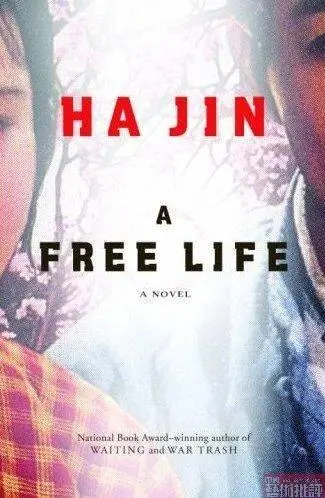
- Название:A Free Life
- Автор:
- Жанр:
- Год:неизвестен
- ISBN:нет данных
- Рейтинг книги:3 / 5. Голосов: 1
-
Избранное:Добавить в избранное
- Отзывы:
-
Ваша оценка:
A Free Life: краткое содержание, описание и аннотация
Предлагаем к чтению аннотацию, описание, краткое содержание или предисловие (зависит от того, что написал сам автор книги «A Free Life»). Если вы не нашли необходимую информацию о книге — напишите в комментариях, мы постараемся отыскать её.
Ha Jin, who emigrated from China in the aftermath of Tiananmen Square, had only been writing in English for 12 years when he won the National Book Award for Waiting in 1999. His latest novel sheds light on an émigré writer's woodshedding period. It follows the fortunes of Nan Wu, who drops out of a U.S. grad school after the repression of the democracy movement in China, hoping to find his voice as a poet while supporting his wife, Pingping, and son, Taotao. After several years of spartan living, Nan and Pingping save enough to buy a Chinese restaurant in suburban Atlanta, setting up double tensions: between Nan's literary hopes and his career, and between Nan and Pingping, who, at the novel's opening, are staying together for the sake of their young boy. While Pingping grows more independent, Nan -amid the dulling minutiae of running a restaurant and worries about mortgage payments, insurance and schooling-slowly snuffs the torch he carries for his first love. That Nan at one point reads Dr. Zhivago isn't coincidental: while Ha Jin's novel lacks Zhivago's epic grandeur, his biggest feat may be making the reader wonder whether the trivialities of American life are not, in some ways, as strange and barbaric as the upheavals of revolution.
***
From the award-winning author of Waiting, a new novel about a family's struggle for the American Dream.
Meet the Wu family-father Nan, mother Pingping, and son Taotao. They are arranging to fully sever ties with China in the aftermath of the 1989 massacre at Tiananmen Square, and to begin a new, free life in the United States. At first, their future seems well-assured. But after the fallout from Tiananmen, Nan 's disillusionment turns him toward his first love, poetry. Leaving his studies, he takes on a variety of menial jobs as Pingping works for a wealthy widow as a cook and housekeeper. As Pingping and Taotao slowly adjust to American life, Nan still feels a strange attachment to his homeland, though he violently disagrees with Communist policy. But severing all ties-including his love for a woman who rejected him in his youth-proves to be more difficult than he could have ever imagined.
A Free Life — читать онлайн бесплатно полную книгу (весь текст) целиком
Ниже представлен текст книги, разбитый по страницам. Система сохранения места последней прочитанной страницы, позволяет с удобством читать онлайн бесплатно книгу «A Free Life», без необходимости каждый раз заново искать на чём Вы остановились. Поставьте закладку, и сможете в любой момент перейти на страницу, на которой закончили чтение.
Интервал:
Закладка:
Some people applauded. Liu's words surprised Nan, who raised his hand and was allowed to speak. With his legs shaking, Nan said in a calm voice, "Mr. Liu, I can see the political logic of your argument. But if we look at this issue in a different light, that is, from the viewpoint of humanity, we may reach another conclusion. For the individual human being, what is a country? It's just an idea that binds people together emotionally. But if the country cannot offer the individual a better life, if the country is detrimental to the individual's existence, doesn't the individual have the right to give up the country, to say no to it? By the same token, all the regions in China are like members of the Chinese family-if one of the brothers wants to live separately, isn't it barbaric to go smash his home and beat him up?"
The audience was thrown into a tumult, with many eyes glowering at Nan, who forced himself not to wince. Mr. Liu smiled and said, " Nan Wu, my friend, I see your point. I can sympathize with your concern for humanity, but your argument is infeasible and too naive. If China doesn't get Taiwan back, another country will take it and set up military bases there to threaten China. Sometimes a nation must sacrifice to survive."
Mei Hong, the short, bony-faced woman, stood up and spoke in a shrill voice. "I totally agree with Mr. Liu. John F. Kennedy said, 'Ask not what your country can do for you; ask what you can do for your country.' Even Americans put their national interests before the individual's interests. Without Taiwan, our shoreline will be cut in half. Also, if Taiwan goes independent, then how about Tibet, Inner Mongolia, and Sinkiang Uighur? If we let this happen, China would break into numerous small warring states. Then chaos will rule our homeland, millions and millions of people will be homeless and die of famine, and the world will be swarmed with refugees."
Nan challenged, "You're a Christian. Does your religion teach you to kill? Are there not enough crimes committed on the pretext of patriotism in this century?"
Shiming Bian, the pastor, broke in, "Christianity doesn't tolerate evil. Anyone who wants to destroy China deserves his own destruction. Nan Wu, you're too emotional to think coherently. Even a democratic country like the United States fought the Civil War to keep the country from going separate."
Nan cried, "Isn't the current Chinese government an evil power that banished you? Why do you see eye to eye with it?"
Mr. Liu put in, "We must differentiate the government from our country and people. The government can be evil, but both our people and our country are good. I'm optimistic because I cannot afford to lose hope for our nation. The world already has too many pessimists, a dollar a dozen, so we ought to take heart."
That shut Nan up, but he wasn't persuaded. He thought of retorting with the aphorism Mr. Liu had often quoted from Hegel, "the nature of a people determines the nature of their government," but he sat down and remained silent. The question-and-answer period continued.
Nan left the meeting before it was over. The next morning he phoned Pastor Bian's residence, where Mr. Liu was staying, and left a message on the machine: he invited both of them to dinner at the Gold Wok. But they didn't return his call. Nan was disappointed by both Mr. Liu and the pastor, so for a long time he didn't set foot in that church again.
23
THERE WERE hundreds of Tibetans living in the Atlanta area, some of whom were graduate students. They gathered in a lecture room at Emory University on weekends to meditate and listen to a monk preach on Buddhist scriptures. Dick was involved with this group and often urged Nan and Pingping to join them, but the Wus couldn't, having to work on weekends. They had noticed that whenever they slackened their efforts at the Gold Wok, problems would crop up and customers would complain. They had to do their utmost to maintain the quality of their offerings, keep the restaurant clean and orderly, and see to it that every part of the business went without a hitch.
A few days after Mr. Liu's talk at the public library, Dick told Nan excitedly that the Dalai Lama was going to speak at Emory that week. Both Nan and Pingping were interested in hearing the holy man's speech and asked Dick to get tickets for them. Dick promised to help.
The next morning he called and said all three thousand tickets were already gone. Nan and Pingping were not overly disappointed, since it would have been difficult for both of them to leave the restaurant at the same time. They had seen the Dalai Lama on TV recently and respected him. He had a natural demeanor that belied his role of a dignitary. At a conference broadcast on TV, a reporter asked him what the major events of the next year would be, and he laughed and said, "What a question you gave me, Ted! I don't even know what I'm going to eat for dinner. How can I predict anything about next year?" The audience exploded in laughter.
Later that night Dick phoned to inform Nan that the Dalai Lama would meet with a group of Chinese students at the Ritz-Carlton hotel at two p.m. the next day. "If I were you, I would go," he told Nan. "This is a rare opportunity."
Then Dick described to him the public speech the Dalai Lama had delivered in the university's stadium two hours before. It had gone well at first, and His Holiness had spoken about forgiveness, benevolence, love, happiness. People were captivated by his humor and candor. But as soon as the Dalai Lama finished speaking, a stout politician took the podium and began condemning China for occupying Tibet, for starting the Korean War and the Vietnam War, for the genocide committed by the Khmer Rouge sponsored by the Chinese Communists, for oppressing the minorities and dissidents, for supporting the dictatorial regimes like Cuba and North Korea. He went so far as to claim that the Chinese national leaders should be grateful to the United States for the very fact that every morning they woke up to find Taiwan still a part of China. As the result of his diatribe, the spiritual gathering suddenly turned into a political battle. Some Chinese students shouted at the speaker from the back of the stadium, "Stop insulting China!" "Get off the stage!" "Stop China-bashing!" The meeting was chaotic until the politician was done.
The next day Nan and Pingping drove to Lenox Square in Buck-head. The timing was good, since Niyan and Shubo could manage without them in the early afternoon. When Nan and Pingping stepped into the hotel, the lobby was swarmed with people trooping out of a large auditorium. In the hall the Dalai Lama was standing on the stage and shaking hands with a few officials; he had just given a talk to four hundred local community leaders, two pieces of white silk still draped around his neck. There were so many people pouring out of the entrance that the Wus couldn't get closer to look at the holy man. Seeing some Chinese students heading down the hallway, Nan and Pingping followed them, pretending they were graduate students too. One man wearing thick glasses said in English, "I'm going to ask His Holiness how often he jerks off."
Pingping didn't understand the expression, but Nan was shocked. Then a pallid young woman said, "Yes, we must grill him."
Following them, the Wus entered a room in which a dozen rows of folding chairs occupied almost half of its space. About seventy Chinese students and scholars were already seated in there. At the front stood a small table and two wing chairs. A few moments after Nan and Pingping had sat down, the Dalai Lama stepped in, accompanied by a thickset man who had a broad, weather-beaten face. His Holiness bowed a little with his palms pressed together before his chest. The audience stood up. The Dalai Lama shook hands with some people at the front. "Sit down, please sit down," he said in standard Mandarin.
Читать дальшеИнтервал:
Закладка:
Похожие книги на «A Free Life»
Представляем Вашему вниманию похожие книги на «A Free Life» списком для выбора. Мы отобрали схожую по названию и смыслу литературу в надежде предоставить читателям больше вариантов отыскать новые, интересные, ещё непрочитанные произведения.












Обсуждение, отзывы о книге «A Free Life» и просто собственные мнения читателей. Оставьте ваши комментарии, напишите, что Вы думаете о произведении, его смысле или главных героях. Укажите что конкретно понравилось, а что нет, и почему Вы так считаете.