Ben Okri - The Famished Road
Здесь есть возможность читать онлайн «Ben Okri - The Famished Road» весь текст электронной книги совершенно бесплатно (целиком полную версию без сокращений). В некоторых случаях можно слушать аудио, скачать через торрент в формате fb2 и присутствует краткое содержание. Жанр: Современная проза, на английском языке. Описание произведения, (предисловие) а так же отзывы посетителей доступны на портале библиотеки ЛибКат.
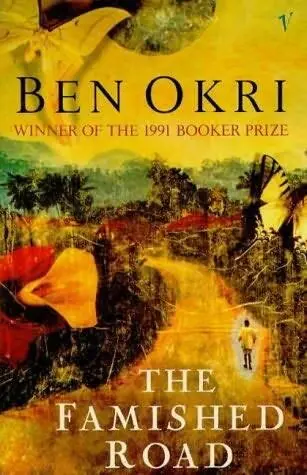
- Название:The Famished Road
- Автор:
- Жанр:
- Год:неизвестен
- ISBN:нет данных
- Рейтинг книги:5 / 5. Голосов: 1
-
Избранное:Добавить в избранное
- Отзывы:
-
Ваша оценка:
The Famished Road: краткое содержание, описание и аннотация
Предлагаем к чтению аннотацию, описание, краткое содержание или предисловие (зависит от того, что написал сам автор книги «The Famished Road»). Если вы не нашли необходимую информацию о книге — напишите в комментариях, мы постараемся отыскать её.
The Famished Road — читать онлайн бесплатно полную книгу (весь текст) целиком
Ниже представлен текст книги, разбитый по страницам. Система сохранения места последней прочитанной страницы, позволяет с удобством читать онлайн бесплатно книгу «The Famished Road», без необходимости каждый раз заново искать на чём Вы остановились. Поставьте закладку, и сможете в любой момент перейти на страницу, на которой закончили чтение.
Интервал:
Закладка:
‘How?’ ‘On a flash.’ ‘I don’t believe you.’ ‘Last night I flew to the moon and took pictures of its incredible face.’ ‘Let me see them.’ ‘Another time.’ ‘Why not now?’ ‘Because I have to sleep.’ ‘What else can you do?’ ‘I can change people’s faces.’
‘How?’‘With my camera.’ ‘Into what?’‘I can make them ugly or beautiful.’
‘Why?’‘Because I can do it.’‘What else can you do?’‘I can drink ten bottles of ogogoro without getting drunk.’ The rats began to chew.‘Can you understand what the rats are saying?’ ‘No.’‘Can you talk to them?’‘No. But I can kill them.’‘Why?’‘Because they are never satisfied. They are like bad politicians and imperialists and rich people.’ ‘How?’ ‘They eatup property.They eatup everythinginsight.Andoneday whenthey are very hungry they will eat us up.’ I was silent. ‘When you wake up tomorrow all the rats will be gone. I will finish them off. I will use my powerful medicine and my secret charms. But they won’t work if you don’t sleep.’ He got up and shut the window. We lay on the mat. I tried to sleep but the rats went on chewing and the mosquitoes went on tormenting us. ‘I can teach you how to fly to the moon,’ he said in the dark. ‘How?’ ‘Just think about the moon and fall asleep.’
I tried it. I fell asleep, but I did not fly to the moon, nor did I even dream about its mysterious face. And I didn’t wake up early enough to tell the photographer that what he taught me hadn’t worked.
NINE
MUM WAS SHRIEKING. Dad stood over her, a fiendish look on his face, dangling six large rats by the tail. One of them was still barely alive. It kicked feebly. Mum got out of bed.
‘Where did you find those rats?’
I sat up. All around the mat, under the centre table, by the door, on top of the cupboard, near thebed,werethebristlingcorpsesofrats.Iscreamed.Theroomwasa Calvary of rats, a battleground of them. They had died in every conceivable position. There were rats near my pillow, clinging on to the mat with their bared yellow teeth. There were rats all over my cover cloth. Some had died beside me, died beneath the cloth, perished on the centre table, their long tails hanging over the edge. Some had clawed their way up the window curtain and had died at the foot of the wall, leaving long rips on the cloth. They had died in Dad’s boot, their tails mistakable for his shoelace. They had died with their yellow eyes open, gazing at us with a solemn vacant threat of vengeance. A few of them were still struggling, still alive, and Dad put them out of their misery, crushing their heads expertly with his boots. The rats, in dying, squirted yellow and blue liquids from their mouths. Bigfurry rats with longthin tails writhed among the bodies of their companions, kicking with their little paws. Dad picked one up to add to his pendular collection and it made a sudden motion of rip and snag, catching Dad on the cuff of his shirt, and tearing it, and Dad slung the creature against the wall, and it left its imprint there as it collapsed to the floor, clinging on to a piece of sacking with its jagged teeth, refusing to die. Dad stood ankle-deep in the corpses of rats. I was too scared to move.
Dad came over to me, mischief on his face, and waved the six rats over me like an obscene pendulum. I ran to Mum.
‘They are only rats,’ she said, having obviously recovered from her own horror.
‘So many!’ Dad said.
‘I will count them,’ I said.
‘But what happened to them?’
‘They had bad dreams,’ Dad suggested.
‘What bad dreams?’
‘About the landlord’s party. When they heard his speech they decided to commit suicide.’
‘What is suicide?’ I asked.
‘What happened to the rats?’ Mum wondered.
‘The photographer killed them.’
‘Flow?’
‘With a special moon poison. It works.’
‘Works too well,’ Mumsaid, gettingout of bed.
She fetched the broom. When she moved the cupboard she gasped. The number of rats that had died there was frightening. It was impossible to imagine that we had been sharing our lives with so many rats. They had eaten the sacking, the wood of the table, had eaten their way through clothes, shoes, materials. There were crumbs of food and ratshit. Lying in a thousand different positions-tails entwined, pale bellies showing, teeth bared, snarling in their death-throes – was an unholy horde of rats.
‘Don’t touch anything!’ Mum said.
She swept ever corner. She swept beneath the bed, under the cupboard. She moved her hole-ridden sacks and basins behind the door, gasping in horror all the while. The sacks had been more or less devoured, and rats had died amongst her provisions. Mumswept themto thedoor and madeapileout of their corpses. I went searchingfor acarton. I found abigoneusedforthepackingofchocolatedrinks.Theratsfilledthe carton. The creepy mass of them nearly made me throw up. Mum went and dumped the carton of rats on the growing rubbish heap at the back of the burnt van. Then she came back and drenched the room in disinfectant. She made us practically bathe in the stuff. Then she made us wash our hands in a concentrated solution. Then she made food, while Dad prepared for work.
While we were eating there was a knock on the door.
‘Come in,’ Dad said.
It was too early for visitors. We were struck by the sight of the man in ragged clothes who camein, lookingaround furtively, his eyes yellow, his complexion pale, his mouth bitter. He was from the landlord. He was the bearer of a message. We were informed that our rent had been increased. Apparently we were the only ones to suffer an increment in the compound. After he had delivered the message, which included an option to move out if we didn’t like the new rent, and after he had gone, Dad sat in front of the table of food like a man who had been kicked in the ribs. He betrayed no pain, but sat still, his eyes a little bewildered. When he moved it was to creak his neck and his knuckles. Then he moved restlessly, fidgeting, his face contorted.
‘Idon’tfeellikeeatingany more,’hesaidaftersometime.Buthepickedup his spoon, continuedwithhisfood,andcleanedupeverythingontheplate.Thenhesent me to buy some ogogoro. The woman who sold it wasn’t awake and Dad lost his temperwhenIcamebackwithoutany.SoIwentandwokeup thewoman,bangingon her door, and she got up and abused me while measuring out the amount Dad wanted. Dad drank half of it in one gulp. Mum cleared the table. Then she went to the backyard, singingasongfromthevillage. In theroomDad sat and stared straight ahead.
‘You see what life does to you?’ he asked. ‘Yes.’
‘You see how wicked people can be?’ ‘Yes.’
‘That’s how they make you commit murder.’ He cracked his knuckles again. He sighed.
‘Where am I going to find that kind of money every month, eh?’
‘I don’t know.’
He stared at me. So intensely did he stare at me I felt that I was the enemy.
‘Do you see how they force a man to become an armed robber?’
‘Yes.’
He sighed again. He lit a cigarette. He smoked in silence. Then, as if he had hit upon a most brilliant idea, he put out his cigarette, and put on his work-clothes. I was disappointed when he said:
‘When I come back I will go and see Madame Koto.’
‘She is mad,’ I told him.
He stared at me in that curious fashion again.
‘Maybeshecanloanussomemoney,’hesaid,ignoringmy pieceofinformation.
He got into his shoes, stamped them on the ground, touched me on the head, and went out to work.
After awhileMumcamein, her wrapper wet. Shehad been washingclothes in the backyard. Washingand thinking. Washingand singing. Thecompound had awoken. Astray dogwanderedup thepassage.Itwasadullmorning.Thesky wasgrey asifit might rain. The noise of metal buckets clanking at the well, the sound of water being poured, a woman raising her voice, grew on the morning air. The school-children were in their uniforms. A cock crowed repeatedly. Mum got her tray together. I was ready forschool.Mumwentdownthestreet,swaying,movingalittlesleepily,with one more burden added to her life. Soon she was merely a detail in the poverty of our area.
Читать дальшеИнтервал:
Закладка:
Похожие книги на «The Famished Road»
Представляем Вашему вниманию похожие книги на «The Famished Road» списком для выбора. Мы отобрали схожую по названию и смыслу литературу в надежде предоставить читателям больше вариантов отыскать новые, интересные, ещё непрочитанные произведения.



Обсуждение, отзывы о книге «The Famished Road» и просто собственные мнения читателей. Оставьте ваши комментарии, напишите, что Вы думаете о произведении, его смысле или главных героях. Укажите что конкретно понравилось, а что нет, и почему Вы так считаете.