Ben Okri - The Famished Road
Здесь есть возможность читать онлайн «Ben Okri - The Famished Road» весь текст электронной книги совершенно бесплатно (целиком полную версию без сокращений). В некоторых случаях можно слушать аудио, скачать через торрент в формате fb2 и присутствует краткое содержание. Жанр: Современная проза, на английском языке. Описание произведения, (предисловие) а так же отзывы посетителей доступны на портале библиотеки ЛибКат.
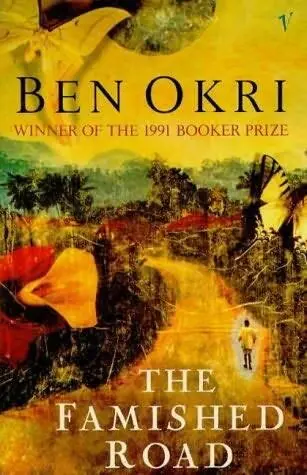
- Название:The Famished Road
- Автор:
- Жанр:
- Год:неизвестен
- ISBN:нет данных
- Рейтинг книги:5 / 5. Голосов: 1
-
Избранное:Добавить в избранное
- Отзывы:
-
Ваша оценка:
The Famished Road: краткое содержание, описание и аннотация
Предлагаем к чтению аннотацию, описание, краткое содержание или предисловие (зависит от того, что написал сам автор книги «The Famished Road»). Если вы не нашли необходимую информацию о книге — напишите в комментариях, мы постараемся отыскать её.
The Famished Road — читать онлайн бесплатно полную книгу (весь текст) целиком
Ниже представлен текст книги, разбитый по страницам. Система сохранения места последней прочитанной страницы, позволяет с удобством читать онлайн бесплатно книгу «The Famished Road», без необходимости каждый раз заново искать на чём Вы остановились. Поставьте закладку, и сможете в любой момент перейти на страницу, на которой закончили чтение.
Интервал:
Закладка:
TEN
I TRIED TO sneak past Madame Koto’s place but she saw me, and said very loudly: ‘Areyou runningfrommeagain?’ She looked different. She wore a new lace blouse, an expensive wrapper, coral beads round her neck, and copper bangles round her wrists. She wore eye-shadow, which darkened her eyes, and powder on her face, beneath which her sweat ran. The day had become hotter. It seemed impossible to avoid the sun. I was thirsty.
‘Come and have some palm-wine,’ she offered.
The bar had changed again. There were two almanacs of the Rich Party on the walls. It was surprisingly crowded for that time of the afternoon. There were normal, decent-looking people, as well as men with scars, women with bracelets that weighed down their arms, men with dark glasses. Arguments reverberated in the heated place. They discussed politics and scandals in loud, passionate voices. Some of them had thunderous faces, gleaming with sweat, and when they talked their mouths opened to astonishing degrees. Some of them were thin and bony, with ragged hungry beards and furtive eyes. The women had long painted fingers. They waved their hands violently when they spoke. They fanned themselves with newspapers Their noises mingled with the incessant buzz of the flies.
There was a hammer on the counter. I thought the carpenter was around, but upon looking, I found he wasn’t. There were several gourds of palm-wine on the tables, and flies jostled on their rims. The plates empty of peppersoup were also a little busy with the flies. At one corner of the room a man lay on the bench, his mouth and eyes open. He was fast asleep. A wall-gecko ran across his face and got caught in his hair and he woke up screaming. The others burst into laughter.
In the midst of all the noise sat a man with a chief’s cap on his head. He sat straight, with inherited dignity, and there was a boy next to him who fanned him. He had great orange beads round his neck and wore a dazzling blue agbada. He drank as if he owned the place. He looked familiar. I looked hard at him. Then I remembered him as oneof themen on thevanwhohadbeenoverseeingthedistributionofpoisonedmilk. His lips were large for his face and the colour of his lower lip was a curious mixture of red and black. There was more red than black and it seemed he had been burnt thereas achild. Hehad theeyes of arat. Hecaught mestaringat him.
‘What areyou lookingat?’ heasked. Thevoices in thebar stopped.
‘You,’ I said.
‘Why? Are you mad?’
‘No.’
He gave me a vicious stare. One of the men in the bar got up, came over, and cracked me on the head.
‘You are mad,’ he said.
I spat at him, but it didn’t travel very far.
‘Look at this bad boy,’ he said, and cracked me a second time.
I spat again. It landed on my shirt. Madame Koto came into the bar. The man slapped me with two thick fingers and I shouted and rushed for the hammer on the counter. I tore at the man, who for some reason fled. Madame Koto grabbed my arms and took the hammer from me.
‘Don’t be a bad boy! Do you see that man there?’ she said, pointing. ‘He’s a chief. Heis goingto ruleour area. Hewillswallow you.’
The chief, satisfied with the tribute, smiled, and went on drinking. The noises resumed. Some of the people commented on my behaviour and lamented the way children no longer respected their elders and blamed it all on the white man’s way of lifewhich was spoilingthevalues of Africa.
Then one of the men suggested to Madame Koto that she would be better off with girls as waiters and servants than with boys. A woman amongst them said that if Madame Koto wanted some girls to work for her, and to help her serve the customers, she could arrange it.
‘That ugly boy will destroy your business for you,’ said the man who had knocked me twice on the head. ‘Who wants to be drunk on your excellent palm-wine and see that terrible face?’
‘You will die!’ I said to the man.
The voices stopped. The man rose from his bench, his face quivering under the superstitious fear of a child’s curse.
‘Say I won’t die!’ he demanded.
‘No!’
He came towards me. Madame Koto was counting money behind her counter. She was too engrossed to be aware of what was happening.
‘Take it back!’
‘No!’
He strode towards me. Only the flies made any noises.
‘Floghimtillhepisses on himself,’ said thechief. ‘That’s how to train achild.’
I watched the man without moving. He raised his hand to hit me and I ran neatly between his legs and everyone laughed. I stopped and made faces at the chief and the painted women. When the man dashed at me, enraged by the trick, I fled out of the bar and went on fleeing and didn’t stop till I was in the forest. I looked back. The man was panting. He gave up and turned back. I went deeper into the forest and sat on the mighty tree that had been cut down. I looked over the great pit from which they had been dredging sand to build the roads of the world.
And then I wandered. I wandered for a long time in the forest. The earth gave off a potent aroma and in the heat the palm trees released alcoholic fumes deep in their trunks which I breathed in with the smell of their barks and their wine-sap evaporating into the quivering air. I listened to the curlews in the groves of wild pine trees. Intoxicated with the alcoholic fumes of sun on earth I broke through a remote section of the forest, where sunbirds clustered in baobab branches, and I emerged in another reality, a strange world, a path which had completed its transition into a road. The surface of the road was uneven with bumps. The tarmac melted under the sun and my soles turned black. The smell of melting tarmac was heady and I saw the mirage of a trailer, quivering in its frightening speed, coursing down the road towards me. The mirage shot right through the road construction machines that stood at the intersection. It ground its way over the women who sold iced water and oranges, over the beggars and the workers and shacks within which the eternal arguments about pay and strikes raged. And then the great mirage of the trailer went on, plungingforward, right into the forest and I did not see it any more.
I came to another half-constructed road. Workers stood around the hulks of machinery, abusing those who were working. They waved sticks with words written on them. I gathered that those who cursed had been sacked. They shouted slogans at the white engineers. I did not see any white engineers. It might have been the sun. I passed them and when I looked back I saw figures setting upon the protesting workers. The sun was remorseless. Shadows were deep. Where the sun was brightest, objects were blackest. Antagonists and protesters twisted in an extraordinary dance and all I could make out were the confusing shapes of glistening bodies moving in and out of visibility. Thelights madeeverythingunreal.
Birds cawed overhead, flying around in widening circles. I reentered the forest. The sun’s rays were sharp like glass. The blue shadows of green trees blinded me for a moment. The shade was cooling and the air smelt of fine aromatic herbs and bark. Patterns of light and colours danced on the forest floor. Flowers which I didn’t see scented the dense and tender breeze. I listened to the fluted sound of birds, the murmurings of a distant stream, the wind in the somnolent trees, and the pervasive concert of insects. And then, suddenly, that part of the forest was over.
I had emerged into another world. All around, in the future present, a mirage of houses was being built, paths and roads crossed and surrounded the forest in tightening circles, unpainted churches and the whitewashed walls of mosques sprang up where the forest was thickest. The worshippers in the unpainted churches wore whitecassocks and prayed totheringingofbellsallafternoon.Theworldoftreesand wild bushes was being thinned. I heard the ghostly wood-cutters axing down the titanic irokos, the giant baobabs, the rubber trees and obeches. There were birds’ nests on the earth and the eggs within them were smashed, had fallen out, had mingled with the leaves and the dust, the little birds within the cracked eggs half-formed and dried up, dying as they were emerging into a hard, miraculous world. Ants swarmed all over them.
Читать дальшеИнтервал:
Закладка:
Похожие книги на «The Famished Road»
Представляем Вашему вниманию похожие книги на «The Famished Road» списком для выбора. Мы отобрали схожую по названию и смыслу литературу в надежде предоставить читателям больше вариантов отыскать новые, интересные, ещё непрочитанные произведения.




Обсуждение, отзывы о книге «The Famished Road» и просто собственные мнения читателей. Оставьте ваши комментарии, напишите, что Вы думаете о произведении, его смысле или главных героях. Укажите что конкретно понравилось, а что нет, и почему Вы так считаете.