Ben Okri - The Famished Road
Здесь есть возможность читать онлайн «Ben Okri - The Famished Road» весь текст электронной книги совершенно бесплатно (целиком полную версию без сокращений). В некоторых случаях можно слушать аудио, скачать через торрент в формате fb2 и присутствует краткое содержание. Жанр: Современная проза, на английском языке. Описание произведения, (предисловие) а так же отзывы посетителей доступны на портале библиотеки ЛибКат.
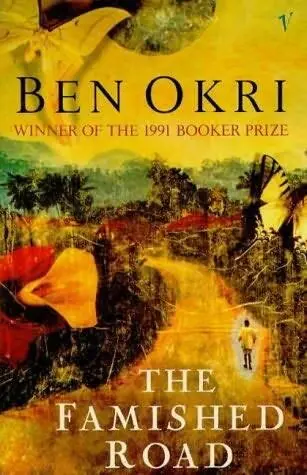
- Название:The Famished Road
- Автор:
- Жанр:
- Год:неизвестен
- ISBN:нет данных
- Рейтинг книги:5 / 5. Голосов: 1
-
Избранное:Добавить в избранное
- Отзывы:
-
Ваша оценка:
The Famished Road: краткое содержание, описание и аннотация
Предлагаем к чтению аннотацию, описание, краткое содержание или предисловие (зависит от того, что написал сам автор книги «The Famished Road»). Если вы не нашли необходимую информацию о книге — напишите в комментариях, мы постараемся отыскать её.
The Famished Road — читать онлайн бесплатно полную книгу (весь текст) целиком
Ниже представлен текст книги, разбитый по страницам. Система сохранения места последней прочитанной страницы, позволяет с удобством читать онлайн бесплатно книгу «The Famished Road», без необходимости каждый раз заново искать на чём Вы остановились. Поставьте закладку, и сможете в любой момент перейти на страницу, на которой закончили чтение.
Интервал:
Закладка:
‘Let’s run away,’ I said.
Mum laughed. Then she became serious. And for the first time I saw how the world had sharpened her features. Her cheekbones jutted out, her nose was pointed, her chin was sharp, and the two corners of her forehead stood out like the rock-shaped result of permanent bruising. Her eyes were narrowed as if they were endlessly trying to exclude most of what they saw.
‘Our destiny will protect us. Don’t fear anything, my son. The worst they can do is kill us.’ She paused.
Her face took on the bizarre immobility of a mask. Her eyes didn’t move and they seemed to stare past the window in an uncanny vacant concentration.
‘I am tired of this life anyway,’ she said, eventually. ‘I want to die.’
Suddenly I had a vision of her death. It came and went so fast and it left me perplexed. I remembered her face when she nearly died just after my homecoming. I remembered that it was because of her bruised face that I had chosen to live, to stay, in the confines of this world, and to break my pacts with my spirit companions. One of the many promises I made before birth was that I would make her happy. I had chosen to stay, now she wanted to die. I burst out crying. I threw myself on the floor and thrashed and wept. The demon of grief seized me completely. Mum tried to hold me, and console me, and find out why I had so suddenly begun crying. She didn’t know how inconsolable I was at that moment, because she didn’t know the cause of my grief.Shedidn’t knowthattheonlythingthatcouldmakemestopwasapromise from her that she would never die.
‘What’s wrong with you? Is it because of the door? Or the compound people? Or the landlord? Don’t be afraid. We are too strong for them.’
Her words came too late. I could not separate myself from unhappiness. I became my grief. I wept in advance for all the things that would happen, the unimaginable things beyond the horizon of all the narratives of our lives. Misery filled me like water fills a deep well after a heavy downpour. I started to choke. My spirit companions drank of my grief and filled me with sweet songs to make my wretchedness more sublime. My heart stopped beating. I froze, became rigid, didn’t breathe, my mouth open, eyes wide. Darkness rushed over me, a powerful wind from the forest. The darkness extinguished my consciousness.
But deep inside that darkness a counterwave, a rebellion of joy, stirred. It was a peaceful wave, breaking on the shores of my spirit. I heard soft voices singing and a very brilliant light came closer and closer to the centre of my forehead. And then suddenly, out of the centre of my forehead, an eye opened, and I saw this light to be the brightest, most beautiful thing in the world. It was terribly hot, but it did not burn. It was fearfully radiant, but it did not blind. As the light came closer, I became more afraid. Then my fear turned. The light went into the new eye and into my brain and roved around my spirit and moved in my veins and circulated in my blood and lodged itselfinmy heart.Andmyheartburnedwithasearingagony,asifitwerebeingburnt to ashes within me. As I began to scream the pain reached its climax and a cool feeling of divine dew spread through me, making the reverse journey of the brilliant light, cooling its flaming passages, till it got back to the centre of my forehead, where it lingered, the feeling of a kiss for ever imprinted, a mystery and a riddle that not even the dead can answer.
EIGHT
MUM HELD THE candle in her hand. The wax dripped down on to her fragile skin. She did not flinch. She did not move. Her eyes were wide open. Her face was a rock in the dark shadows where the candle-light couldn’t reach.
‘One day I will tell you the story of how Death was conquered,’ she said, in the voice of a mysterious priestess.
She stared at me for a long time. The candle-light created a golden aureole round the scattered fringes of her hair. The wax turned white on her fragile skin. She put down the candle and peeled off the wax. She stared beyond me. There was fear and love in her eyes. She moved her hand across the darkness and created a raft in the shadows. It was abluedarkness. Everythingturned blue.
I floated on the raft and found myself on the mat. The candle had burned low on the table. There were mosquitoes and midges in the room and the window was open. The wind blew in, fluttering the candle, and it brought the smells of the world cleansed by the freshness of the night air.
Someone tapped gently on the door of my spirit. I opened the door and found the photographer outside. At first I didn’t recognise him. I hadn’t seen him for many days. He looked different. His face shone with health. His eyes were bright. His mood was buoyant as though he had discovered fields of hope somewhere in the night.
‘It’s me,’ he said, a little hesitantly, ‘the International Photographer.’
He came in half crouching, half bouncing. His spirit swung between fear and buoyancy. He had new cases for his equipment. On his photographic encasement was written the legend, white against the black leather: TO BECOME A MAN. Was it a question unasked, a riddle unstated, or a declaration unfinished? I had no idea. I stared at the words, mesmerised.
‘Do you remember me?’ he whispered, as I locked the door.
‘Where have you been?’
‘Round the world and back.’‘How is that?’‘Wonders will never cease.’‘Why not?’Hedidn’tanswermy question.Welistenedtothesleepingworld.Stillwhispering, he said:
‘I am going to move soon. I am going to get another job soon. Is there any food? I think thosethugs havestopped lookingfor me. Thelandlord wants meto moveaway from his house. I am hungry.’
‘There is no food.’
‘Why not?’
‘Didn’t you see the door?’
‘What door?’
‘Our door.’
‘Of course I saw it.’
‘You didn’t.’
‘How did I get into the room?’
‘You didn’t see it.’
‘Why not?’
‘Somepeopletriedtobreakitdown.Thenthey putsomethingstrangeonit.’
‘Why?’
‘I don’t know.’
‘Who did it?’
‘We don’t know.’
‘Wickedness will never cease.’
‘What?’
‘So there is no food?’
‘They poured water on our fire when Mum was cooking.’ Dad turned on the bed.He grunted in his sleep. The rats began to eat. Mum chewed her mouth and fell silent.
‘Why?’
‘I don’t know. Mum thinks they might poison us.’
‘Ssssshhhhhh!’
‘What?’
‘A spirit passingmight hear you.’
‘What will it do?’
‘Depends.’
‘On what?’
‘Is there any garri?’
‘Yes.’
He went to the cupboard and, quiet as a thief, dug out some garri from the basin with a bowl. He poured water in the bowl, got rid of the excess water in the passage, put salt and cubes of sugar in the garri, some more water to achieve his desired eccentric balance, and ate. The simple food satisfied him. When he finished he said:
‘Show me the door.’
I took the candle outside, cupping the flame against the wind. He studied the gashes, touched the foul-smelling red stuff, smelt it, tasted it, and said:
‘Blood of a wild boar.’ ‘How do you know?’
‘I used to be a hunter.’
We went back in. He knelt in silence on the mat.
‘Maybeit’s becauseof me,’ hesaid after alongtime. Hepaused.
‘I will go soon. I will disappear. I will go underground.’ Another pause.
‘I don’t want to bringyou trouble.’
The wind blew in through the window and blew out the candle. We stayed in the dark. When he spoke again his voice had changed. ‘Do you know what I did today?’
‘No.’ ‘I took photographs of women at the market being attacked by thugs. The women fought them back. I took pictures of riots against our white rulers. I took pictures of a policeman takingbribes. Thepoliceman saw meand pursued me. I escaped.’ ‘How?’ ‘Magic.’ ‘How?’ ‘I turned invisible.’ ‘How?’ ‘I have a lot of powers.’ ‘Then why are you hiding?’ ‘Because if you have power you don’t use it all the time.’ ‘What else can you do?’ ‘I can fly.’ ‘To where?’ ‘To the moon.’
Читать дальшеИнтервал:
Закладка:
Похожие книги на «The Famished Road»
Представляем Вашему вниманию похожие книги на «The Famished Road» списком для выбора. Мы отобрали схожую по названию и смыслу литературу в надежде предоставить читателям больше вариантов отыскать новые, интересные, ещё непрочитанные произведения.



Обсуждение, отзывы о книге «The Famished Road» и просто собственные мнения читателей. Оставьте ваши комментарии, напишите, что Вы думаете о произведении, его смысле или главных героях. Укажите что конкретно понравилось, а что нет, и почему Вы так считаете.