Ben Okri - The Famished Road
Здесь есть возможность читать онлайн «Ben Okri - The Famished Road» весь текст электронной книги совершенно бесплатно (целиком полную версию без сокращений). В некоторых случаях можно слушать аудио, скачать через торрент в формате fb2 и присутствует краткое содержание. Жанр: Современная проза, на английском языке. Описание произведения, (предисловие) а так же отзывы посетителей доступны на портале библиотеки ЛибКат.
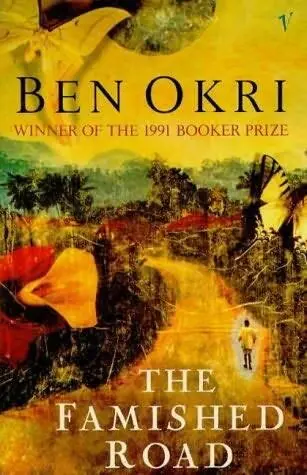
- Название:The Famished Road
- Автор:
- Жанр:
- Год:неизвестен
- ISBN:нет данных
- Рейтинг книги:5 / 5. Голосов: 1
-
Избранное:Добавить в избранное
- Отзывы:
-
Ваша оценка:
The Famished Road: краткое содержание, описание и аннотация
Предлагаем к чтению аннотацию, описание, краткое содержание или предисловие (зависит от того, что написал сам автор книги «The Famished Road»). Если вы не нашли необходимую информацию о книге — напишите в комментариях, мы постараемся отыскать её.
The Famished Road — читать онлайн бесплатно полную книгу (весь текст) целиком
Ниже представлен текст книги, разбитый по страницам. Система сохранения места последней прочитанной страницы, позволяет с удобством читать онлайн бесплатно книгу «The Famished Road», без необходимости каждый раз заново искать на чём Вы остановились. Поставьте закладку, и сможете в любой момент перейти на страницу, на которой закончили чтение.
Интервал:
Закладка:
It wasevening.Outside,throughthecurtainstrips,Icouldseebirdswhirlinground and round in the air, as though marking, with the centre of their circle, the spot where a comrade had just fallen. The sun was an intense orange, a molten object strangely unconnected with the cooling breeze of the forest. Madame Koto’s face had broken into the smile she reserved for the customers who spent the most.
There were a lot of people outside. They were elegantly dressed in bright kaftans and agbadas and safari suits. They laughed and talked in animated tones. There were many women amongst them. The strong scent of their perfumes was heavy and inescapableon theeveningair.
The two thugs who had earlier led the man away stepped into the bar. They surveyed theplaceasiftoascertainwhetheritwasbigenoughforthecelebrationthey planned. They did not look like thugs. In spite of the bandage and the animal expression in their eyes, they looked like modern businessmen, contractors, exporters, politicians. Dressed in lace kaftans, with matching hats, they were wonderfully high-spirited. They went out, came in again and, walking towards Madame Koto with the dignity of honourable crooks, said:
‘It will do. We want to celebrate here. You are our friend and supporter. Since you havebeen good to us, wewillbringbusiness to you.’
The man with the bandage round his forehead went out and I heard him say:
‘Come in, my people. Come in.’
He led the way, walking with a lilt. The small-eyed man stood in the middle of the bar, making expansive gestures. Neither of them looked like the people they had been. I was fascinated by their transformation.
‘My favourite customers, welcome!’ Madame Koto said, in a voice of such extreme unctuousness that I turned to her, surprised.
Her face glistened. She rubbed her palms together. The two men sat. The people outside came in, bringing their thick perfume smells, their crackling lace, their clinkingbangles and trinkets and strangejewellery, and thesmellof new money.
‘More light!’ cried one of the men.
‘And plenty of your best palm-wine!’ said another.
Madame Koto, who seemed to me afraid of nothing under the heavens, moved with such alacrity it appeared she was afraid of incurring their displeasure. She rushed out and got a clean cloth and wiped the benches before the women and the men sat on them. She wiped the tabletops till they shone and she opened the curtains wider by hanging the lower parts of the plastic strips on a nail. She rushed out and came back in and gave me a terrible stare and for the first time she shouted at me as if I were her servant.
‘Get up, you ugly child. Get up and fetch water for my customers!’
I was too stunned to move. She grabbed me by the scruff of the neck, and tossed me out of the bar. Furious and confused, I picked up a length of firewood. I stayed out a long time. Madame Koto came out looking for me. I held the firewood high, ready to use it.
‘What about the water?’ she asked.
I said nothing. I held the wood harder. I withstood the metal in her eyes. She approached. I backed away into the bushes. She smiled, her breasts heaving. She got close, arms outstretched, and I lashed out, and missed, and the firewood flew out of my hands, and splinters caught in my palm. She stopped. A new expression appeared on her face. Then she said:
‘Okay, okay.’
She fetched the basins of water herself. I stayed near the bushes and watched her run up and down, trying frantically to please her customers. She came out with a heavy face and re-entered with a big false smile. I went to the front and watched as more of the thugs and their friends poured into the bar. They laughed roughly and talked about money. They talked about politics and contracts and women and the elections. I peeped in and saw Madame Koto sitting behind her counter, sweating. She listened with wide-eyed attentiveness to what was being said and jumped up with an elastic smile whenever they wanted something. She seemed like a total stranger.
‘Madame,’ one of the men said, ‘why don’t you turn this place into a hotel? You will make plenty of money.’
‘And why don’t you get women to serve us instead of that strange child, eh?’
Madame Koto made a reply which raised laughter, but which I didn’t hear. They went on drinkingendless bowls of soup, endless gourds of palm-wine. I stayed out till the evening began to distribute itself across the sky. Madame Koto came lookingfor me and when I saw her I ran.
‘Why are you running?’ she asked in a gentler voice.
Then she pleaded with me to go back in and said that they were her special customers and I should behave properly towards them. She promised me some money and a generous portion of soup. Cautiously, I went back into the bar. But by then the men were quite drunk and had begun to shout and to boast. Two of the men were so drunkthat they dancedwithoutmusic,staggering,sweatingpeppersoup.Oneofthem climbed on a table and danced to the tune of his party’s song. The table wobbled. He sang and stamped. The other man tried to climb a bench, but couldn’t. The two thugs kept trying to get them to come down. The bandaged man went round his table and tried to grab the dancer, but he jumped from one table to another and eventually jumped so hard that he crashed right through the wood and remained entangled. No one moved to help him.
‘Don’t worry, Madame,’ said the small-eyed thug, ‘we will pay for your table.’
Madame Koto remained still behind the counter. Her lower face vibrated. I could sense her tremendous rage. But she managed a smile of incredible sincerity, and said:
‘Thank you, my favourite customers.’
Two women from the group got up and helped the man out of the table. He was bleeding from the thighs and round the area of his crotch but he didn’t seem to notice. He lay down on a bench next to me and fell asleep. His shoes stank. His horrible perfume mingled with peppersoup sweat. I moved two benches away from him. The others resumed their drinking and their rowdy merriment. Madame Koto watched them with a fixed smile on her huge face. She watched passively, not doinganything, even when fresh customers turned up and were driven away, shouted away, by the bandaged man and his friends.
‘Go and find somewhere else to drink. This is our bar tonight,’ they would say, laughing.
They went on turning people away, preventing them from so much as coming in, and all Madame Koto did was smile.
‘This madame is going to be my wife!’ announced the bandaged thug.
He got up, swaying, and dragged her from behind the counter and danced with her. ‘That madame,’ said one of the men, ‘will swallow you completely.’ The others laughed. Madame Koto stopped dancing, went out, and returned with her broom.
‘Run! Run-o!’ came a drunken chorus.
The man who had provoked her was already outside by the time she reached him.
‘Sweep away my sorrows,’ crooned the bandaged man, holding her from behind.
She shook him off. He said, with eyes both feverish and earnest:
‘Madame, if you marry me you will sleep on a bed of money!’
And as if to prove it he brought out a crisp packet of pound notes and proceeded to plaster note after note on her sweating forehead. She responded with amazing dexterity and, as if she were some sort of desperate magician, made the money disappear into her brassiere. She danced all the while. He seemed very amused by her greed. He swayed, his eyes opening and shutting, behaving as if he hadn’t noticed anything. And then quite suddenly he put away his packet of money, and danced away fromMadameKoto,hisfaceglisteningwiththeecstasy ofpower.
The darkness outside spread indoors. The flies were intense. It became quite dark. Madame Koto brought in the lanterns, lit them, and distributed them round the tables.
Читать дальшеИнтервал:
Закладка:
Похожие книги на «The Famished Road»
Представляем Вашему вниманию похожие книги на «The Famished Road» списком для выбора. Мы отобрали схожую по названию и смыслу литературу в надежде предоставить читателям больше вариантов отыскать новые, интересные, ещё непрочитанные произведения.






Обсуждение, отзывы о книге «The Famished Road» и просто собственные мнения читателей. Оставьте ваши комментарии, напишите, что Вы думаете о произведении, его смысле или главных героях. Укажите что конкретно понравилось, а что нет, и почему Вы так считаете.