Ben Okri - The Famished Road
Здесь есть возможность читать онлайн «Ben Okri - The Famished Road» весь текст электронной книги совершенно бесплатно (целиком полную версию без сокращений). В некоторых случаях можно слушать аудио, скачать через торрент в формате fb2 и присутствует краткое содержание. Жанр: Современная проза, на английском языке. Описание произведения, (предисловие) а так же отзывы посетителей доступны на портале библиотеки ЛибКат.
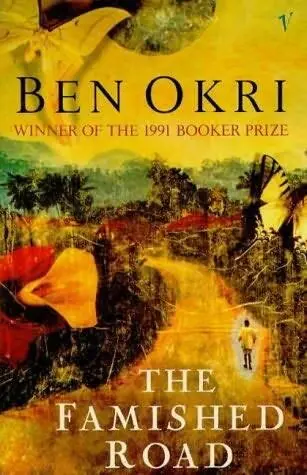
- Название:The Famished Road
- Автор:
- Жанр:
- Год:неизвестен
- ISBN:нет данных
- Рейтинг книги:5 / 5. Голосов: 1
-
Избранное:Добавить в избранное
- Отзывы:
-
Ваша оценка:
The Famished Road: краткое содержание, описание и аннотация
Предлагаем к чтению аннотацию, описание, краткое содержание или предисловие (зависит от того, что написал сам автор книги «The Famished Road»). Если вы не нашли необходимую информацию о книге — напишите в комментариях, мы постараемся отыскать её.
The Famished Road — читать онлайн бесплатно полную книгу (весь текст) целиком
Ниже представлен текст книги, разбитый по страницам. Система сохранения места последней прочитанной страницы, позволяет с удобством читать онлайн бесплатно книгу «The Famished Road», без необходимости каждый раз заново искать на чём Вы остановились. Поставьте закладку, и сможете в любой момент перейти на страницу, на которой закончили чтение.
Интервал:
Закладка:
‘Madame,’ slurred the small-eyed thug, ‘we will give you electricity and you will play music for us one of these days and we will all dance.’
At that moment the curtain parted and the carpenter, eyes wide, clothes dirty from another job, came into the bar.
‘Go and drink somewhere else!’ said one of the men.
‘Why?’
‘Why not?’
‘Because I built this bar.’
‘So what?’
‘No one can tell me to get out of here.’
‘Is that so?’
‘Yes.’
The bandaged man, who had clearly been spoiling for some confrontation all evening, made a great show of tearing off his agbada. Then he unceremoniously jumped on the carpenter. They both fell on a bench. A lantern rocked on the table. They wrestled, rolling, on the floor. One of the lanterns fell and broke and set the table on fire. The women screamed, grabbed their handbags, and fled outside. Madame Koto got her inevitable broom and whipped the fire. Her broom began to burn. The two men went on fighting. The carpenter ripped off the thug’s bandage. The thug attempted to strangle the carpenter. The companions of the bandaged man began hitting the carpenter, booting him, smashing his head with their shoes, punching his ribs. But each time they hit the carpenter, it was the bandaged man who cried out. Then, in a flurry, benches and tables came tumbling over, glasses and plates broke, calabashes were cracked open, spilled palm-wine burst into flames, and smoke filled the air. I didn’t move. I heard one of the thugs screaming. His agbada had caught fire. He ran out, his garment flaming all around him, into the blue night. The curtain strips caught fire as well. Soon it seemed everything was burning. Madame Koto rushed in with the compound people, bearingbuckets of water, which they poured everywhere, on the tables and walls, on the men fighting over flames and broken calabashes, over the man who lay asleep and drunk and who had earlier jumped into a table, over the curtains. Soon the fires were extinguished and the men had stopped wrestling on the floor. They were thoroughly drenched. They both got up, bits of glass and wood sticking to them, and they leant forward, groaning.
Madame Koto fetched a new broom and waded into the crowd of bodies and began lashing out, thrashing everyone with such viciousness that the commotion in the bar became incredible. She whipped the thugs and their guests, pursued them to the door, she turned and flogged the carpenter and chased him round the bar, then she attacked the compound people who had come to help, and who fled screaming that she had gone mad, she lashed me on the back and neck and I ran outside. She went on hitting out and whippingtheair with her broomeven when therewas no oneleft to hit.
She emerged suddenly at the front door and her presence sent the women screaming, the men yelling. She bounded after the thugs and their friends, soundly beatingthewomen on theback, themen roundtheankles,pursuingthemup theroad towards the forest. For a while, we didn’t see her. Then, breathing heavily, she materialised amongst us, and pounced on our astonishment, quick on her feet for one so heavy. Shetoreafter us, managingthecurious featofbeinginseveralplacesatthe same time, and whipping those of us who had run either north or south, west or east, crackling the air with the electric fury of her new broom, cursing everything, raising the dust and kicking up stones, whirling and swearing, chasing us into the bushes, into the backyard and down the passages. People fled everywhere. I ran into the stinking bathroom and remained there for a long time and only came out when I heard other voicestentatively emergingfromtheirhiding-places.Icreptup tothebar.
Madame Koto sat at a table. There was only one functioning lantern in the room. The place was a mess. Tables were broken and burnt, there were broken glasses and bones of chickens and crushed bowls and twisted spoons and shattered calabashes and torn clothes and spilt wine and soup everywhere. There was vomit on one table, the Coca-Cola calendar was on the floor, with peppersoup stains all over the breasts of the white woman. Benches were upside down. There were burnt pound notes on tables and patches of blood on the walls. Madame Koto sat in the soft darkness. Her breasts heaved slightly. Her face was a mask. She sat alone in her bar, surrounded by confusion and night-flies. Her hands trembled.
With her sad, hard eyes she stared straight ahead of her, not surveyingher domain. She bit her lower lip. Then to my greatest amazement she began to tremble worse than ever, sitting bolt upright, her face bold, her eyes defeated. She wept, quivering, and her tears ran down her massive cheeks and dripped on the table. Then she stopped, swallowed, wiped her face with her wrapper, and began to lock up the bar for the day. She too had crossed the divide between past and future. She must have known that a new cycle had begun. She turned suddenly, saw me, became stiff, her eyes widening with the horror of being discovered in a secret moment, and then she said, somewhat harshly:
‘What areyou lookingat?’
‘Nothing.’
‘Haven’t you seen a grown woman cry before?’
I was silent.
‘Go home!’ she commanded.
I didn’t move. Neither Madame Koto, nor her bar, would ever be the same again.
‘Go home!’ she ordered.
I went.
SEVEN
MUM WAS ALONE in the room, praying to our ancestors and to God in three different languages. She knelt by the door, her kerchief partly coveringher face, rubbingher palms together fervently.
‘Shut the door and come in,’ she said.
I went and sat on the bed. The intensity of her prayer overwhelmed the room. I listened to her calling for strength, pleading for Dad to get a good job, for us to find prosperity and contentment. She prayed that we should not die before our time, that we should live long enough for the good harvest, and that our suffering should turn into wisdom.
When she finished she stood up and came and sat beside me on the bed. She was silent. The space around her was full of energies. She asked about Madame Koto and I told her that people thought she was going mad. Mum laughed, till I told her what had happened. There was a long silence. Then I realised that she hadn’t been listening to me. Her eyes were distant.
‘Did you seethedoor?’ sheasked suddenly, breakingout of her contemplation.‘Our door?’‘Yes.’‘I did.’‘Go and look again.’I went out and looked but couldn’t see anything because of the darkness. The compound people, like figures in a red dream, milled about in the backyard, moved about the passage. I came back in. ‘Did you see?’
‘No.’ I took the candle, cupped my palm over a side of its flame, and went out again. Our door had been crudely hacked with machetes. They had almost splintered the wood. Gashes were long rather than deep on the door. A foul-smelling substance, glistening red under the candle-light, had been smeared across the wood in a set of menacing signs. Our door had been marked. I went back in.
‘Who did it?’‘It was the landlord.’‘How do you know?’‘Dad challenged his party.’Mum was silent for a moment. I put the candle back on the table.‘Be careful of the compound people,’ she warned. ‘One day they are our friends and the next day they are our enemies.’ ‘Yes, mother.’ ‘I was cooking food. I came to the room. When I went back to the kitchen someone had poured water on the fire.’ We were silent. ‘I am now afraid to walk the compound at night. Who knows if they are poisoning our food, eh?’ I became afraid. I held on to Mum. She patted my head gently. For a moment I could see our door being broken down at night, while we slept. I saw the great monstrous Egungun, belching white smoke from seven ears, bursting into our room and devouring us all with his bloodied mouth.
Читать дальшеИнтервал:
Закладка:
Похожие книги на «The Famished Road»
Представляем Вашему вниманию похожие книги на «The Famished Road» списком для выбора. Мы отобрали схожую по названию и смыслу литературу в надежде предоставить читателям больше вариантов отыскать новые, интересные, ещё непрочитанные произведения.






Обсуждение, отзывы о книге «The Famished Road» и просто собственные мнения читателей. Оставьте ваши комментарии, напишите, что Вы думаете о произведении, его смысле или главных героях. Укажите что конкретно понравилось, а что нет, и почему Вы так считаете.