Margaret Atwood - The Robber Bride
Здесь есть возможность читать онлайн «Margaret Atwood - The Robber Bride» весь текст электронной книги совершенно бесплатно (целиком полную версию без сокращений). В некоторых случаях можно слушать аудио, скачать через торрент в формате fb2 и присутствует краткое содержание. Год выпуска: 1993, Жанр: Современная проза, на английском языке. Описание произведения, (предисловие) а так же отзывы посетителей доступны на портале библиотеки ЛибКат.
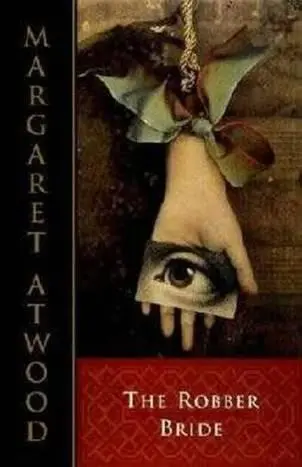
- Название:The Robber Bride
- Автор:
- Жанр:
- Год:1993
- ISBN:нет данных
- Рейтинг книги:5 / 5. Голосов: 1
-
Избранное:Добавить в избранное
- Отзывы:
-
Ваша оценка:
The Robber Bride: краткое содержание, описание и аннотация
Предлагаем к чтению аннотацию, описание, краткое содержание или предисловие (зависит от того, что написал сам автор книги «The Robber Bride»). Если вы не нашли необходимую информацию о книге — напишите в комментариях, мы постараемся отыскать её.
Even Zenia’s name is enough to provoke the old sense of outrage, of humiliation and confused pain. The truth is that at certain times—early mornings, the middle of the night—she finds it hard to believe that Zenia is really dead.’ Zenia is beautiful, smart and greedy; by turns manipulative and vulnerable, needy and ruthless; a man’s dream and a woman’s nightmare. She is also dead. Just to make absolutely sure Tony, Roz and Charis are there for the funeral. But five years on, as the three women share a sisterly lunch, the impossible happens: ‘with waves of ill will flowing out of her like cosmic radiation’, Zenia is back ...
This is the wise, unsettling, drastic story of three women whose lives share a common wound: Zenia, a woman they first met as university students in the sixties. Zenia is smart and beautiful, by turns manipulative, vulnerable—and irresistible. She has entered into their separate lives to ensnare their sympathy, betray their trust, and exploit their weaknesses. Now Zenia, thought dead, has suddenly reappeared. In this richly layered narrative, Atwood skilfully evokes the decades of the past as she retraces three women’s lives, until we are back in the present—where it’s yet to be discovered whether Zenia’s ‘pure, free-wheeling malevolence’ can still wreak havoc.
reports from the farthest reaches of the sex wars and is one of Margaret Atwood’s most intricate and subversive novels yet.
Exploring the paradox of female villainy, this tale of three fascinating women is another peerless display of literary virtuosity by the supremely gifted author of
and
. Roz, Charis and Tony all share a wound, and her name is Zenia. Beautiful, smart and hungry, by turns manipulative and vulnerable, needy and ruthless, Zenia is the turbulent center of her own neverending saga. She entered their lives in the sixties, when they were in college. Over the three decades since, she has damaged each of them badly, ensnaring their sympathy, betraying their trust, and treating their men as loot. Then Zenia dies, or at any rate the three women—with much relief -- attend her funeral. But as
begins, Roz, Charis and Tony have come together at a trendy restaraunt for their monthly lunch when in walks the seemingly resurrected Zenia...
In this consistently entertaining and profound new novel, Margaret Atwood reports from the farthest reaches of the war between the sexes with her characteristic well-crafted prose, rich and devious humor, and compassion.
The Robber Bride — читать онлайн бесплатно полную книгу (весь текст) целиком
Ниже представлен текст книги, разбитый по страницам. Система сохранения места последней прочитанной страницы, позволяет с удобством читать онлайн бесплатно книгу «The Robber Bride», без необходимости каждый раз заново искать на чём Вы остановились. Поставьте закладку, и сможете в любой момент перейти на страницу, на которой закончили чтение.
Интервал:
Закладка:
The chickens cluck hyperactively, mobbing her legs, making small fluttering hops, jostling and pecking one another, giving out yelps of anger. When they have settled down and are feeding she carries their water container outside too and tops it up from the pail.
Charis watches the chickens eat. They fill her with joy, a joy that has no rational source, because she knows—she has seen, also she remembers—how greedy chickens are, how selfish and unfeeling, how cruel they are to one another, how they gang up: at least two of them have naked scalps, from being picked on. Nor are they placid vegetarians: you can start a riot among them just by tossing them a few hot-dog ends or scraps of bacon. As for the rooster, with his eye of an insane prophet and his fanatic’s air of outrage and his comb and wattles flaunted like genitals, he’s an overbearing autocrat, and attacks her rubber boots when he thinks she’s not looking.
Charis doesn’t care; she excuses the chickens everything. She adores them! She has adored them ever since the moment they arrived, flowering out of the feed sacks in which they travelled, shaking their angels’ feathers. She thinks they are miraculous. They are.
Inside the henhouse, she rummages through the straw in the boxes, hoping for eggs. In June the hens were bursting with eggs, laying two a day, huge milky ovals with double and triple yolks, but now, with the declining angle of the sun, they’ve fallen off badly. Their feathers and wattles are duller; several of them are moulting. She does manage to find one egg, an undersized one with a pebbly shell. She slips it into the breast pocket of her overalls; she will feed it to Billy for his breakfast.
Back in the kitchen she takes off her boots; she leaves the overalls on, because she’s cold. She slides another stick of wood into the stove, warming her hands. Should she have her own breakfast first, or wait and have it while Billy has his? Should she wake him at all? Sometimes he’s mad if she does, other times he’s mad if she doesn’t. But today is a city day for her, so if she wakes him up now she can get him fed before she catches the ferry. That way he won’t spend the morning asleep, and blame her later.
She climbs the stairs and walks gently along the hall; when she gets to the doorway she stands for a moment, just looking. She likes looking at Billy in the same way that she likes looking at the hens. Billy too is beautiful; and just as the hens are the essence of hen-ness, Billy is the essence of Billy-ness. (Like the hens, too, he is a little frowsier now than when she first encountered him. This also may have something to do with the angle of the sun.)
He lies on their mattress, the sleeping bag pulled up to his neck. His left arm is flung across his eyes; the tan on it is fading, although it’s still dark, this arm, and pelted with short golden hairs, like a honeybee covered with pollen. His short yellow beard shines in the white room, in the strange light from the mist outside—heraldic, the beard of a saint, or of a knight in an old picture. Or like something on a stamp. Charis loves to watch Billy at such moments, when he’s quiet and still. It’s easier to maintain her view of him that way than when he’s talking and moving around.
Billy must sense her flashlight gaze on him. His arm moves away from his eyes, the eyes themselves open, such blue! Like forget-me-nots, like mountains in the distance, on postcards, like thick ice. He smiles at her, uncovering Viking teeth.
“What time is it?” he says. “I don’t know,” says Charis.
“You’ve got a watch, don’t you?” he says. Don’tcha. How can she explain about the mist? Also that she can’t take the time to look at her watch, because she’s looking at him? Looking is not a casual thing. It takes all her attention.
He gives a small sigh, of exasperation or desire, it’s so hard to tell the difference. “Come here,” he says.
It must be desire. Charis goes to the mattress, sits down beside Billy, smooths back the hair on his forehead, hair so yellow it looks painted. It’s still amazing to her that the colour doesn’t come off on her skin. Although her own hair is blonde as well, it’s a different blonde, pale and bleached-out, moon to his sun. Billy’s hair glows from within.
“I said here,” says Billy. He pulls ,her down on top of him, zeroes in on her mouth, encircles her in his golden arms; squeezes her tight.
“The egg!” says Charis breathlessly, remembering it. The egg breaks.
XXX
That’s what Billy was like, at the time. He was always after her then. In the mornings, in the afternoons, at night, it made no difference. Maybe it was just a sort of nervousness, or boredom, because he didn’t have that much to fill up the time; or it might have been the tension of being there illegally. He would wait for her at the ferry dock and walk back to the house with her and grab her before she even had a chance to put the groceries down, pressing her back against the kitchen counter, his hands pulling up her long flimsy skirt. His urgency confused her. God I love you, God I love you, he would say at these times. Sometimes he did things that hurt—slapping her, pinching. Sometimes it hurt anyway, but since she didn’t mention this, how was he supposed to know about it?
What had she felt, herself? It’s hard to sort out. Maybe if there had been less, less plain old sex—if she had felt less like a trampoline with someone jumping up and down on it—she would have learned to enjoy it more, in time. If she could relax. As it was she merely detached herself, floated her spirit off to one side, filled herself with another essence—apple, plum—until he’d finished and it was safe to re-enter her body. She liked being held afterwards, she liked being stroked and kissed and told she was beautiful, a thing Billy sometimes did. Once in a while she cried, which Billy seemed to find normal. Her tears had nothing to do with Billy; he didn’t make her sad, he made her happy! She told him that, and he was satisfied and didn’t push her for answers. They talked about other things; they never talked about that.
But what was it supposed to be like? What would have been normal? She had no idea. Every so often they smoked dope—not a lot, because they couldn’t afford much of it, and when they had some it usually came from one of Billy’s friends—and at those times she got an inkling, an intimation, a small flutter. But it hardly counted, because her skin felt like rubber then anyway, like a rubber suit she had on with a grid of tiny electric wires running through it, and Billy’s hands were like inflated comic-book gloves, and she would get involved with the convolutions of his car or the whorl of golden hairs on his chest, and whatever her body was up to was no concern of hers. One of Billy’s friends said that there was no sense in wasting good hash on Charis because she was stoned all the time anyway. Charis didn’t think that was fair, although it was true that being stoned didn’t make as much difference for her as it seemed to make for other people.
Billy wasn’t the first man she’d slept with, of course. She’d slept with several, because you were supposed to and she didn’t want to be considered uptight, or selfish about her body, and she’d even lived with one man, although it hadn’t lasted. He’d ended by calling her a frigid bitch, as if she was doing him some injury or other, which puzzled her. Hadn’t she been affectionate enough, hadn’t she nodded her head when he talked, hadn’t she cooked the meals and laid herself down compliantly whenever he wanted her to, hadn’t she washed the sheets afterwards, hadn’t she tended him? She was not an ungiving person.
The good part about Billy was that this thing about her, this abnormality—she knew it must be one, because she’d listened to other women talking—didn’t bother him. In fact he appeared to expect it. He thought women were like that: without urges, without needs. He didn’t pester her about it, he didn’t question her, he didn’t try to fix her, as the other men had done—tinkering away at her as if she was a lawnmower. He loved her the way she was. Without anything being said, he simply assumed, as she did, that what she felt about it didn’t matter. Both of them were agreed on that. They both wanted the same thing: for Billy to he happy.
Читать дальшеИнтервал:
Закладка:
Похожие книги на «The Robber Bride»
Представляем Вашему вниманию похожие книги на «The Robber Bride» списком для выбора. Мы отобрали схожую по названию и смыслу литературу в надежде предоставить читателям больше вариантов отыскать новые, интересные, ещё непрочитанные произведения.




Обсуждение, отзывы о книге «The Robber Bride» и просто собственные мнения читателей. Оставьте ваши комментарии, напишите, что Вы думаете о произведении, его смысле или главных героях. Укажите что конкретно понравилось, а что нет, и почему Вы так считаете.