Margaret Atwood - The Robber Bride
Здесь есть возможность читать онлайн «Margaret Atwood - The Robber Bride» весь текст электронной книги совершенно бесплатно (целиком полную версию без сокращений). В некоторых случаях можно слушать аудио, скачать через торрент в формате fb2 и присутствует краткое содержание. Год выпуска: 1993, Жанр: Современная проза, на английском языке. Описание произведения, (предисловие) а так же отзывы посетителей доступны на портале библиотеки ЛибКат.
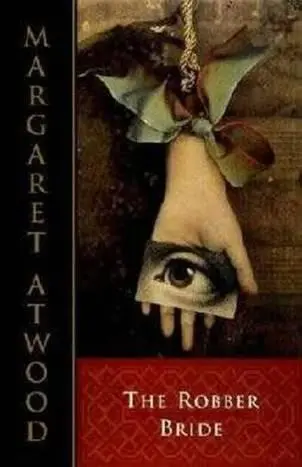
- Название:The Robber Bride
- Автор:
- Жанр:
- Год:1993
- ISBN:нет данных
- Рейтинг книги:5 / 5. Голосов: 1
-
Избранное:Добавить в избранное
- Отзывы:
-
Ваша оценка:
The Robber Bride: краткое содержание, описание и аннотация
Предлагаем к чтению аннотацию, описание, краткое содержание или предисловие (зависит от того, что написал сам автор книги «The Robber Bride»). Если вы не нашли необходимую информацию о книге — напишите в комментариях, мы постараемся отыскать её.
Even Zenia’s name is enough to provoke the old sense of outrage, of humiliation and confused pain. The truth is that at certain times—early mornings, the middle of the night—she finds it hard to believe that Zenia is really dead.’ Zenia is beautiful, smart and greedy; by turns manipulative and vulnerable, needy and ruthless; a man’s dream and a woman’s nightmare. She is also dead. Just to make absolutely sure Tony, Roz and Charis are there for the funeral. But five years on, as the three women share a sisterly lunch, the impossible happens: ‘with waves of ill will flowing out of her like cosmic radiation’, Zenia is back ...
This is the wise, unsettling, drastic story of three women whose lives share a common wound: Zenia, a woman they first met as university students in the sixties. Zenia is smart and beautiful, by turns manipulative, vulnerable—and irresistible. She has entered into their separate lives to ensnare their sympathy, betray their trust, and exploit their weaknesses. Now Zenia, thought dead, has suddenly reappeared. In this richly layered narrative, Atwood skilfully evokes the decades of the past as she retraces three women’s lives, until we are back in the present—where it’s yet to be discovered whether Zenia’s ‘pure, free-wheeling malevolence’ can still wreak havoc.
reports from the farthest reaches of the sex wars and is one of Margaret Atwood’s most intricate and subversive novels yet.
Exploring the paradox of female villainy, this tale of three fascinating women is another peerless display of literary virtuosity by the supremely gifted author of
and
. Roz, Charis and Tony all share a wound, and her name is Zenia. Beautiful, smart and hungry, by turns manipulative and vulnerable, needy and ruthless, Zenia is the turbulent center of her own neverending saga. She entered their lives in the sixties, when they were in college. Over the three decades since, she has damaged each of them badly, ensnaring their sympathy, betraying their trust, and treating their men as loot. Then Zenia dies, or at any rate the three women—with much relief -- attend her funeral. But as
begins, Roz, Charis and Tony have come together at a trendy restaraunt for their monthly lunch when in walks the seemingly resurrected Zenia...
In this consistently entertaining and profound new novel, Margaret Atwood reports from the farthest reaches of the war between the sexes with her characteristic well-crafted prose, rich and devious humor, and compassion.
The Robber Bride — читать онлайн бесплатно полную книгу (весь текст) целиком
Ниже представлен текст книги, разбитый по страницам. Система сохранения места последней прочитанной страницы, позволяет с удобством читать онлайн бесплатно книгу «The Robber Bride», без необходимости каждый раз заново искать на чём Вы остановились. Поставьте закладку, и сможете в любой момент перейти на страницу, на которой закончили чтение.
Интервал:
Закладка:
“I’m here,” she says, and he comes outside and down the back porch steps. He has his slippers on, she’s relieved to see, although not his dressing gown.
“You were gone,” he says, stooping down towards her, peering. “I couldn’t sleep:”
“Neither could I,” she says. “So I did some work, and then I came out for a breath of fresh air.”
“I don’t think you should wander around outside at night,” he says. “It’s not safe.”
“This isn’t wandering,” she says, amused. “It’s our backyard:”
“Well, there might be muggers,” he says.
She takes his arm. Under the thin cloth, under the flesh, within the arm itself, she can feel another arm forming: the arm of an old man. His eyes shine milky white in the moonlight. Blue eyes, she’s read, are not the basic colour of human eyes; probably they grew from a mutation, and are therefore more prone to cataracts. She has a quick vision of West, ten years older and stone blind, herself leading him tenderly by the hand. Training the seeing-eye dog, arranging the library of books-on-tape, the collection of electronic noises. What would he do without her?
“Come inside,” she says. “You’ll catch cold:”
“Is anything wrong?” he says.
“Not a thing,” she lies pleasantly. “I’ll make us some hot milk.”
“Good,” he says. “We can put some rum in it. Look at that moon! There’s been men playing golf, up there.”
He is so ordinary, so cherished, so familiar to her; like the smell of the skin on her own forearm, like the taste of her fingers. She would like to hang a sign on him, like the metal ones for liquor bottles or the plasticized ones at conventions: Gnissapsert On. She hugs, him, standing on tiptoe, stretching her arms as far around him as they can go. They don’t reach all the way.
How long can she protect him? How long before Zenia descends on them, with her bared incisors and outstretched talons and banshee hair, demanding what is rightfully hers?
Weasel Nights
XXVIII
Charis follows Zenia and the man who is not Billy along Queen Street, at a distance, dodging around her fellow pedestrians and occasionally bumping into them. She bumps into them because she feels that if she takes her eyes off Zenia, even for an instant, Zenia will vanish—not like a popped soap bubble, but like someone out of a TV kids’ cartoon, turning into a bunch of dots and dashes and beaming herself off to some other locale. If you knew enough about matter you could walk through walls, and maybe Zenia does know enough; although any such knowledge must have been acquired by her in a sinister way. Something involving chicken blood, and the eating of still-alive animals. The collection of other people’s toenails, pins driven in. Pain for someone.
Zenia must feel the stun-ray intensity of Charis’s gaze burning into the small of her back, because at one point she turns around and looks, and Charis darts behind a lamppost, almost braining herself in the process. When she recovers from the bright red sensation in her head (It’s not a hurt, it’s a colour) and dares to peek, Zenia and the man have stopped and are talking:
Charis wends her way a little closer, leaving a trail of hostile glances and muttered comments on the sidewalk behind her and smiling weakly at those who, with frayed cuffs and hands held out and the swollen, sunken faces of those who eat too much refined sugar, ask her for the price of a meal. Charis doesn’t have any small change, having left it as a tip at Kafay Nwar; she doesn’t have very much money, period, although more than she thought she’d have after lunch, because it was Roz who figured out the bill and her accounting procedures always end up with Charis paying less, she suspects, than she ought to. Anyway, Charis doesn’t believe in giving money to panhandlers, being of the opinion that money, like candy, is bad for people. But she would give them some of her home-grown carrots, if she could.
She makes her way to a good vantage point behind a hot dog vendor stand with a bright yellow umbrella, and lurks there, despite the offensive smell (pigs’ innards!) and the sinful cans of pop (chemicals!) lined up beside the mustard and relish (pure salt!). The vendor asks her what she’d like today, but she hardly hears him; she’s too engrossed in Zenia. Now the man with Zenia turns and his face is towards Charis, and with a jolt like putting her hand on a hotplate Charis recognizes him: he’s Roz’s son Larry.
It’s always a jump in time for Charis to see Roz’s children grown up, although of course they have grown up and she herself has watched them do it. But their aging is hard to believe. It’s like the times Augusta is in the next room and Charis walks in, expecting to see her crosslegged on the floor playing house with her Barbie doll—Charis hadn’t approved of that thing, but was too weak to forbid it—and instead finds her sitting in a chair in a wide-shouldered suit and sling-back high heels, painting her nails. Oh August! she wants to say. Where did you get those weird dress-up clothes? But those are her real clothes. It is a true head-bender to see your own daughter walking around in clothes that might have belonged to your mother.
There is Larry, then, in jeans and a fawn suede jacket, his taffy-haired head inclined ,towards Zenia, one of his hands on her arm. Little Larry! Serious little Larry, who would purse his mouth and frown at the very same time his twin sisters were laughing and pinching each other’s arms and telling each other they had big snots coming out of their noses. Charis has never been altogether comfortable about Larry, or rather about his rigidity. She’s always felt that a good massage therapist could do wonders. But Larry must have loosened up considerably if he’s been having lunch at the Toxique.
But what is he doing with Zenia? What is he doing with Zenia right now? He’s bending his face down, Zenia’s own face is reaching up like a tentacle, they’re kissing! Or so it appears. “Listen lady, you want a hot dog or not?” says the vendor. “What?” says Charis, startled.
“Crazy broad, shove off” says the vendor. “Get back in the bin. You’re bothering the customers.”
If Charis were Roz, she’d say, What customers? But if Charis were Roz she’d be in a state of deep shock. Zenia and Larry! But she’s twice his age! thinks the vestige of Charis that remains from the time when age, in female-male relationships, was supposed to matter. The present Charis tells herself not to be judgmental. Why shouldn’t women do what men have been doing for ages, namely robbing the cradle? Age is not the point. The point is not Zenia’s age, but Zenia herself. Larry might as well be drinking liquid drain cleaner.
While Charis is having this uncharitable thought, Zenia steps sideways, off the curb, and disappears into a taxi. Larry gets in after her—so it was not a goodbye kiss—and the taxi is sucked out into the current of traffic. Charis dithers. What should she do now? Her urge is to phone Roz—Roz! Roz! Help! Come quickly!—but that would do no good, because she doesn’t know where Zenia and Larry are going; and even if she did, so what? What would Roz do? Burst into their hotel room or whatever, and say Let go of my son? Larry is twenty-two, he is an adult. He can make his own decisions.
Charis sees another taxi and runs out into the street, flailing her arms. The taxi squeals to a stop in front of her and she hurries around, opens the door, and scrambles in. “Thank you,” she gasps.
“You lucky you not dead:” says the driver, who has an accent Charis can’t identify. “So, what can I do for you?”
“Follow that taxi,” says Charis. “What taxi?” says the driver.
Читать дальшеИнтервал:
Закладка:
Похожие книги на «The Robber Bride»
Представляем Вашему вниманию похожие книги на «The Robber Bride» списком для выбора. Мы отобрали схожую по названию и смыслу литературу в надежде предоставить читателям больше вариантов отыскать новые, интересные, ещё непрочитанные произведения.






Обсуждение, отзывы о книге «The Robber Bride» и просто собственные мнения читателей. Оставьте ваши комментарии, напишите, что Вы думаете о произведении, его смысле или главных героях. Укажите что конкретно понравилось, а что нет, и почему Вы так считаете.