Margaret Atwood - The Robber Bride
Здесь есть возможность читать онлайн «Margaret Atwood - The Robber Bride» весь текст электронной книги совершенно бесплатно (целиком полную версию без сокращений). В некоторых случаях можно слушать аудио, скачать через торрент в формате fb2 и присутствует краткое содержание. Год выпуска: 1993, Жанр: Современная проза, на английском языке. Описание произведения, (предисловие) а так же отзывы посетителей доступны на портале библиотеки ЛибКат.
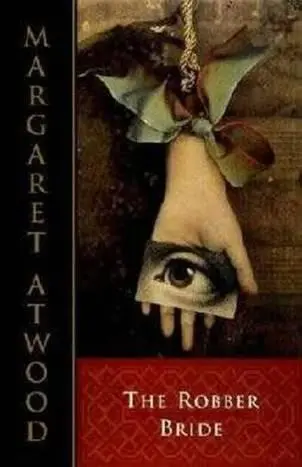
- Название:The Robber Bride
- Автор:
- Жанр:
- Год:1993
- ISBN:нет данных
- Рейтинг книги:5 / 5. Голосов: 1
-
Избранное:Добавить в избранное
- Отзывы:
-
Ваша оценка:
The Robber Bride: краткое содержание, описание и аннотация
Предлагаем к чтению аннотацию, описание, краткое содержание или предисловие (зависит от того, что написал сам автор книги «The Robber Bride»). Если вы не нашли необходимую информацию о книге — напишите в комментариях, мы постараемся отыскать её.
Even Zenia’s name is enough to provoke the old sense of outrage, of humiliation and confused pain. The truth is that at certain times—early mornings, the middle of the night—she finds it hard to believe that Zenia is really dead.’ Zenia is beautiful, smart and greedy; by turns manipulative and vulnerable, needy and ruthless; a man’s dream and a woman’s nightmare. She is also dead. Just to make absolutely sure Tony, Roz and Charis are there for the funeral. But five years on, as the three women share a sisterly lunch, the impossible happens: ‘with waves of ill will flowing out of her like cosmic radiation’, Zenia is back ...
This is the wise, unsettling, drastic story of three women whose lives share a common wound: Zenia, a woman they first met as university students in the sixties. Zenia is smart and beautiful, by turns manipulative, vulnerable—and irresistible. She has entered into their separate lives to ensnare their sympathy, betray their trust, and exploit their weaknesses. Now Zenia, thought dead, has suddenly reappeared. In this richly layered narrative, Atwood skilfully evokes the decades of the past as she retraces three women’s lives, until we are back in the present—where it’s yet to be discovered whether Zenia’s ‘pure, free-wheeling malevolence’ can still wreak havoc.
reports from the farthest reaches of the sex wars and is one of Margaret Atwood’s most intricate and subversive novels yet.
Exploring the paradox of female villainy, this tale of three fascinating women is another peerless display of literary virtuosity by the supremely gifted author of
and
. Roz, Charis and Tony all share a wound, and her name is Zenia. Beautiful, smart and hungry, by turns manipulative and vulnerable, needy and ruthless, Zenia is the turbulent center of her own neverending saga. She entered their lives in the sixties, when they were in college. Over the three decades since, she has damaged each of them badly, ensnaring their sympathy, betraying their trust, and treating their men as loot. Then Zenia dies, or at any rate the three women—with much relief -- attend her funeral. But as
begins, Roz, Charis and Tony have come together at a trendy restaraunt for their monthly lunch when in walks the seemingly resurrected Zenia...
In this consistently entertaining and profound new novel, Margaret Atwood reports from the farthest reaches of the war between the sexes with her characteristic well-crafted prose, rich and devious humor, and compassion.
The Robber Bride — читать онлайн бесплатно полную книгу (весь текст) целиком
Ниже представлен текст книги, разбитый по страницам. Система сохранения места последней прочитанной страницы, позволяет с удобством читать онлайн бесплатно книгу «The Robber Bride», без необходимости каждый раз заново искать на чём Вы остановились. Поставьте закладку, и сможете в любой момент перейти на страницу, на которой закончили чтение.
Интервал:
Закладка:
She takes off her glasses and rubs her eyes. From the street her room must look like a lighthouse, a beacon. Warm and cheerful and safe. But towers have other uses. She could empty boiling oil out the left-hand window, get a dead hit on anyone standing at the front door.
Such as West or Zenia, Zenia and West. She broods about them too much, them and their entangled bodies. Action would be better. She thinks about going over to their apartment (she knows where they’re living, it wasn’t hard to find out, West is listed in the university directory) and confronting Zenia. But what would she say? Give him back? Zenia would just laugh. “He’s a free agent,” she would say. “He’s a grown-up, he can make his own choices:” Or something like that. And if she were to turn up on Zenia’s doorstep, to whine and beg and plead, wouldn’t that be just what Zenia wanted?
She recalls a conversation she had with Zenia, early on, in the days when they were drinking coffee at Christie’s and Zenia was such a friend.
“Which would you rather have?” said Zenia. “From other people. Love, respect, or fear?”
“Respect,” said Tony. “No. Love.”
“Not me,” said Zenia. “I’d choose fear.”
“Why?” said Tony.
“It works better,” said Zenia. “It’s the only thing that works.”
Tony remembers having been impressed by this answer. But it wasn’t fear through which Zenia had stolen West. Not a show of strength. On the contrary, it was a show of weakness. The ultimate weapon.
She could always take the gun.
For almost a year there was no word from West; no mention—for instance—of lawyers or divorce; not even any petitions about the spinet and the lute, which Tony was holding captive in her new living room. Tony knew why West was so wordless. It was because he felt too awful about what he’d done, or rather what had been done to him. He felt too ashamed.
After a while he began to leave timid messages with Tony’s answering service, suggesting they get together for a beer. Tony did not reply, not because she was angry with him—she wouldn’t have been angry with him if he’d been run over by a truck, and she viewed seduction by Zenia as analogous—but because she couldn’t imagine what form any conversation between the two of them might take. How are you and Fine would about cover it. Thus when he finally turned up at her door, her new house door, the door of her nunnery, she simply stared at him.
“Let me in?” said West. Tony could tell at a glance that’it was all finished between Zenia and West. She could tell from the colour of his skin; which was a light greenish grey, and from his sagging shoulders and dejected mouth. He’d been dismissed, sacked, ejected. He’d been kicked in the nuts.
He looked so pitiful, so pulled apart—as if he’d been on the rack, as if every one of his bones had been disconnected from every other bone, leaving only a kind of anatomical jelly—that of course she let him in. Into her home, into her kitchen, where she made him a hot drink, and ultimately into her bed, where he clutched her, shivering. It was not a sexual clutch, it was the clutch of a man drowning. But Tony was in no danger of being dragged down. She felt, if anything, strangely dry; strangely detached from him. He might be drowning, but this time she was standing on the beach. Worse: with binoculars.
She began again to cook small dinners, to boil breakfast eggs. She remembered how to care for him, how to pat him back into shape, and she did it again; but this time with fewer illusions. She still loved him, but she didn’t believe he would ever love her in return, not to the same extent. How could he, after what he’d been through? Could a man with one leg tapdance?
Nor could she trust him. He might crawl out of his depression, tell her how good she was, bring home treats for supper, go through the routines; but if Zenia were to return, from wherever she had gone—and even West didn’t seem to know—then all of these fond habits would count for nothing. He was only on loan. Zenia was his addiction; one sip of her and he’d be gone. He’d be like a dog summoned by a supersonic whistle, inaudible to human ears. He would run off.
She never mentioned Zenia: to dwell on her might be to invoke her. But when Zenia died, when she was blown up and safely encapsulated and planted under a mulberry tree, Tony no longer needed to fear the doorbell. Zenia was no longer’ a menace, not in the flesh. She was a footnote. She was history.
Now Zenia is back, and hungry for blood. Not for West’s blood: West is an instrument merely. The blood Zenia wants to drink is Tony’s, because she hates Tony and always has. Tony could see that hatred in her eyes today, at the Toxique. There’s no rational explanation for such hatred, but it doesn’t surprise Tony. She seems to have been familiar with it for a long time. It’s the rage of her unborn twin.
Or so thinks Tony, removing the vestiges of Otto the Red’s fallen army with her tweezers, installing the Saracens in their freshly captured territory. The flag of Islam flies above the corpse-strewn Italian beaches, while Otto himself escapes by sea. His defeat will inspire the Slavic Wends to make another looting and pillaging foray into Germany; it will motivate uprisings, rebellions, a return to the old cannibal gods. Brutality, counter-brutality, chaos. Otto is losing his grip.
How could he have won this battle? Hard to say. By avoiding recklessness? By drawing the enemy out first to estimate its strength? Strength and cunning are both essential, but each without the other is valueless.
Tony herself, lacking strength, will have to rely on cunning. In order to defeat Zenia she will have to become Zenia, at least enough to anticipate her next move. It would help if she knew what Zenia wanted.
Tony turns out the cellar lights and climbs the stairs to the kitchen, where she runs herself a glass of water out of the spring-water dispenser foisted on her by Charis. (As full of chemicals as anything else, she knows; but at least there’s no chlorine. Eau de Swimming Pool, is what Roz calls the Toronto tap water.) Then she unlocks the back door and creeps out into the yard, into its flora of dry thistles and tree trunks and unpruned shrubs, its fauna of mice. Raccoons are regulars; squirrels make untidy nests in the branches. Once they had a skunk back here, hunting for grubs, rolling up what vestiges of turf remain; once a chipmunk, miraculous survivor of the neighbourhood gamut of cats.
It refreshes Tony to sneak around at night, from time to time. She enjoys being awake when others are asleep. She enjoys occupying dark space. Maybe she will see things other people can’t see, witness nocturnal events, gain rare insights. She used to think that as a child, too—tiptoeing through the house, listening at doors. It didn’t work then, either.
From this vantage point she has a novel view of her own house: the view of a lurking enemy commando. She thinks about how the house would look if she or anyone else were to blow it up. Study, bedroom, kitchen, and hall, suspended in fiery mid-air. Her house is no protection for her, really. Houses are too fragile.
The kitchen lights go on, the back door opens. It’s West, a gangling silhouette, backlighted, his face indistinct. “Tony?” he calls anxiously. “Are you out there?”
Tony savours his anxiety, just a little. True, she adores him, but there’s no such thing as an unmixed motive. She waits for a moment, listening, in her moonlit weedy garden, blending—possibly—with the dappled silvery shadows cast by the trees. Is she invisible? The legs of West’s pyjamas are too short, and so are the arms; they lend him an untended air, like that of a Frankenstein monster. Yet who could have tended him—over the years, and apart from finding some pyjamas that would fit—better than Tony? If she had done it unwillingly she might deserve to feel aggrieved. Is that how grievance works? I’ve given you the best years of my life! But for a gift you don’t expect a return. And who would she have given them to otherwise; those years?
Читать дальшеИнтервал:
Закладка:
Похожие книги на «The Robber Bride»
Представляем Вашему вниманию похожие книги на «The Robber Bride» списком для выбора. Мы отобрали схожую по названию и смыслу литературу в надежде предоставить читателям больше вариантов отыскать новые, интересные, ещё непрочитанные произведения.






Обсуждение, отзывы о книге «The Robber Bride» и просто собственные мнения читателей. Оставьте ваши комментарии, напишите, что Вы думаете о произведении, его смысле или главных героях. Укажите что конкретно понравилось, а что нет, и почему Вы так считаете.