Margaret Atwood - The Robber Bride
Здесь есть возможность читать онлайн «Margaret Atwood - The Robber Bride» весь текст электронной книги совершенно бесплатно (целиком полную версию без сокращений). В некоторых случаях можно слушать аудио, скачать через торрент в формате fb2 и присутствует краткое содержание. Год выпуска: 1993, Жанр: Современная проза, на английском языке. Описание произведения, (предисловие) а так же отзывы посетителей доступны на портале библиотеки ЛибКат.
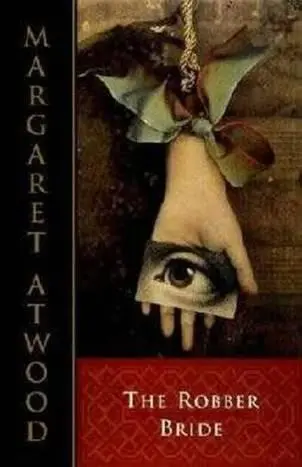
- Название:The Robber Bride
- Автор:
- Жанр:
- Год:1993
- ISBN:нет данных
- Рейтинг книги:5 / 5. Голосов: 1
-
Избранное:Добавить в избранное
- Отзывы:
-
Ваша оценка:
The Robber Bride: краткое содержание, описание и аннотация
Предлагаем к чтению аннотацию, описание, краткое содержание или предисловие (зависит от того, что написал сам автор книги «The Robber Bride»). Если вы не нашли необходимую информацию о книге — напишите в комментариях, мы постараемся отыскать её.
Even Zenia’s name is enough to provoke the old sense of outrage, of humiliation and confused pain. The truth is that at certain times—early mornings, the middle of the night—she finds it hard to believe that Zenia is really dead.’ Zenia is beautiful, smart and greedy; by turns manipulative and vulnerable, needy and ruthless; a man’s dream and a woman’s nightmare. She is also dead. Just to make absolutely sure Tony, Roz and Charis are there for the funeral. But five years on, as the three women share a sisterly lunch, the impossible happens: ‘with waves of ill will flowing out of her like cosmic radiation’, Zenia is back ...
This is the wise, unsettling, drastic story of three women whose lives share a common wound: Zenia, a woman they first met as university students in the sixties. Zenia is smart and beautiful, by turns manipulative, vulnerable—and irresistible. She has entered into their separate lives to ensnare their sympathy, betray their trust, and exploit their weaknesses. Now Zenia, thought dead, has suddenly reappeared. In this richly layered narrative, Atwood skilfully evokes the decades of the past as she retraces three women’s lives, until we are back in the present—where it’s yet to be discovered whether Zenia’s ‘pure, free-wheeling malevolence’ can still wreak havoc.
reports from the farthest reaches of the sex wars and is one of Margaret Atwood’s most intricate and subversive novels yet.
Exploring the paradox of female villainy, this tale of three fascinating women is another peerless display of literary virtuosity by the supremely gifted author of
and
. Roz, Charis and Tony all share a wound, and her name is Zenia. Beautiful, smart and hungry, by turns manipulative and vulnerable, needy and ruthless, Zenia is the turbulent center of her own neverending saga. She entered their lives in the sixties, when they were in college. Over the three decades since, she has damaged each of them badly, ensnaring their sympathy, betraying their trust, and treating their men as loot. Then Zenia dies, or at any rate the three women—with much relief -- attend her funeral. But as
begins, Roz, Charis and Tony have come together at a trendy restaraunt for their monthly lunch when in walks the seemingly resurrected Zenia...
In this consistently entertaining and profound new novel, Margaret Atwood reports from the farthest reaches of the war between the sexes with her characteristic well-crafted prose, rich and devious humor, and compassion.
The Robber Bride — читать онлайн бесплатно полную книгу (весь текст) целиком
Ниже представлен текст книги, разбитый по страницам. Система сохранения места последней прочитанной страницы, позволяет с удобством читать онлайн бесплатно книгу «The Robber Bride», без необходимости каждый раз заново искать на чём Вы остановились. Поставьте закладку, и сможете в любой момент перейти на страницу, на которой закончили чтение.
Интервал:
Закладка:
She loves West, though. That much is very clear to her. And isn’t it a matter of saving his life? It is. So heroism and self-sacrifice are called for.
Tony grits her teeth and sets out to seduce West. She is every bit as inept at it as she has feared she’ll be. She tries bringing some candles over to West’s apartment and cooking a candlelight dinner, but her activity in the kitchen seems only to depress West further, because Zenia was such a marvellous and inventive cook; in addition to which Tony burns the tuna casserole. She takes him to movies, leading him to cheap and
Silly horror films that give her a chance to clutch his hand in the dark when the vampires bare their fangs and the rubber head rolls down the staircase. But whatever she does West chooses to regard as simply the ministrations of friendship: Or so it appears to Tony. To her despair, but also—partly—to her relief, he views her as a loyal sidekick, and that is that.
It’s June, it’s warm, the university term is over but Tony has signed up for a summer course, as usual, so she won’t have to move out of her room at McClung Hall. One afternoon she goes over to West’s place to do his accumulated mildewed dishes and to take him out for his walk, and finds him asleep on his bed. His eyelids are curved and pure, like those on carved tombstone saints; one arm is thrown up over his head. Breath goes into him, breath goes out: she is so grateful that he is still, as yet, alive. His hair—uncut for weeks—is ragged on his head. He looks so sad lying there, so deserted, so lacking in threat, that she sits carefully down beside him, bends gingerly over, and gives him a kiss on the forehead.
West doesn’t open his eyes, but his arms come around her. “You’re so warm, he murmurs into her hair. “You’re so kind to me.
Nobody has ever called Tony warm and kind before. No man has ever put his arms around her. While she is still getting used to it, West begins to kiss her. He gives her small kisses, all over her face. His eyes are still closed. “Don’t go away,” he whispers. “Don’t move.”
Tony can’t move anyway, because she is paralyzed with apprehension. She is dismayed by her own lack of bravery, and also by the sheer magnitude of West’s body, now that she’s so close to it. She can actually see the stubs of whiskers coming out of his chin! Usually they’re too high up for that. It’s like seeing the ants on a falling boulder, just before it crushes you. She feels acutely menaced.
But West is very gradual. He slides off her glasses; then he undoes one button at a time, fumbling as if his fingers are asleep, and pulls his raspy blanket over her, and smooths her as if she’s a velvet cushion, and although it does indeed hurt, as the books have said, it’s less like being torn apart by wild beasts than she’d supposed, given all that growling that used to go on with Zenia, and more like falling into a river, because West is what other people call him, a long drink of water, and Tony is so thirsty, she’s parched, she’s been wandering in the desert all of these years, and no-%w at last somebody truly needs her for something, and in the end she discovers what she’s always wanted to know: she is bigger inside than out.
In this way Tony, proud of herself and filled with the joy of giving, drags West from the field of defeat and carts him off behind the lines, and tends his wounds, and mends him. He has been broken, but he knits together after a time. Though not perfectly. Tony is conscious of the scar, which takes the form of a low-level anxiety: West is convinced he’s failed Zenia. He thinks she’s been tossed out into the back alley of the world, to fend (badly) for herself; because he wasn’t capable enough or smart enough or simply enough for her. He thinks she needs his protection, but Tony must keep her sneers about this to herself. There is no rival like an absent one. Zenia is not there to defend herself, and for this reason Tony can’t attack her. Chivalry as well as wisdom ties her hands.
West goes back to university in the fall and makes up the courses he’s missed. Tony is now in graduate school. They rent a small apartment together and share tidy breakfasts and sweet, kindly nights, and Tony is happier than she’s ever been.
Time passes and they both get their first postgraduate degrees, and both of them acquire teaching assistantships. After a while they get married, at City Hall; the party afterwards is small and intellectual in tone, although Roz is there, married herself already. Her husband Mitch can’t come, she explains; he’s away on a business trip. She gives Tony an enveloping hug and a silver telephone cover, and after she leaves (early), Tony’s historical and West’s musical colleagues ask with ironic eyebrows who on earth that was. Her presence however has reassured Tony: although her own parents’ marriage was a disaster, marriage itself must be possible and even normal if Roz is doing it.
West and Tony move into a larger apartment, and West buys a spinet, to go with his lute. He has a suit now, and several ties, and eyeglasses. Tony buys a coffee grinder and a roasting pan, and a copy of TheJoy of Cooking, in which she looks up esoteric recipes. She makes a hazelnut torte, and buys a fondue dish with long forks, and some skewers for making shish kebab.
More time passes. Tony wonders about having babies, but doesn’t bring up the subject because West has never mentioned it. There are peace marches in the streets now, and confused sitins at the university. West brings home some marijuana, and they smoke it together, and are frightened together by noises on the street outside, and don’t do it again.
Their love is gentle and discreet. If it were a plant it would be a fern, light green and feathery and delicate; if a musical instrument, a flute. If a painting it would he a water lily by Monet, one of the more pastel renditions, with its liquid depths, its reflections, its different falls of light. “You’re my best friend,” West tells Tony, stroking her hair back from her forehead. “I owe you a lot:” Tony is touched by his gratitude, and too young to be suspicious of it.
They never mention Zenia, Tony because she thinks it will upset West, West because he thinks it will upset Tony. Zenia does not go away, however. She hovers, growing fainter, true, but still there, like the blue haze of cigarette smoke in a room after the cigarette has been put out. Tony can smell her.
One evening Zenia appears at their door. She knocks like anybody else and Tony opens, thinking it is a Girl Guide selling cookies, or else the Jehovah’s Witnesses. When she sees Zenia standing there she can’t think of what to say. She’s holding a skewer in her hand, with chunks of lamb and tomato and green pepper threaded onto it, and for an instant she has a vision of herself plunging the skewer into Zenia, into where her heart should be, but she doesn’t do this. She just stands there with her mouth open, and Zenia smiles at her and says, “Tony darling, it was such work to track you down!” and laughs with her white teeth. She’s thinner now, and even more sophisticated. She’s wearing a black mini-skirt, a black shawl with jet beading and long silken fringes, fishnet tights, and knee-high lace-up high-heeled boots.
“Come in,” says Tony, motioning with her skewer. Lamb blood drips onto the floor.
“Who is it?” calls West from the living room, where he’s playing Purcell on the spinet. He likes to play while Tony is making dinner: it’s one of their little rituals.
Nobody, Tony wants to say. They had the wrong address. They went away. She wants to thrust her hands at Zenia, push her back, slam the door. But Zenia is already over the threshold.
“West! My God!” she says, striding into the living room, holding out her arms to him. “Long time no see!” West can’t believe it. His eyes behind his rimless glasses are the shocked eyes of a burned baby, the amazed eyes of an interstellar traveller. He doesn’t get up, he doesn’t move. Zenia takes his upturned face in her two hands and kisses him twice, once on each cheek, and then a third time on the forehead. The fringes of her shawl caress him, his mouth is level with her chest. “It’s so good to see old friends,” says Zenia, breathing out.
Читать дальшеИнтервал:
Закладка:
Похожие книги на «The Robber Bride»
Представляем Вашему вниманию похожие книги на «The Robber Bride» списком для выбора. Мы отобрали схожую по названию и смыслу литературу в надежде предоставить читателям больше вариантов отыскать новые, интересные, ещё непрочитанные произведения.


Обсуждение, отзывы о книге «The Robber Bride» и просто собственные мнения читателей. Оставьте ваши комментарии, напишите, что Вы думаете о произведении, его смысле или главных героях. Укажите что конкретно понравилось, а что нет, и почему Вы так считаете.