Margaret Atwood - The Robber Bride
Здесь есть возможность читать онлайн «Margaret Atwood - The Robber Bride» весь текст электронной книги совершенно бесплатно (целиком полную версию без сокращений). В некоторых случаях можно слушать аудио, скачать через торрент в формате fb2 и присутствует краткое содержание. Год выпуска: 1993, Жанр: Современная проза, на английском языке. Описание произведения, (предисловие) а так же отзывы посетителей доступны на портале библиотеки ЛибКат.
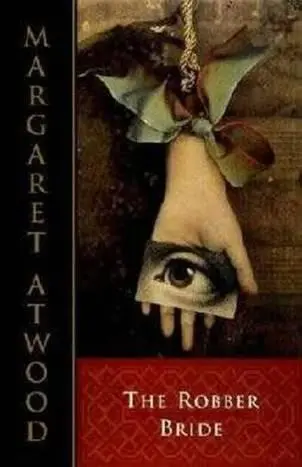
- Название:The Robber Bride
- Автор:
- Жанр:
- Год:1993
- ISBN:нет данных
- Рейтинг книги:5 / 5. Голосов: 1
-
Избранное:Добавить в избранное
- Отзывы:
-
Ваша оценка:
The Robber Bride: краткое содержание, описание и аннотация
Предлагаем к чтению аннотацию, описание, краткое содержание или предисловие (зависит от того, что написал сам автор книги «The Robber Bride»). Если вы не нашли необходимую информацию о книге — напишите в комментариях, мы постараемся отыскать её.
Even Zenia’s name is enough to provoke the old sense of outrage, of humiliation and confused pain. The truth is that at certain times—early mornings, the middle of the night—she finds it hard to believe that Zenia is really dead.’ Zenia is beautiful, smart and greedy; by turns manipulative and vulnerable, needy and ruthless; a man’s dream and a woman’s nightmare. She is also dead. Just to make absolutely sure Tony, Roz and Charis are there for the funeral. But five years on, as the three women share a sisterly lunch, the impossible happens: ‘with waves of ill will flowing out of her like cosmic radiation’, Zenia is back ...
This is the wise, unsettling, drastic story of three women whose lives share a common wound: Zenia, a woman they first met as university students in the sixties. Zenia is smart and beautiful, by turns manipulative, vulnerable—and irresistible. She has entered into their separate lives to ensnare their sympathy, betray their trust, and exploit their weaknesses. Now Zenia, thought dead, has suddenly reappeared. In this richly layered narrative, Atwood skilfully evokes the decades of the past as she retraces three women’s lives, until we are back in the present—where it’s yet to be discovered whether Zenia’s ‘pure, free-wheeling malevolence’ can still wreak havoc.
reports from the farthest reaches of the sex wars and is one of Margaret Atwood’s most intricate and subversive novels yet.
Exploring the paradox of female villainy, this tale of three fascinating women is another peerless display of literary virtuosity by the supremely gifted author of
and
. Roz, Charis and Tony all share a wound, and her name is Zenia. Beautiful, smart and hungry, by turns manipulative and vulnerable, needy and ruthless, Zenia is the turbulent center of her own neverending saga. She entered their lives in the sixties, when they were in college. Over the three decades since, she has damaged each of them badly, ensnaring their sympathy, betraying their trust, and treating their men as loot. Then Zenia dies, or at any rate the three women—with much relief -- attend her funeral. But as
begins, Roz, Charis and Tony have come together at a trendy restaraunt for their monthly lunch when in walks the seemingly resurrected Zenia...
In this consistently entertaining and profound new novel, Margaret Atwood reports from the farthest reaches of the war between the sexes with her characteristic well-crafted prose, rich and devious humor, and compassion.
The Robber Bride — читать онлайн бесплатно полную книгу (весь текст) целиком
Ниже представлен текст книги, разбитый по страницам. Система сохранения места последней прочитанной страницы, позволяет с удобством читать онлайн бесплатно книгу «The Robber Bride», без необходимости каждый раз заново искать на чём Вы остановились. Поставьте закладку, и сможете в любой момент перейти на страницу, на которой закончили чтение.
Интервал:
Закладка:
“There’s one thing about being an orphan, though,” says Zenia thoughtfully. Two jets of smoke come out of her perfect nostrils. “You don’t have to live up to anyone else’s good opinion of you.” She drinks the dregs of her coffee, butts out her cigarette. “You can be whoever you like.”
Tony looks at her, looks into her blue-black eyes, and sees her own reflection: herself, as she would like to be. Tnomerf Ynot. Herself turned inside out.
NT—V%r XXX
Under the circumstances, what can Tony withhold? Not very much.
Certainly not money. Zenia has to eat—Zenia, and West too, of course—and how are they to do that unless Tony, replete with the wealth of the dead, will lend Zenia the odd twenty, the odd fifty, the odd hundred, from time to time? And then how is Zenia to pay it back, things being what they are? She has a scholarship of some kind, or so she has implied, but it doesn’t cover the whole shot. In the distant past she panhandled and to a certain extent hooked her way through Europe and across the ocean; although—she tells Tony, as Tony’s eyes widen and blink—she’d much rather roll a nice middle-class drunk any time, it’s quicker and a good deal cleaner. In the more recent past she’s made extra cash by waiting on tables and by cleaning washrooms in second-rate hotels—drudgery is the price of virtue—but when she does that she’s too tired to study.
She’s too tired anyway. Love takes it out of you, and lovenests require feathering, and who does the cooking and laundry and cleaning up around Zenia’s place? Not West, poor angel; man-like, he has trouble cooking an egg or making himself a cup of tea. (Ah, thinks Tony, I could make his tea! She longs for such simple domestic chores, to offer up to West. But she censors this almost immediately. Even the boiling of West’s tea-water would feel like a betrayal of Zenia.)
Also, Zenia indicates, it costs to defy the social order: freedom is not free, it comes with a price. The front lines of liberation get the first bullets. Already Zenia and West aré-paying more than they should for that rat-bag of an apartment because the dirty-minded hypocrite of a landlord has come to suspect they aren’t married. Toronto is so puritanical!
Then how can Tony refuse when Zenia comes to her room one evening, in tears and minus a term paper for Modern History, with barely a moment to spare? “If I flunk this course it’s game over,” she says. “I’ll have to leave university, it’s back on the streets for me. Shit, you don’t know, Tony—you just don’t know! It’s such hell, it’s so degrading, i can’t go back to that! “
Tony is bewildered by her tears; she has thought of Zenia as tearless, more tearless even than herself. And now there are not only tears but many tears, rolling fluently down Zenia’s strangely immobile face, which always looks made-up even when it isn’t. On some other woman the mascara would run; but that isn’t mascara, it’s Zenia’s real eyelashes.
It ends with Tony writing two term papers, one for herself and one for Zenia. She does this nervously: she knows it’s highly risky. She’s stepping over a line, a line she respects. But Zenia is doing Tony’s rebelliousness for her so it’s only fair that Tony should write Zenia’s term paper. Or that is the equation Tony makes, at some level below words. Tony will be Zenia’s right hand, because Zenia is certainly Tony’s left one.
Neither of the term papers is about battles. The Modern History professor, bald-headed, squinty-eyed, leatherelbow-patched Dr. Welch, is more interested in economics than he is in bloodshed, and he has made it clear to Tony—who suggested the out-of-control sack of Constantinople by the Crusaders—that he does not consider war an appropriate subject for girls. So both of the papers are about money. Zenia’s is on the Slavic slave trade with the Byzantine Empire—Tony picked this because of Zenia’s Russian ancestors—and Tony’s is about the tenth-century Byzantine silk monopoly. .
Byzantium interests Tony. A lot of people died unpleasantly there, most of them for trivial reasons; you could be torn in pieces for dressing wrong, you could be disembowelled for smirking. Twenty-nine Byzantine emperors were assassinated by their rivals. Blinding was a favourite method; that, and jointby-joint dismemberment, and slow starvation.
If the professor hadn’t been so squeamish Tony would have chosen to write about the assassination of the Byzantine emperor Nicephorus Phocas by his beautiful wife, the empress Theophano. Theophano started life as a concubine and worked her way to the top: When her autocratic husband became too old and ugly for her she had him killed. Not only that, she helped to do it. On December 1, 969, she persuaded him to leave his bedroom door unlocked, promising sexual favours, no doubt, and in the middle of the night she entered his room with her younger, better-looking lover, John Tsimisces—who would later have her imprisoned in a convent—and a band of mercenaries. They woke Nicephorus up—he was sleeping on a panther skin, a nice touch—and then John Tsimisces split his head open with a sword. John was laughing.
How do we know that? thinks Tony. Who was there to record it? Was Theophano laughing, as well? She speculates about why they woke him up. It was a sadistic touch; or perhaps it was revenge. By all accounts Nicephorus was a tyrant: proud, capricious, cruel. She pictures Theophano on her way to the assassination, with a purple silk mantle thrown over her shoulders and gold sandals. Her dark hair swirls around her head; her pale face shines in the torchlight. She walks first, and quickly, because the most important element in any act of treachery is surprise. Behind her come the men with swords.
Theophano is smiling, but Tony doesn’t see it as a sinister smile. Instead it’s gleeful: the smile of a child about to put its hands over someone’s eyes from behind. Guess who?
There’s an element of sheer mischief in history, thinks Tony. Perverse joy. Outrageousness for its own sake. What is an ambush, really, but a kind of military practical joke? Hiding yourself, then jumping out and yelling Surprise! But none of the historians ever mentions it, this quality of giddy hide-and-seek. They want the past to be serious. Dead serious. She muses over the phrase: if dead is serious, is alive then frivolous? So the phrasemakers would have it.
Maybe Theophano woke up Nicephorus because she wanted him to appreciate her cleverness before he died. She wanted him to see how duplicitous she was, and how mistaken he had been about her. She wanted him to get the joke.
Both of the papers are up to Tony’s usual standard; if anything, the silk monopoly one is better. But Zenia’s gets an A and Tony’s a mere A minus. Zenia’s reputation for brilliance has affected even Professor Welch, it seems. Or perhaps it’s the way she looks. Does Tony mind? Not particularly. But she notices.
She also feels remorseful. Up until now she has always paid the strictest attention to academic decorum. She never borrows other people’s notes, although she lends them; her footnotes are impeccable; and she is well aware that writing a term paper for someone else is cheating. But it isn’t as if there’s any benefit to herself. Her motives are of the best: how could she turn away her friend? How could she condemn Zenia to a life of sexual bondage? It isn’t in her. Nevertheless, her conscience troubles her, so maybe it’s justice that she’s received a mere A minus. If this is the only punishment in store for her she’ll have gotten off lightly.
Tony composed her two term papers in March, when the snow was melting and the sun was warming up, and the snowdrops were appearing through the mud and old newspapers aftd decaying leaves on front lawns, and people were becoming restive inside their winter coats. Zenia was becoming restive too. She and Tony no longer spent their evenings drinking coffee at Christie’s Coffee Shop on Queen East; they no longer talked intensely, far into what Tony considered the night. Partly Tony didn’t have the time, because the final exams were coming up and her own brilliance was something she had to work at. But also it was as if Zenia had learned all she needed to know about Tony.
Читать дальшеИнтервал:
Закладка:
Похожие книги на «The Robber Bride»
Представляем Вашему вниманию похожие книги на «The Robber Bride» списком для выбора. Мы отобрали схожую по названию и смыслу литературу в надежде предоставить читателям больше вариантов отыскать новые, интересные, ещё непрочитанные произведения.


Обсуждение, отзывы о книге «The Robber Bride» и просто собственные мнения читателей. Оставьте ваши комментарии, напишите, что Вы думаете о произведении, его смысле или главных героях. Укажите что конкретно понравилось, а что нет, и почему Вы так считаете.