Margaret Atwood - The Robber Bride
Здесь есть возможность читать онлайн «Margaret Atwood - The Robber Bride» весь текст электронной книги совершенно бесплатно (целиком полную версию без сокращений). В некоторых случаях можно слушать аудио, скачать через торрент в формате fb2 и присутствует краткое содержание. Год выпуска: 1993, Жанр: Современная проза, на английском языке. Описание произведения, (предисловие) а так же отзывы посетителей доступны на портале библиотеки ЛибКат.
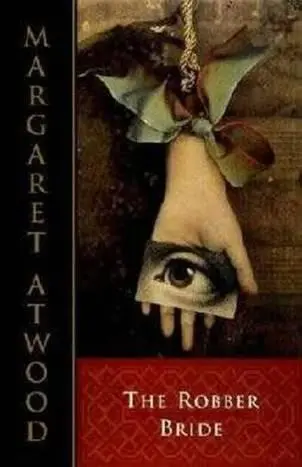
- Название:The Robber Bride
- Автор:
- Жанр:
- Год:1993
- ISBN:нет данных
- Рейтинг книги:5 / 5. Голосов: 1
-
Избранное:Добавить в избранное
- Отзывы:
-
Ваша оценка:
The Robber Bride: краткое содержание, описание и аннотация
Предлагаем к чтению аннотацию, описание, краткое содержание или предисловие (зависит от того, что написал сам автор книги «The Robber Bride»). Если вы не нашли необходимую информацию о книге — напишите в комментариях, мы постараемся отыскать её.
Even Zenia’s name is enough to provoke the old sense of outrage, of humiliation and confused pain. The truth is that at certain times—early mornings, the middle of the night—she finds it hard to believe that Zenia is really dead.’ Zenia is beautiful, smart and greedy; by turns manipulative and vulnerable, needy and ruthless; a man’s dream and a woman’s nightmare. She is also dead. Just to make absolutely sure Tony, Roz and Charis are there for the funeral. But five years on, as the three women share a sisterly lunch, the impossible happens: ‘with waves of ill will flowing out of her like cosmic radiation’, Zenia is back ...
This is the wise, unsettling, drastic story of three women whose lives share a common wound: Zenia, a woman they first met as university students in the sixties. Zenia is smart and beautiful, by turns manipulative, vulnerable—and irresistible. She has entered into their separate lives to ensnare their sympathy, betray their trust, and exploit their weaknesses. Now Zenia, thought dead, has suddenly reappeared. In this richly layered narrative, Atwood skilfully evokes the decades of the past as she retraces three women’s lives, until we are back in the present—where it’s yet to be discovered whether Zenia’s ‘pure, free-wheeling malevolence’ can still wreak havoc.
reports from the farthest reaches of the sex wars and is one of Margaret Atwood’s most intricate and subversive novels yet.
Exploring the paradox of female villainy, this tale of three fascinating women is another peerless display of literary virtuosity by the supremely gifted author of
and
. Roz, Charis and Tony all share a wound, and her name is Zenia. Beautiful, smart and hungry, by turns manipulative and vulnerable, needy and ruthless, Zenia is the turbulent center of her own neverending saga. She entered their lives in the sixties, when they were in college. Over the three decades since, she has damaged each of them badly, ensnaring their sympathy, betraying their trust, and treating their men as loot. Then Zenia dies, or at any rate the three women—with much relief -- attend her funeral. But as
begins, Roz, Charis and Tony have come together at a trendy restaraunt for their monthly lunch when in walks the seemingly resurrected Zenia...
In this consistently entertaining and profound new novel, Margaret Atwood reports from the farthest reaches of the war between the sexes with her characteristic well-crafted prose, rich and devious humor, and compassion.
The Robber Bride — читать онлайн бесплатно полную книгу (весь текст) целиком
Ниже представлен текст книги, разбитый по страницам. Система сохранения места последней прочитанной страницы, позволяет с удобством читать онлайн бесплатно книгу «The Robber Bride», без необходимости каждый раз заново искать на чём Вы остановились. Поставьте закладку, и сможете в любой момент перейти на страницу, на которой закончили чтение.
Интервал:
Закладка:
Somehow or other she ends up staying for dinner, because who are Tony and West to hold grudges, and what is there to hold them about anyway? Wasn’t it Zenia’s defection that brought them together? And aren’t they touchingly happy? Zenia tells them they are. They’re just like a couple of kids, she says, kids on one long picnic, playing sand castles at the beach. So darling! She says she’s delighted to see it. Then she sighs, implying that life has not treated her as well as it’s been treating them. But then, she hasn’t had their advantages. She s-lived on the edges, out there where it’s dark and sharp and there are scarcities. She’s had to forage.
Where has she been? Well, Europe, she says, gesturing towards a higher, a deeper culture; and the States, where the big folks play; and the Middle East. (With a wave of her hand she invokes deserts, date palms, mystic knowledge, and better shish kebab than anything capable of being grilled in Tony’s wee Canadian oven.) She avoids saying what she’s been doing in these places. This and that, she says. She laughs, and says she has a short attention span.
About the money she made off with she tactfully says nothing, and Tony decides that it would be parochial of her to bring it up. Zenia does say, “Oh, there’s your wonderful lute, I always loved it,” as if she has no memory whatsoever of her own kidnapping of this instrument. West seems to have no memory of it either. At Zenia’s request he plays a few of the old songs; though he doesn’t do folksongs much any more, he says. By now he’s into a cross-cultural study of polyphonal chants.
No memory, no memory. Does nobody but Tony have any memory at all? Apparently not; or rather West has no memory, and Zenia’s is highly selective. She gives little nudges, little hints, and assumes a rueful expression: she has regrets, is what she implies, but she has sacrificed her own happiness for that of West. Hearth and home are what he needs, not a feckless, mossless rover like Zenia, and Tony is such a busy little housewife—isn’t this cunning food! West is where he belongs: like a houseplant in the right window, just look how he’s flourishing!
“You two are so lucky,” she whispers to Tony, a mournful catch in her voice. West overhears, as he is meant to.
“Where are you staying?” Tony asks politely, meaning, when are you leaving.
“Oh, you know,” says Zenia with a shrug. “Here and there. I live from hand to mouth—or from feast to famine. Just like the old days, remember, West? Remember our feasts?” She’s eating a Viennese chocolate, from a box West brought home to surprise Tony. He often brings her little treats, little atonements for the part of himself he’s unable to give her. Zenia licks the dark chocolate from her fingers, one by one, gazing at West from between her eyelashes. “Delicious,” she says richly.
Tony can’t believe that West doesn’t see through all this, this blandishment and prestidigitation, but he doesn’t. He has a blind spot: his blind spot is Zenia’s unhappiness. Or else her body. Men, thinks Tony with new bitterness, can’t seem to tell one from the other.
A few days after that, West comes home later than usual. “I took Zenia out for a beer,” he tells Tony. He has the air of a man who is being scrupulously honest even though he’s been tempted not to be. “She’s having a rough time. She’s a very vulnerable person. I’m quite worried about her.”
Vulnerable? Where did West pick up that word? Tony thinks Zenia is about as vulnerable as a cement block, but she doesn’t say so. Instead she says something almost as bad. “I suppose she wants some money.”
West looks hurt. “Why don’t you like her?” he asks. “You used to be such good friends. She’s noticed, you know. She’s upset about it:”
“Because of what she did to you,” says Tony indignantly. “That’s why I don’t like her!”
West is puzzled. “What did she do to me?” he asks. He really doesn’t know.
In no time at all—actually in about two weeks—Zenia has reclaimed West, in the same way she might reclaim any piece of property belonging to her, such as a suitcase left at a train station. She simply tucks West under her arm and walks off with him. It doesn’t look like that to him, naturally; just to Tony. To West it looks as if he’s on a rescue mission, and who is Tony to deny the attraction of that?
“I admire you a lot,” he says to Tony. “You’ll always be my best friend. But Zenia needs me.”
“What does she need you for?” says Tony in a small clear voice.
“She’s suicidal,” says West. “You’re the strong one, Tony. You’ve always been so strong.”
“Zenia is as strong as an ox,” says Tony.
“It’s just an act,” says West. “I always knew that about her. She’s a deeply scarred person:” Deeply scarred, thinks Tony. That can’t be anyone’s vocabulary but Zenia’s. West has been hypnotized: it’s Zenia talking, from the inside of his head. He goes on: “She’s going to fall apart completely unless I do something:”
Something means that West will move in with Zenia. This, according to West, will give Zenia back some of her lost confidence in herself. Tony wants to hoot with derisive laughter, but how can she? West is gazing at her earnestly, willing her to understand and to absolve him and to give him her blessing, just as if he were still in control of his own brain. But instead he’s a zombie.
He’s holding Tony’s hands, at the kitchen table. She withdraws them and gets up and goes into her study, and shuts the door, and immerses herself in the Battle of Waterloo. After it was over the victorious soldiers celebrated, and drank all night, and roasted the flesh of the butchered cavalry horses on the metal breastplates of the dead, leaving the wounded to moan and scream in the background. Winning intoxicates you, and numbs you to the sufferings of others.
How well she did it, thinks Tony. How completely she took us in. In the war of the sexes, which is nothing like a real war but is instead a kind of confused scrimmage in which people change allegiances at a moment’s notice, Zenia was a double agent. Or not even that, because Zenia wasn’t working for one side or the other. She was on no side but her own. It’s even possible that her antics—Tony is old enough, now, to think of them as antics—had no motive other than her own whim, her own Byzantine notions of pleasure. Maybe she hed and tortured just for the fun of it.
Though part of what Tony feels is admiration. Despite her disapproval, her dismay, all her past anguish, there’s a part of her that has wanted to cheer Zenia on, even to encourage her. To make her into a saga. To participate in her daring, her contempt for almost everything, her rapacity and lawlessness. It’s like the time her mother disappeared downhill on the toboggan. No! No! On! On!
But the recognition of that came later. At the time of West’s defection she was devastated. (Devastate, verb, to lay waste, to render desolate; a familiar enough term in the literature of war, thinks Tony in the cellar, surveying her sand-table and the ruins of Otto’s army, and eating another clove.) She refused to cry, she refused to howl. She listened to West’s footsteps as he tiptoed around the apartment, as if in a hospital. When she heard the apartment door shut behind him she scuttled out and double-locked it, and put on the chain. Then she went into the bathroom and locked that door, too. She took off her wedding ring (simple, gold, no diamonds), intending to drop it down the toilet, but instead she placed it on a cabinet shelf, next to the disinfectant. Then she subsided onto the bathroom floor.
American Standard, said the toilet. Dradnats Nacirema. A Bulgarian skin ointment.
After a while she came out of the bathroom because the phone was ringing. She stood there looking at it, it and its bridal silver telephone cover; it continued to Ping. She lifted it. then dropped it down again. There was nobody she wanted to talk to. She wandered into the kitchen but there was nothing she wanted to eat.
Читать дальшеИнтервал:
Закладка:
Похожие книги на «The Robber Bride»
Представляем Вашему вниманию похожие книги на «The Robber Bride» списком для выбора. Мы отобрали схожую по названию и смыслу литературу в надежде предоставить читателям больше вариантов отыскать новые, интересные, ещё непрочитанные произведения.






Обсуждение, отзывы о книге «The Robber Bride» и просто собственные мнения читателей. Оставьте ваши комментарии, напишите, что Вы думаете о произведении, его смысле или главных героях. Укажите что конкретно понравилось, а что нет, и почему Вы так считаете.