Margaret Atwood - The Robber Bride
Здесь есть возможность читать онлайн «Margaret Atwood - The Robber Bride» весь текст электронной книги совершенно бесплатно (целиком полную версию без сокращений). В некоторых случаях можно слушать аудио, скачать через торрент в формате fb2 и присутствует краткое содержание. Год выпуска: 1993, Жанр: Современная проза, на английском языке. Описание произведения, (предисловие) а так же отзывы посетителей доступны на портале библиотеки ЛибКат.
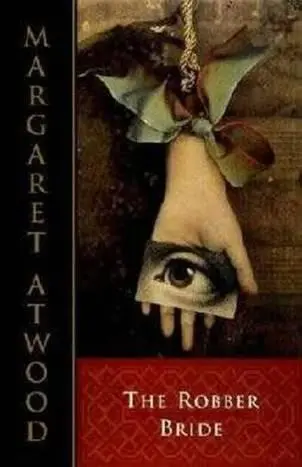
- Название:The Robber Bride
- Автор:
- Жанр:
- Год:1993
- ISBN:нет данных
- Рейтинг книги:5 / 5. Голосов: 1
-
Избранное:Добавить в избранное
- Отзывы:
-
Ваша оценка:
The Robber Bride: краткое содержание, описание и аннотация
Предлагаем к чтению аннотацию, описание, краткое содержание или предисловие (зависит от того, что написал сам автор книги «The Robber Bride»). Если вы не нашли необходимую информацию о книге — напишите в комментариях, мы постараемся отыскать её.
Even Zenia’s name is enough to provoke the old sense of outrage, of humiliation and confused pain. The truth is that at certain times—early mornings, the middle of the night—she finds it hard to believe that Zenia is really dead.’ Zenia is beautiful, smart and greedy; by turns manipulative and vulnerable, needy and ruthless; a man’s dream and a woman’s nightmare. She is also dead. Just to make absolutely sure Tony, Roz and Charis are there for the funeral. But five years on, as the three women share a sisterly lunch, the impossible happens: ‘with waves of ill will flowing out of her like cosmic radiation’, Zenia is back ...
This is the wise, unsettling, drastic story of three women whose lives share a common wound: Zenia, a woman they first met as university students in the sixties. Zenia is smart and beautiful, by turns manipulative, vulnerable—and irresistible. She has entered into their separate lives to ensnare their sympathy, betray their trust, and exploit their weaknesses. Now Zenia, thought dead, has suddenly reappeared. In this richly layered narrative, Atwood skilfully evokes the decades of the past as she retraces three women’s lives, until we are back in the present—where it’s yet to be discovered whether Zenia’s ‘pure, free-wheeling malevolence’ can still wreak havoc.
reports from the farthest reaches of the sex wars and is one of Margaret Atwood’s most intricate and subversive novels yet.
Exploring the paradox of female villainy, this tale of three fascinating women is another peerless display of literary virtuosity by the supremely gifted author of
and
. Roz, Charis and Tony all share a wound, and her name is Zenia. Beautiful, smart and hungry, by turns manipulative and vulnerable, needy and ruthless, Zenia is the turbulent center of her own neverending saga. She entered their lives in the sixties, when they were in college. Over the three decades since, she has damaged each of them badly, ensnaring their sympathy, betraying their trust, and treating their men as loot. Then Zenia dies, or at any rate the three women—with much relief -- attend her funeral. But as
begins, Roz, Charis and Tony have come together at a trendy restaraunt for their monthly lunch when in walks the seemingly resurrected Zenia...
In this consistently entertaining and profound new novel, Margaret Atwood reports from the farthest reaches of the war between the sexes with her characteristic well-crafted prose, rich and devious humor, and compassion.
The Robber Bride — читать онлайн бесплатно полную книгу (весь текст) целиком
Ниже представлен текст книги, разбитый по страницам. Система сохранения места последней прочитанной страницы, позволяет с удобством читать онлайн бесплатно книгу «The Robber Bride», без необходимости каждый раз заново искать на чём Вы остановились. Поставьте закладку, и сможете в любой момент перейти на страницу, на которой закончили чтение.
Интервал:
Закладка:
Maybe it’s this: his own sadness and melancholy and guilt are his, and therefore important to him, but they’re contained inside. Those of other people don’t get in. Whereas Charis is a screen door, an open one at that, and everything blows right through.
“I’m so what?” says Billy, grinning. Ahm. Charis smiles back at him.
“So ... well, you know,” she says.
Charis did not exactly meet Billy. Instead he was allotted to her, at the Furrows Food Co-op, where she knew a good many people although not well. It was a woman called Bernice who got her into it. Bernice was Peace Movement and in some church or other, and they were parcelling out the draft dodgers they had collected, sticking them here and there in people’s houses, like the English children who were shipped across the ocean during the Second World War. Charis just happened to be at the co-op that day, and Bernice more or less raffled off the draft dodgers, and Billy was left over, him and another boy (Bernice called them “boys”), so Charis said she would put them up for a few nights, in her sublet Queen Street warehouse room, one on the broken-springed Goodwill sofa she had then and one on the floor, just until they could find some other place, if Bernice would supply the sleeping bags because Charis didn’t have any extras.
Charis did not do this for political reasons: she didn’t believe in politics, in getting involved in an activity that caused you to have such negative emotions. She didn’t approve of wars, or of thinking about them. So she didn’t understand the Vietnam War or want to understand it—although some of it had seeped into her head, despite her precautions, because it was in the air molecules—and above all she didn’t watch it on TV She didn’t even have a TV, and she did not read newspapers because they were too upsetting and anyway there was nothing she could do about all that misery. So her reason for taking Billy in had nothing to do with any of that. Instead she did it out of a sense of hospitality. She felt an obligation to be kind to strangers, especially strangers who were down on their luck. Also it would have been too weird to have been the only person at the co-op who refused to take anyone in.
So that was how it started. After a few days the other boy moved out and Billy stayed; and then after a few more days she realized she was expected to go to bed with him. He didn’t push it; in that early time he was diffident and shy, disoriented, uncertain of himself. He’d thought it was going to be more or less the same on this side of the border as on the other side, only safer, and when it turned out that it wasn’t either one of those things he was confused and upset. He realized he’d done something monumental, something he couldn’t reverse; that he’d landed himself in exile, perhaps forever. He’d made life hard for his family—they’d supported his decision about the draft but not about the other stuff, the explosives, and they were getting what he called “a lot of flak.” Also he’d deserted his country, a notion that has a good deal more meaning for him than it does for Charis, because in Billy’s schools they started the day with their hands over their hearts, saluting their flag, instead of praying to God as they did at Charis’s schools. For Billy his country was a kind of God, an idea that Charis finds idolatrous and even barbaric. She finds the standard God with his white beard and anger and lamb sacrifices and death angels barbaric too, of course. She has gone beyond all that.—Her God is oval.
Also Billy worried about his friends back there, back home; guys he’d gone to school with, who hadn’t escaped with him and were probably, even now, on their way across the sea or being shot at in rice paddies or blown up by guerrillas as they walked along some hot mud road. He felt he’d betrayed them. He knew the war was wrong and that what he’d done was right, but he felt like a coward anyway. He was homesick. A lot of the time he wanted to go back.
This was how he talked to Charis, in fits and starts, in bits and pieces. He said he didn’t expect her to understand, but she did understand some of it. She understood his emotions, which came at her in a deluge—watery, chaotic, a melancholy blue in colour, like a great wave of tears. He was so lost, so wounded, how could she refuse to offer him whatever comfort she had?
XXXI
Things have changed since then. Since they moved to the Island, and into this house. Billy is still nervous, but less so. He seems more rooted. Also he has friends now, a whole network of exiles like himself. They even have meetings, on the mainland; Billy goes over there a couple of times a week. They help out the new arrivals, they pass them around and hide them out, and Charis has had to put up more than one of them, briefly, on the living-room sofa—a different sofa now, still second-hand but with better springs. Living with someone, Charis has discovered, leads to real furniture, although having real furniture was one of the things she renounced years ago.
Occasionally the exiles forgather at her house to drink beer and talk and smoke dope, though they take care to keep the parties quiet: the last thing they need is the police. They come across on the ferry and they bring their girlfriends, stringyhaired girls quite a lot younger than Charis, girls who take baths in Charis’s bathroom because they live in places where they don’t have bathrooms of their own, and they use up Charis’s few towels and leave rings in Charis’s old claw-footed bathtub. Dirt is an illusion, it’s just one way of thinking about matter, and Charis knows she shouldn’t be upset about it, but if she has to deal with an illusion of dirt she would rather it be her own dirt, not the dirt of these vacant-eyed girls. The men, or boys, refer to these girls as “my old lady,” though they are the opposite of old, which makes Charis feel some better about the fact that Billy calls her by this name; as well.
Billy’s group is always talking about plans. They think they should do something, take some action, but what kind? They’ve gone so far as to make up a list of names, the names of the others in the group, though they’re first names only and false names at that. Charis—peeking at Billy’s copy of the list, although she shouldn’t have—was taken aback to discover that some of them were women’s names: Edith, Ethel, Emma. During the parties, as she gets cold beer out of her tiny refrigerator, as she dumps chips and mixed nuts from the co-op into bowls, as she finds the shampoo for some girl who wants to wash her hair, as she sits on the floor beside Billy, breathing in second-hand pot smoke and smiling and gazing into space, she has listened in, she has overheard, and she knows that Billy is really Edith, or vice versa. He’s named after Edith Cavell, some person in the past. There are telephone numbers, too; some of them are scrawled on the wall beside the phone, but Billy tells her it’s safe because they’re just the numbers of places where you can leave messages. They also have a plan to put out a newspaper, although there are several draft-dodger newspapers already. A lot of other guys got here before Billy and his newfound friends.
Charis isn’t sure all these cloak-and-dagger props, the sneaking around and the codes and the pretend names, are really necessary. It’s like kids playing. But the activity seems to give Billy more energy, and a purpose in life. He’s venturing out more, he’s less cooped up. On the days when Charis thinks the danger isn’t real she rejoices in this, but on the days when she believes in it she worries. And every time Billy steps on board the ferry to go to the mainland, there’s a corner of her that panics. Billy is like a tightrope walker, stepping carelessly blindfolded along a clothesline strung between two thirty-storey buildings, thinking he’s only four feet above the ground. He believes that his actions, his words, his tiny little newspaper, can change things, can change things out there in the world. Charis knows that there is no change possible in the world at large, no change for the better that is. Events are deceptive, they are part of a cycle; to get caught up in them is to be trapped in a whirlpool. But what does Billy know about the relentless malice of the physical universe? He is too young.
Читать дальшеИнтервал:
Закладка:
Похожие книги на «The Robber Bride»
Представляем Вашему вниманию похожие книги на «The Robber Bride» списком для выбора. Мы отобрали схожую по названию и смыслу литературу в надежде предоставить читателям больше вариантов отыскать новые, интересные, ещё непрочитанные произведения.







Обсуждение, отзывы о книге «The Robber Bride» и просто собственные мнения читателей. Оставьте ваши комментарии, напишите, что Вы думаете о произведении, его смысле или главных героях. Укажите что конкретно понравилось, а что нет, и почему Вы так считаете.