Margaret Atwood - The Robber Bride
Здесь есть возможность читать онлайн «Margaret Atwood - The Robber Bride» весь текст электронной книги совершенно бесплатно (целиком полную версию без сокращений). В некоторых случаях можно слушать аудио, скачать через торрент в формате fb2 и присутствует краткое содержание. Год выпуска: 1993, Жанр: Современная проза, на английском языке. Описание произведения, (предисловие) а так же отзывы посетителей доступны на портале библиотеки ЛибКат.
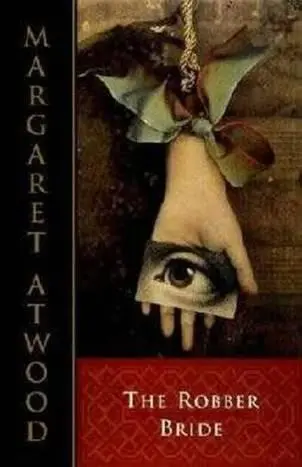
- Название:The Robber Bride
- Автор:
- Жанр:
- Год:1993
- ISBN:нет данных
- Рейтинг книги:5 / 5. Голосов: 1
-
Избранное:Добавить в избранное
- Отзывы:
-
Ваша оценка:
The Robber Bride: краткое содержание, описание и аннотация
Предлагаем к чтению аннотацию, описание, краткое содержание или предисловие (зависит от того, что написал сам автор книги «The Robber Bride»). Если вы не нашли необходимую информацию о книге — напишите в комментариях, мы постараемся отыскать её.
Even Zenia’s name is enough to provoke the old sense of outrage, of humiliation and confused pain. The truth is that at certain times—early mornings, the middle of the night—she finds it hard to believe that Zenia is really dead.’ Zenia is beautiful, smart and greedy; by turns manipulative and vulnerable, needy and ruthless; a man’s dream and a woman’s nightmare. She is also dead. Just to make absolutely sure Tony, Roz and Charis are there for the funeral. But five years on, as the three women share a sisterly lunch, the impossible happens: ‘with waves of ill will flowing out of her like cosmic radiation’, Zenia is back ...
This is the wise, unsettling, drastic story of three women whose lives share a common wound: Zenia, a woman they first met as university students in the sixties. Zenia is smart and beautiful, by turns manipulative, vulnerable—and irresistible. She has entered into their separate lives to ensnare their sympathy, betray their trust, and exploit their weaknesses. Now Zenia, thought dead, has suddenly reappeared. In this richly layered narrative, Atwood skilfully evokes the decades of the past as she retraces three women’s lives, until we are back in the present—where it’s yet to be discovered whether Zenia’s ‘pure, free-wheeling malevolence’ can still wreak havoc.
reports from the farthest reaches of the sex wars and is one of Margaret Atwood’s most intricate and subversive novels yet.
Exploring the paradox of female villainy, this tale of three fascinating women is another peerless display of literary virtuosity by the supremely gifted author of
and
. Roz, Charis and Tony all share a wound, and her name is Zenia. Beautiful, smart and hungry, by turns manipulative and vulnerable, needy and ruthless, Zenia is the turbulent center of her own neverending saga. She entered their lives in the sixties, when they were in college. Over the three decades since, she has damaged each of them badly, ensnaring their sympathy, betraying their trust, and treating their men as loot. Then Zenia dies, or at any rate the three women—with much relief -- attend her funeral. But as
begins, Roz, Charis and Tony have come together at a trendy restaraunt for their monthly lunch when in walks the seemingly resurrected Zenia...
In this consistently entertaining and profound new novel, Margaret Atwood reports from the farthest reaches of the war between the sexes with her characteristic well-crafted prose, rich and devious humor, and compassion.
The Robber Bride — читать онлайн бесплатно полную книгу (весь текст) целиком
Ниже представлен текст книги, разбитый по страницам. Система сохранения места последней прочитанной страницы, позволяет с удобством читать онлайн бесплатно книгу «The Robber Bride», без необходимости каждый раз заново искать на чём Вы остановились. Поставьте закладку, и сможете в любой момент перейти на страницу, на которой закончили чтение.
Интервал:
Закладка:
Charis lies under the sleeping bag, propped on one elbow, touching lightly the face of Billy, who has his eyes closed and may be on his way back to sleep. Maybe one of these days she will have a baby, Billy’s baby; it will look like him. She’s thought about it before—how it would just happen, without any decision or plan, and how he would stay with her then, stay on and on, and they could keep living here, like this, forever. There’s even a small room in the house where she could put the baby. At the moment it’s full of stuff—some of it is Billy’s, but most of it is Charis’s, because despite her wish not to be pinned down by possessions she has a number of cardboard boxes full of them. But that could all be cleared out and she could put a little cradle in there, with rockers on it, or a rush laundry basket. Not a crib, though; nothing with bars.
She runs her fingers over Billy’s forehead, his nose, his gently smiling mouth; he doesn’t know it, but this touching she does is not only tender, not only compassionate, but possessive. Although he is not a prisoner, he is in a way a prisoner of war. It’s war that has brought him here, war that keeps him in hiding, war that makes him stay put. She can’t help thinking of him as a captive; her captive, because his very existence here depends on her. He is hers, to do with as she will, as much hers as if he were a traveller from another planet, trapped on Earth in this dome of artificial interplanetary air that is her house. If she were to ask him to leave, what would happen to him? He’d be caught, deported, sent back, to where the air is heavier. He would implode.
He might as well be from another planet, because he’s from the United States; not only that, but from some dim and esoteric part of it, as mysterious to Charis as the dark side of the moon. Kentucky? Maryland? Virginia? He’s lived in all three places, but what do those words mean? Nothing to Charis, except that they verge on the South, a word also lacking in solid content. Charis has a few images connected with it—mansions, wisteria, and, once upon a time, segregation—she has seen movies, back in her other life, before she was Charis—but Billy does not seem to have lived in a mansion or to have segregated anybody. On the contrary, his father was almost run out of town (which town?) for being what Billy calls a “liberal,”
which is not at all the same thing as the solid, the orthodox, the bland-faced and interchangeable Liberals that appear on Toronto election posters with such stultifying monotony.
The United States is just across the lake, of course, and on clear days you can almost see it—a sort of line, a sort of haze. Charis has even been there, on a high-school day trip to Niagara Falls, but that part of it looked disappointingly similar; not like the part Billy comes from, which must be very strange. Strange, and more dangerous—that much is clear—and maybe because of that, superior. The things that happen there are said to matter in the world. Unlike the things that happen here.
So Charis runs her fingers over Billy, gloating a little, because here he is, in her bed, in her hands, her very own mythological creature, odd as unicorns, her very own captive draft dodger, part of a thousand headline stories, part of history, tucked away in secret in her house, the house for which she alone has had to sign the rental lease because nobody must know Billy’s name or where he is. Some of the draft dodgers have visas, but others—such as Billy—don’t, and once you’re inside this country you can’t get a visa, you’d have to go back across the border and apply from there, and then you’d be nabbed for sure.
Billy has explained all this; also that the Mounties are not really the Mounties of Charis’s childhood, not the picturesque men on horseback, in red uniforms, upright and true, who always get their man. Instead they are devious and cunning and in cahoots with the US. government, and if they put their finger on Billy he’s a dead duck, because—and she must never tell this to anyone, even his friends here don’t know about it—dodging the draft wasn’t the only thing he did. What else? He blew things up. A couple of people too, but they were an accident. That’s why the Mounties are after him.
If he’s lucky they’ll go through the extradition process, and he might have a chance. If unlucky they’ll just tip off the CIA
and Billy will be kidnapped, some dark night, and whisked back across the border, maybe across the lake in a speedboat, the way the Canadians smuggled liquor during Prohibition, he’s heard of guys they’ve done that to—he’ll be spirited away and thrown into jail and that will be the end of him. Someone will cut his throat, in the shower, for being a draft dodger. That’s what happens.
When he says things like this he holds onto Charis very tightly, and she puts her arms around him and says, “I won’t let them,” although she knows she has no power to prevent such a thing. But just saying this has a soothing effect, on both of them. She doesn’t quite believe it anyway, this doom-laden scenario of Billy’s. Things like that might happen in the United States—anything can happen there, where the riot police shoot people and the crime rate is so high—but not here. Not on the Island, where there are so many trees and people don’t lock the door when they go out. Not in this country, familiar to her and drab, undramatic and flat. Not in her house, with the hens cooing peacefully in the yard. No harm can come to her, or to Billy either, with the hens watching over them, feathery guardian spirits. The hens are good luck.
So she says, “I’ll keep you here with me,” even though she knows that Billy is an unwilling voyager. She suspects something worse, as well: that she herself is just a sort of way station for him, a temporary convenience, like the native brides of soldiers who are posted abroad. Although he doesn’t know it yet, she isn’t his real life. But he is hers.
This is painful.
“Well.” says Charis, sliding her mind quickly away, because pain is an illusion and should be circumvented, “how about some breakfast?”
“You’re beautiful,” says Billy. “Bacon, huh? We got any coffee?” Billy drinks real coffee, with caffeine in it. He makes fun of Charis’s herbal teas and won’t eat salad, not even the lettuce Charis grows herself. “Rabbit food,” he calls it. “Fit for nothing but little bunnies, and women:” Li’l.
“There would have been an egg,” says Charis reproachfully, and Billy laughs. (The overalls with their breast pocket full of squished egg are of course no longer on Charis but on the floor. She will wash them, later. She will avoid hot water or the egg will scramble. She will have to turn the pocket inside out.)
“Can’t make an omelette without breaking a few eggs,” he says. Cain’t. Charis turns the sound over, silently in her mouth, tasting it. Cherishing, storing away. She would like his name to be Billy Joe or Billy Bob, one of those double-barrelled Southern names, as in films. She hugs him.
“Billy, you are so .. :” she says. She wants to say young, because he is young, he’s seven years younger than she is; but he doesn’t like being reminded of it, he’d think she’s pulling rank. Or she could say innocent, which he’d find even more of an insult: he’d think it was a comment on his sexual inexperience.
What she means is pristine. What she means is his unscratched surface. Despite the suffering he’s gone through and is still going through, there’s something shiny about him. shiny and new. Or else impermeable. She herself is so penetrable; sharp edges stick into her, she bruises easily, her inner skin is puffy and soft, like marshmallows. She’s covered all over with tiny feelers like the feelers on ants: they wave, they test the air, they touch and recoil, they warn her. Billy has no such feelers. He doesn’t need them. Whatever slams into him bounces right off—either he dismisses it, or instead of hurting him it makes him angry. It’s a kind of hardness, which exists quite apart from any sadness or melancholy or even guilt that he may be experiencing at the time.
Читать дальшеИнтервал:
Закладка:
Похожие книги на «The Robber Bride»
Представляем Вашему вниманию похожие книги на «The Robber Bride» списком для выбора. Мы отобрали схожую по названию и смыслу литературу в надежде предоставить читателям больше вариантов отыскать новые, интересные, ещё непрочитанные произведения.



Обсуждение, отзывы о книге «The Robber Bride» и просто собственные мнения читателей. Оставьте ваши комментарии, напишите, что Вы думаете о произведении, его смысле или главных героях. Укажите что конкретно понравилось, а что нет, и почему Вы так считаете.