Margaret Atwood - The Robber Bride
Здесь есть возможность читать онлайн «Margaret Atwood - The Robber Bride» весь текст электронной книги совершенно бесплатно (целиком полную версию без сокращений). В некоторых случаях можно слушать аудио, скачать через торрент в формате fb2 и присутствует краткое содержание. Год выпуска: 1993, Жанр: Современная проза, на английском языке. Описание произведения, (предисловие) а так же отзывы посетителей доступны на портале библиотеки ЛибКат.
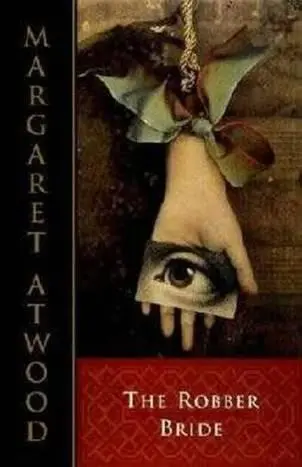
- Название:The Robber Bride
- Автор:
- Жанр:
- Год:1993
- ISBN:нет данных
- Рейтинг книги:5 / 5. Голосов: 1
-
Избранное:Добавить в избранное
- Отзывы:
-
Ваша оценка:
The Robber Bride: краткое содержание, описание и аннотация
Предлагаем к чтению аннотацию, описание, краткое содержание или предисловие (зависит от того, что написал сам автор книги «The Robber Bride»). Если вы не нашли необходимую информацию о книге — напишите в комментариях, мы постараемся отыскать её.
Even Zenia’s name is enough to provoke the old sense of outrage, of humiliation and confused pain. The truth is that at certain times—early mornings, the middle of the night—she finds it hard to believe that Zenia is really dead.’ Zenia is beautiful, smart and greedy; by turns manipulative and vulnerable, needy and ruthless; a man’s dream and a woman’s nightmare. She is also dead. Just to make absolutely sure Tony, Roz and Charis are there for the funeral. But five years on, as the three women share a sisterly lunch, the impossible happens: ‘with waves of ill will flowing out of her like cosmic radiation’, Zenia is back ...
This is the wise, unsettling, drastic story of three women whose lives share a common wound: Zenia, a woman they first met as university students in the sixties. Zenia is smart and beautiful, by turns manipulative, vulnerable—and irresistible. She has entered into their separate lives to ensnare their sympathy, betray their trust, and exploit their weaknesses. Now Zenia, thought dead, has suddenly reappeared. In this richly layered narrative, Atwood skilfully evokes the decades of the past as she retraces three women’s lives, until we are back in the present—where it’s yet to be discovered whether Zenia’s ‘pure, free-wheeling malevolence’ can still wreak havoc.
reports from the farthest reaches of the sex wars and is one of Margaret Atwood’s most intricate and subversive novels yet.
Exploring the paradox of female villainy, this tale of three fascinating women is another peerless display of literary virtuosity by the supremely gifted author of
and
. Roz, Charis and Tony all share a wound, and her name is Zenia. Beautiful, smart and hungry, by turns manipulative and vulnerable, needy and ruthless, Zenia is the turbulent center of her own neverending saga. She entered their lives in the sixties, when they were in college. Over the three decades since, she has damaged each of them badly, ensnaring their sympathy, betraying their trust, and treating their men as loot. Then Zenia dies, or at any rate the three women—with much relief -- attend her funeral. But as
begins, Roz, Charis and Tony have come together at a trendy restaraunt for their monthly lunch when in walks the seemingly resurrected Zenia...
In this consistently entertaining and profound new novel, Margaret Atwood reports from the farthest reaches of the war between the sexes with her characteristic well-crafted prose, rich and devious humor, and compassion.
The Robber Bride — читать онлайн бесплатно полную книгу (весь текст) целиком
Ниже представлен текст книги, разбитый по страницам. Система сохранения места последней прочитанной страницы, позволяет с удобством читать онлайн бесплатно книгу «The Robber Bride», без необходимости каждый раз заново искать на чём Вы остановились. Поставьте закладку, и сможете в любой момент перейти на страницу, на которой закончили чтение.
Интервал:
Закладка:
“This is Zenia,” says West. There’s a proprietary reverence in his voice, and a huskiness, that Tony doesn’t like at all. Mine, is what he means. Handfuls of mine.
Tony can see now that she was wrong about we. We hadnothing to do with male roommates. We meant Zenia. Zenia is now leaning back against West as if he’s a lamppost. He has his arms around her waist, under her smock; his face is half hidden in her smoky hair.
“They’re great,” Tony says. She tries to sound enthusiastic. She takes an awkward swallow from the bottle Zenia has given her, and concentrates to avoid spluttering. Her eyes are stinging, her face reddening, her nose is full of prickles.
“And this is Tony,” says West’s voice. His mouth is behind Zenia’s hair, so it looks like the hair talking. Tony thinks about running: out the kitchen door, between the denim-covered legs in the main room, down the stairs. A stampeding mouse. “Oh, this is Tony,” says Zenia. She sounds amused. “Hi there, Tony. Do you like our black walls? Please get your cold hands off my stomach,” she adds, to West.
“Cold hands, warm heart,” West mutters.
“Heart,” says Zenia. “Who cares about your heart? It’s not your most useful body part:” She lifts up the bottom of her smock, finds his two big hands, extracts them, and holds them in hers, caressing them, all the time smiling at Tony. “It’s revenge,” she says. Her eyes aren’t black, as Tony thought at first: they’re navy blue: “This is a revenge parry. The landlord’s kicking us out, so we thought we’d give the old fucker something to remember us by. It’ll take him more than two coats to cover this up. The lease said we had the right to paint, but it didn’t say what colour. Did you see the toilet?”
“Yes,” says Tony. “It’s very slippery.” She doesn’t mean this to be funny, but Zenia laughs.
“You’re right,” she says to West. “Tony’s a scream:”
Tony hates being talked about in the third person. She’s always hated it; her mother used to do the same thing. West has been discussing her with Zenia, the two of them, analyzing her behind her back, sticking adjectives onto her as if she’s a child, as if she’s anyone at all, as if she’s a topic. It occurs to her also that the only reason West asked her to their party is that Zenia told him to. She sets the beer bottle down on the black stove, noticing that it’s half empty. She must have drunk the other half How did she do that? “I should be going,” she says, with what she hopes is dignity.
Zenia doesn’t seem to have heard her. Neither does West. He’s peering out now from the burrow of Zenia’s hair; she can see his eyes gleaming in the light from the candles.
Tony’s arms and legs are coming detached from the rest of her, and sounds are slowing down. It’s the beer, she doesn’t usually drink it, she isn’t used to it. Longing sweeps through her. She wishes she knew someone who would bury his face in her own hair like that. She wishes it could be West. But she doesn’t have enough hair for that. He would just hit scalp.
She’s lost something. She’s lost West. Tsol. Reverof. It’s a dumb thought: how can you lose somebody you never really had?
“So, Tony,” says Zenia. She says Tony as if it’s a foreign word, as if it’s in quotes. “West tells me you’re brilliant. What’s your direction?”
Tony thinks that Zenia is asking her where she’s going from here. She could pretend there’s another party, a better one, to which Zenia herself has not been invited. But it’s not likely she would be believed. “I guess I’ll take the subway back,” she says. “I have to work:”
“She’s always working,” says West.
“No,” says Zenia, with a hint of impatience. “I mean, what do you want to do with your life? What’s your obsession?” Obsession. Tony doesn’t know anyone who talks like that. Only criminals and creepy people have obsessions, and if you have one yourself you aren’t supposed to admit to it. I don’t have to answer, she tells herself. She pictures the girls in the Common Room, and what they would think of obsessions; and what they would think of Zenia, come to that. They would think she was full of it, and also a slut, with her buttons undone like that. They would disapprove of her slutry hair. Usually Tony finds their judgments on other women catty and superficial, but right now she finds them comforting.
She should smile a bored, dismissive smile. She should say, “My what?” and laugh, and act puzzled, as if it’s a stupid question. She knows how to do this, she has watched and listened.
But it isn’t a stupid question, and she knows the answer. “Raw,” she says.
“What?” says Zenia. She’s concentrating on Tony now, as if she is finally interesting. Something worth figuring out. “Did you say law?”
Tony realizes she’s made a mistake, a slip of the tongue. She’s reversed the word. It must be the alcohol.
“I mean war,” she says, pronouncing this time carefully. “That’s what I want to do with my life. I want to study war.” She shouldn’t have said it, she shouldn’t have told that much about herself, she’s put it wrong. She’s been ridiculous.
Zenia laughs, but it isn’t a mocking laugh. It’s a laugh of delight. She touches Tony’s arm, lightly, as in a game of tag played with cobwebs. “Let’s have coffee,” she says. And Tony smiles.
That was it, that was the decisive moment. Rubicon! The die was cast, but who would have known it at the time? Not Tony, although she does remember a sensation, the sensation of having lost her footing, of being swept out into a strong current. And what, exactly, had acted as the invitation proper? What had beckoned to Zenia, shown her an opening in Tony’s beetle-like little armoured carapace? Which was the magic word, raw or war? Probably it was the two of them together; the doubleness. That would have had high appeal, for Zenia.
But this may be just overcomplication, intellectual webspinning, to which Tony knows she is prone. Doubtless it was something much simpler, much more obvious: Tony’s confusion, her lack of defences under the circumstances, the circumstances being West; West, and the fact that Tony loved him. Zenia must have sensed this before Tony did, and known that Tony was no threat, and known as well that Tony had some feathers worth plucking.
But what about Tony herself What was Zenia offering her, or appearing to offer, as she stood there in the black kitchen, as she smiled with her fingers lightly on Tony’s arm, shimmering in the candlelight like a mirage?
Nature abhors a vacuum, thinks Tony. How inconvenient. Otherwise, we vacuums might lead our lives in relative security. Not that Tony is a vacuum now. No, not at all. Now she’s replete, now she wallows in plenitude, now she’s guarding a castle full of treasure, now she’s involved. Now she must take hold.
Tony paces the basement floor, her pen and notebook neglected on the ping-pong table, thinking of West sleeping upstairs, with the air going deeply into and out of him; West, shifting and groaning, with forlorn sighs, sighs that sound like heartbreak. She listens to the screams of the dying, to the cheering of the Saracens on the barren coast, to the refrigerator humming nearby, to the dunk of the furnace as it turns itself off and on, and to Zenia’s voice.
A drawling voice, with a slight hesitation in it, a slight foreign flavour, the hint of a lisp; low, succulent, but with a hard surface. A glazed chocolate, with a soft, buttery, deceptive centre. Sweet, and bad for you.
“What would cause you to kill yourself?” says Zenia.
“Kill myself?” says Tony wonderingly, as if she’s never thought of such a thing. “I don’t know. I don’t think I would.”
Читать дальшеИнтервал:
Закладка:
Похожие книги на «The Robber Bride»
Представляем Вашему вниманию похожие книги на «The Robber Bride» списком для выбора. Мы отобрали схожую по названию и смыслу литературу в надежде предоставить читателям больше вариантов отыскать новые, интересные, ещё непрочитанные произведения.


Обсуждение, отзывы о книге «The Robber Bride» и просто собственные мнения читателей. Оставьте ваши комментарии, напишите, что Вы думаете о произведении, его смысле или главных героях. Укажите что конкретно понравилось, а что нет, и почему Вы так считаете.