Margaret Atwood - The Robber Bride
Здесь есть возможность читать онлайн «Margaret Atwood - The Robber Bride» весь текст электронной книги совершенно бесплатно (целиком полную версию без сокращений). В некоторых случаях можно слушать аудио, скачать через торрент в формате fb2 и присутствует краткое содержание. Год выпуска: 1993, Жанр: Современная проза, на английском языке. Описание произведения, (предисловие) а так же отзывы посетителей доступны на портале библиотеки ЛибКат.
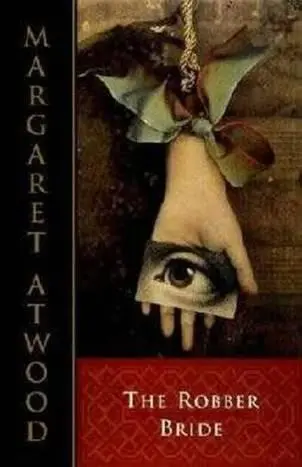
- Название:The Robber Bride
- Автор:
- Жанр:
- Год:1993
- ISBN:нет данных
- Рейтинг книги:5 / 5. Голосов: 1
-
Избранное:Добавить в избранное
- Отзывы:
-
Ваша оценка:
The Robber Bride: краткое содержание, описание и аннотация
Предлагаем к чтению аннотацию, описание, краткое содержание или предисловие (зависит от того, что написал сам автор книги «The Robber Bride»). Если вы не нашли необходимую информацию о книге — напишите в комментариях, мы постараемся отыскать её.
Even Zenia’s name is enough to provoke the old sense of outrage, of humiliation and confused pain. The truth is that at certain times—early mornings, the middle of the night—she finds it hard to believe that Zenia is really dead.’ Zenia is beautiful, smart and greedy; by turns manipulative and vulnerable, needy and ruthless; a man’s dream and a woman’s nightmare. She is also dead. Just to make absolutely sure Tony, Roz and Charis are there for the funeral. But five years on, as the three women share a sisterly lunch, the impossible happens: ‘with waves of ill will flowing out of her like cosmic radiation’, Zenia is back ...
This is the wise, unsettling, drastic story of three women whose lives share a common wound: Zenia, a woman they first met as university students in the sixties. Zenia is smart and beautiful, by turns manipulative, vulnerable—and irresistible. She has entered into their separate lives to ensnare their sympathy, betray their trust, and exploit their weaknesses. Now Zenia, thought dead, has suddenly reappeared. In this richly layered narrative, Atwood skilfully evokes the decades of the past as she retraces three women’s lives, until we are back in the present—where it’s yet to be discovered whether Zenia’s ‘pure, free-wheeling malevolence’ can still wreak havoc.
reports from the farthest reaches of the sex wars and is one of Margaret Atwood’s most intricate and subversive novels yet.
Exploring the paradox of female villainy, this tale of three fascinating women is another peerless display of literary virtuosity by the supremely gifted author of
and
. Roz, Charis and Tony all share a wound, and her name is Zenia. Beautiful, smart and hungry, by turns manipulative and vulnerable, needy and ruthless, Zenia is the turbulent center of her own neverending saga. She entered their lives in the sixties, when they were in college. Over the three decades since, she has damaged each of them badly, ensnaring their sympathy, betraying their trust, and treating their men as loot. Then Zenia dies, or at any rate the three women—with much relief -- attend her funeral. But as
begins, Roz, Charis and Tony have come together at a trendy restaraunt for their monthly lunch when in walks the seemingly resurrected Zenia...
In this consistently entertaining and profound new novel, Margaret Atwood reports from the farthest reaches of the war between the sexes with her characteristic well-crafted prose, rich and devious humor, and compassion.
The Robber Bride — читать онлайн бесплатно полную книгу (весь текст) целиком
Ниже представлен текст книги, разбитый по страницам. Система сохранения места последней прочитанной страницы, позволяет с удобством читать онлайн бесплатно книгу «The Robber Bride», без необходимости каждый раз заново искать на чём Вы остановились. Поставьте закладку, и сможете в любой момент перейти на страницу, на которой закончили чтение.
Интервал:
Закладка:
“Go on,” says Zenia once more, leaning forward, across the speckled-brown table, the half-empty cups, the butts in the brown metal ashtray. And Tony does.
XXI
What Tony is telling about is her mother. This is the first time Tony has ever said very much to anyone about her mother, beyond the bare bones, that is. Lost and gone, says Tony, and Dreadful sorry, says everyone else. Why say more? Who would be interested?
Zenia is, as it turns out. She can see it’s a painful subject for Tony, but this doesn’t deter her; if anything it spurs her on. She pushes and prods and makes all the right noises, curious and amazed, horrified, indulgent, and relentless, and pulls Tony inside out like a sock.
It takes time, because Tony has no single clear image of her mother. The memory of her is composed of shiny fragments, like a vandalized mosaic, or like something brittle that’s been dropped on the floor. Every once in a while Tony takes out the pieces and arranges and rearranges them, trying to make them fit. (Though she hasn’t spent very long at this yet. The wreck is too immediate.)
So all Zenia can get out of her is a handful of shards. Why does she want such a thing? That’s for Zenia to know and Tony to find out. But, in the entranced and voluble moment, it doesn’t occur to Tony even to ask. :
Tony was hardened off early. This is what she calls it by now, ruefully, in her cellar, at three a.m., with the shambles of Otto the Red’s clove army strewn on the sand-table behind her and West sleeping the sleep of the unjust upstairs, and Zenia raging unchecked, somewhere out there in the city. “Hardened off” is a term she’s lifted from Charis, who has explained that it’s what you do to seedlings to toughen them up and make them frostresistant and help them to transplant better. You don’t water them very much, and you leave them outside in the cold. This is what happened to Tony. She was a premature baby, as her mother was fond of telling her, and was kept in a glass box. (Was there a note of regret in her mother’s voice, as if it was a pity that she was eventually taken out?) So Tony spent her first days motherless. Nor—in the long run—did things improve.
For instance:
When Tony was five, her mother decided she would take her tobogganing. Tony knew what tobogganing was, although she had never done it. Her mother had only a vague idea, gleaned from Christmas cards. But it was one of her romantic English images of Canada.
Where did she get the toboggan? Probably she borrowed it from one of her bridge club friends. She zipped Tony into her snowsuit and got them to the tobogganing hill in a taxi. The toboggan was just a small one, so it fit into the back seat, on a slant, along with Tony. Her mother sat in the front. Tony’s father had the car that day, as he did most days. This was just as well, as the streets were icy and Tony’s mother was at best a spontaneous driver.
By the time they got to the tobogganing hill the sun was low and huge and dimly pink in the grey winter sky, and the shadows were bluish. The hill was very high. It was on the side of a ravine, and covered with close-packed, icy snow. Groups of—screaming children and a few adults were careering down it on sleighs and toboggans and large pieces of cardboard. Some had overturned, and there were pile-ups. Those that reached the bottom disappeared behind a clump of dark fir trees.
Tony’s mother stood at the top of the hill, staring down, holding the toboggan by its rope as if restraining it. “There,” she said. “Isn’t that nice?” She was pleating her lips, the way she did when she put on lipstick, and Tony could tell that the scene before her was not exactly what she’d had in mind. She was wearing her downtown coat and hat, and nylon stockings and little boots with high heels and fur tops. She didn’t have slacks or a ski suit or a Hudson’s Bay coat and earmuffs like the other adults there, and it occurred to Tony that her mother expected her to go down the hill on the toboggan all by herself.
Tony felt an urgent need to pee. She knew how difficult this would be, considering her clumsy two-piece snowsuit with the elastic braces over the shoulders, and what annoyance it would cause her mother—there was not a washroom in sight—so she said nothing about it. Instead she said, “I don’t want to.” She knew that if she ever went down that hill she would flip over, she would crash into something, she would be crushed. One small child was being led up the hill, howling, with blood running from its nose.
Tony’s mother hated having her scenarios foiled. People should enjoy themselves when she wanted them to. “Come on,” she said. “I’ll give you a push. It’ll be lovely!”
Tony sat down on the ground, which was her habitual means of protest. Crying did not work, not with her mother. It was likely to produce a slap, or at best a shake. She had never been much of a crier.
Her mother glanced down at her with disgust. “I’ll show you how!” she said. Her eyes were sparkling, her teeth were set: it was the look she got when she was willing herself to be brave, when she was refusing to be defeated. Before Tony knew
‘ what was happening her mother had picked up the toboggan and run with it to the brink of the hill. There she threw it onto the—snow and hurled herself on top of it, and went whizzing down, flat on her belly, with her beige legs in their nylons and her fur-topped boots sticking straight up behind her. Almost immediately her hat came off.
She went at an astonishing speed. As she diminished down the slope, into the dusk, Tony clambered to her feet. Her mother was going away from her, she was vanishing, and Tony wbuld be left alone on the cold hill.
“No! No!” she screamed. (Unusual for her to have screamed: she must have been terrified.) But inside herself she could hear another voice, also hers, which was shouting, fearlessly and with ferocious delight:
On! On!
As a child, Tony kept a diary. Every January she would write her name in the front of it, in block letters:
Tony Fremont
Then under it she would write her other name: TNOMERFYNOT
This name had a Russian or Martian sound to it, which pleased her. It was the name of an alien, or a spy. Sometimes it was the name of a twin, an invisible twin; and when Tony grew up and learned more about left-handedness she was faced with the possibility that she might in fact have been a twin, the left-handed half of a divided egg, the other half of which had died. But when she was little her twin was merely an invention, the incarnation of her sense that part of her was missing. Although she was a twin, Tnomerf Ynot was a good deal taller than Tony herself. Taller, stronger, more daring.
Tony wrote her outer name with her right hand and her other name, her inner one, with her left; although, officially, she was forbidden to write with her left hand, or to do anything else of importance with it. Nobody had told her why. About the closest she’d come to an explanation was a speech of Anthea’s—of her mother’s—in which she’d said that the world was not constructed for the left-handed. She also said that Tony would understand better when she grew up, which was just another of Anthea’s assurances that failed to come true.
When Tony was younger the teachers at school would slap her left hand or hit it with rufers, as ifshe’d been caught picking her nose with it. One teacher tied it to the side of her desk. The other children might have teased her about this, but they didn’t. They couldn’t see the logic of it, any more than she could.
That was a school Tony got yanked out of quickly. Usually it took Anthea eight months or more before she got fed up with a school. It was true that Tony couldn’t spell very well, or not according to the teachers. They said she reversed letters. They said she had trouble with numbers. They would say this to Anthea, and Anthea would say that Tony was gifted, and then Tony would know it would soon be time for a change because very shortly now Anthea would lose her temper and start insulting the teachers. Nincompoops was one of the nicer names she called them. She wanted Tdny changed, fixed, turned right side up, and she wanted it to happen overnight.
Читать дальшеИнтервал:
Закладка:
Похожие книги на «The Robber Bride»
Представляем Вашему вниманию похожие книги на «The Robber Bride» списком для выбора. Мы отобрали схожую по названию и смыслу литературу в надежде предоставить читателям больше вариантов отыскать новые, интересные, ещё непрочитанные произведения.


Обсуждение, отзывы о книге «The Robber Bride» и просто собственные мнения читателей. Оставьте ваши комментарии, напишите, что Вы думаете о произведении, его смысле или главных героях. Укажите что конкретно понравилось, а что нет, и почему Вы так считаете.