Margaret Atwood - The Robber Bride
Здесь есть возможность читать онлайн «Margaret Atwood - The Robber Bride» весь текст электронной книги совершенно бесплатно (целиком полную версию без сокращений). В некоторых случаях можно слушать аудио, скачать через торрент в формате fb2 и присутствует краткое содержание. Год выпуска: 1993, Жанр: Современная проза, на английском языке. Описание произведения, (предисловие) а так же отзывы посетителей доступны на портале библиотеки ЛибКат.
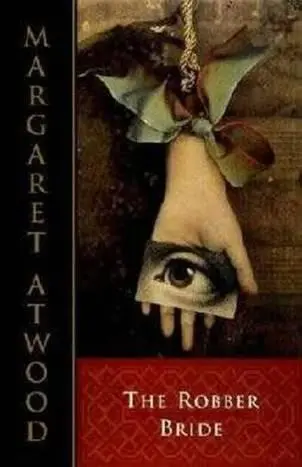
- Название:The Robber Bride
- Автор:
- Жанр:
- Год:1993
- ISBN:нет данных
- Рейтинг книги:5 / 5. Голосов: 1
-
Избранное:Добавить в избранное
- Отзывы:
-
Ваша оценка:
The Robber Bride: краткое содержание, описание и аннотация
Предлагаем к чтению аннотацию, описание, краткое содержание или предисловие (зависит от того, что написал сам автор книги «The Robber Bride»). Если вы не нашли необходимую информацию о книге — напишите в комментариях, мы постараемся отыскать её.
Even Zenia’s name is enough to provoke the old sense of outrage, of humiliation and confused pain. The truth is that at certain times—early mornings, the middle of the night—she finds it hard to believe that Zenia is really dead.’ Zenia is beautiful, smart and greedy; by turns manipulative and vulnerable, needy and ruthless; a man’s dream and a woman’s nightmare. She is also dead. Just to make absolutely sure Tony, Roz and Charis are there for the funeral. But five years on, as the three women share a sisterly lunch, the impossible happens: ‘with waves of ill will flowing out of her like cosmic radiation’, Zenia is back ...
This is the wise, unsettling, drastic story of three women whose lives share a common wound: Zenia, a woman they first met as university students in the sixties. Zenia is smart and beautiful, by turns manipulative, vulnerable—and irresistible. She has entered into their separate lives to ensnare their sympathy, betray their trust, and exploit their weaknesses. Now Zenia, thought dead, has suddenly reappeared. In this richly layered narrative, Atwood skilfully evokes the decades of the past as she retraces three women’s lives, until we are back in the present—where it’s yet to be discovered whether Zenia’s ‘pure, free-wheeling malevolence’ can still wreak havoc.
reports from the farthest reaches of the sex wars and is one of Margaret Atwood’s most intricate and subversive novels yet.
Exploring the paradox of female villainy, this tale of three fascinating women is another peerless display of literary virtuosity by the supremely gifted author of
and
. Roz, Charis and Tony all share a wound, and her name is Zenia. Beautiful, smart and hungry, by turns manipulative and vulnerable, needy and ruthless, Zenia is the turbulent center of her own neverending saga. She entered their lives in the sixties, when they were in college. Over the three decades since, she has damaged each of them badly, ensnaring their sympathy, betraying their trust, and treating their men as loot. Then Zenia dies, or at any rate the three women—with much relief -- attend her funeral. But as
begins, Roz, Charis and Tony have come together at a trendy restaraunt for their monthly lunch when in walks the seemingly resurrected Zenia...
In this consistently entertaining and profound new novel, Margaret Atwood reports from the farthest reaches of the war between the sexes with her characteristic well-crafted prose, rich and devious humor, and compassion.
The Robber Bride — читать онлайн бесплатно полную книгу (весь текст) целиком
Ниже представлен текст книги, разбитый по страницам. Система сохранения места последней прочитанной страницы, позволяет с удобством читать онлайн бесплатно книгу «The Robber Bride», без необходимости каждый раз заново искать на чём Вы остановились. Поставьте закладку, и сможете в любой момент перейти на страницу, на которой закончили чтение.
Интервал:
Закладка:
Tony could do things easily with her left hand, things her right hand would stumble over. In her right-handed life she was awkward, and her handwriting was lumpish and clumsy. But that made no difference: despite its good performance her left hand was scorned, but her right hand was bribed and encouraged. It wasn’t fair, but Anthea said that life wasn’t fair.
Secretly Tony continued to write left-handed; but she felt guilty about it. She knew there must be something shameful about her left hand or it would not have been humiliated like that. It was the hand she loved best, all the same.
It’s November, and the afternoon is already darkening. Earlier there was a dusting of snow, but now it’s drizzling. The drizzle runs down the living-room windows in icy, sinuous trickles; a few brown leaves are stuck to the outside of the glass like leather tongues.
Tony kneels on the chesterfield with her nose pressed against the window,., making fog patches with her breath. When the patch is big enough she writes on it, squeakily, with her index finger. Then she rubs out the words. Kcuf, she writes. This is a word too bad even for her diary. Tihs. She writes these words with fear and awe, but alto with’a superstitious relish. They are Tnomerf Ynot words. They make her feel powerful, in charge of something.
She breathes and writes and rubs out, breathes and writes. The air is unfresh, filled with the dry, burnt smell of the chintz curtains. All the time she’s writing, she’s listening to the silence of the house behind her. She’s used to silences: she can distinguish between full silences and empty ones, between those that come before and those that come after. Just because there’s a silence it doesn’t mean that nothing is going on.
Tony kneels at the window as long as she dares. At last she sees her mother walking quickly along the street from the corner, head down against the drizzle, her fur collar turned up, her face hidden by her maroon hat. She’s carrying a wrapped package.
Probably it’s a dress, because clothes are a solace for Anthea; when she’s feeling “blue,” as she calls it, she goes shopping. Tony has been dragged downtown on these expeditions many times, when Anthea couldn’t figure out where else to stash her. She’s waited outside change rooms, sweating in her winter coat, while Anthea has tried things on and then more things, and has come out in her stocking feet and done a pirouette in front of the full-length mirror, smoothing the cloth down over her hips. Anthea doesn’t often buy clothes for Tony; she sa~s she could dress Tony in a potato sack and Tony wouldn’t notice. But Tony does notice, she notices a great deal, She just doesn’t think it would make any difference whether she wore a potato sack or not. Any difference to Anthea, that is.
Tony gets up from the chesterfield and begins her piano practice. Playing the piano is supposed to strengthen her right hand, though everyone including Tony knows that Tony isn’t musical and that these lessons will lead nowhere. How could they? Tony, with her little rodent paws, can’t even span an octave.
Tony practises doggedly, trying to keep time to the ticking metronome, and squinting at the music because she’s forgotten to turn on the piano lamp, and because, without realizing it, she’s becoming near-sighted. The piece she’s playing is called “Gavotte:” Ettovag. It’s a good word; she will think of a use for it, later. The piano reeks of lemon oil. Ethel, who comes in to clean, has been told not to polish the keys with it—she’s only supposed to use a damp cloth—but she pays no attention, and Tony’s fingers will smell of lemon oil for hours. It’s a formal smell, an adult smell, ominous. It comes before parties.
She hears the front door open and close, and feels the cold draft from it on her legs. After a few minutes her mother walks into the living room. Tony can hear the high heels, tapping on the hardwood floor, then muffled by the carpet. She plays on, banging the keys down to show her mother how studious she is.
“That’s enough for today, don’t you think, Tony?” her mother says gaily. Tony is puzzled: usually Anthea wants her to practise as long as possible. She wants her safely occupied, somewhere out of the way.
Tony stops playing and turns to look at her. She’s taken off her coat, but she still has her hat on, and, oddly, her matching maroon gloves. The hat has a spotted half-veil that comes down over her eyes and part of her nose. Below the veil is her mouth, slightly blurred around the edges, as if her lipstick has run because of the rain. She puts her hands up behind her head, to unpin her hat.
“I haven’t done a half-hour yet,” says Tony. She still believes that the dutiful completion of pre-set tasks will cause her to be loved, although in some dim corner of herself she knows this hasn’t worked yet and most likely never will.
Anthea takes down her hands, leaving her hat in place. “Don’t you think you deserve a little holiday today?” she says, smiling at Tony. Her teeth are very white in the dim room.
“Why?” says Tony. She can see nothing special about this day. It isn’t her birthday.
Anthea sits down beside her on the piano bench and slides her left arm with its leather-gloved hand around Tony’s shoulders. She gives a little squeeze. “You poor thing,” she says. She puts the fingers of her other hand under Tony’s chin and turns her face up. The leather hand is lifeless and cool, like the hand of a doll.
“I want you to know,” she says, “that Mother truly, truly loves you:”
Tony pulls back within herself: Anthea has said this before. When she says it her breath smells the way it does now, of smoke and of the empty glasses left on the kitchen counter in the mornings after parties, and on other mornings as well. Glasses with damp cigarette butts in them, and broken glasses, on the floor.
She never says “I truly, truly love you:” It’s always Mother, as if Mother is someone else.
Rehtom, thinks Tony. Evol. The metronome ticks on. Anthea gazes down at her, holding onto her with her two gloved hands. In the semi-dark her eyes behind the spots of her veil are sooty black, bottomless; her mouth is tremulous. She bends over and presses her cheek to Tony’s, and Tony feels the rasp of the veil and the damp, creamy skin under it, and smells her, a smell of violet perfume and underarms mixed with dresscloth, and a salry, eggy smell, like strange mayonnaise. She doesn’t know why Anthea is acting like this, and she’s embarrassed. All Anthea does normally is kiss her goodnight, a little peck; she’s shaking all over, and for a moment Tony thinks—hopes—it’s with laughter.
Then she lets go of Tony and gets up and moves to the window, and stands with her back turned, unpinning her hat really this time. She takes it off and throws it down on the sofa, and fluffs out her dark hair at the back. After a moment she kneels and looks out. “Who’s been making all these smudges?”
she says, in a higher, tighter voice. It’s the voice she uses for mimicking happiness, when she’s angry with Tony’s father and wants to show him she doesn’t care. She knows the smudges are Tony’s. Ordinarily she’d be irritated, she’d make some remark about how much it costs to have Ethel clean the windows, but this time she laughs, breathlessly, as if she’s been running.
“Nose marks, just like a dog. Guppy, you are such a funny child.”
Guppy is a name from long ago. Anthea’s story is that she called Tony that right after she was born, because of her time in the incubator. Anthea would come and look at Tony through the glass, and Tony’s mouth would be opening and closing but there wouldn’t be any sound. Or Anthea said she couldn’t hear any. She kept the name because later, when Tony was out of danger and she’d taken her home, Tony scarcely cried; she just opened and closed her mouth. Anthea tells this story as if it’s funny.
Читать дальшеИнтервал:
Закладка:
Похожие книги на «The Robber Bride»
Представляем Вашему вниманию похожие книги на «The Robber Bride» списком для выбора. Мы отобрали схожую по названию и смыслу литературу в надежде предоставить читателям больше вариантов отыскать новые, интересные, ещё непрочитанные произведения.






Обсуждение, отзывы о книге «The Robber Bride» и просто собственные мнения читателей. Оставьте ваши комментарии, напишите, что Вы думаете о произведении, его смысле или главных героях. Укажите что конкретно понравилось, а что нет, и почему Вы так считаете.