Margaret Atwood - The Robber Bride
Здесь есть возможность читать онлайн «Margaret Atwood - The Robber Bride» весь текст электронной книги совершенно бесплатно (целиком полную версию без сокращений). В некоторых случаях можно слушать аудио, скачать через торрент в формате fb2 и присутствует краткое содержание. Год выпуска: 1993, Жанр: Современная проза, на английском языке. Описание произведения, (предисловие) а так же отзывы посетителей доступны на портале библиотеки ЛибКат.
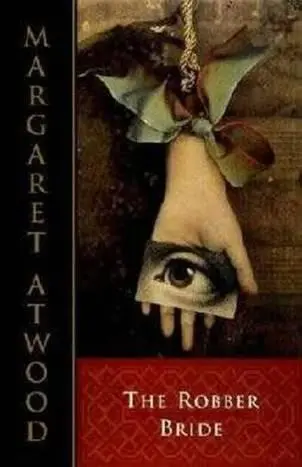
- Название:The Robber Bride
- Автор:
- Жанр:
- Год:1993
- ISBN:нет данных
- Рейтинг книги:5 / 5. Голосов: 1
-
Избранное:Добавить в избранное
- Отзывы:
-
Ваша оценка:
The Robber Bride: краткое содержание, описание и аннотация
Предлагаем к чтению аннотацию, описание, краткое содержание или предисловие (зависит от того, что написал сам автор книги «The Robber Bride»). Если вы не нашли необходимую информацию о книге — напишите в комментариях, мы постараемся отыскать её.
Even Zenia’s name is enough to provoke the old sense of outrage, of humiliation and confused pain. The truth is that at certain times—early mornings, the middle of the night—she finds it hard to believe that Zenia is really dead.’ Zenia is beautiful, smart and greedy; by turns manipulative and vulnerable, needy and ruthless; a man’s dream and a woman’s nightmare. She is also dead. Just to make absolutely sure Tony, Roz and Charis are there for the funeral. But five years on, as the three women share a sisterly lunch, the impossible happens: ‘with waves of ill will flowing out of her like cosmic radiation’, Zenia is back ...
This is the wise, unsettling, drastic story of three women whose lives share a common wound: Zenia, a woman they first met as university students in the sixties. Zenia is smart and beautiful, by turns manipulative, vulnerable—and irresistible. She has entered into their separate lives to ensnare their sympathy, betray their trust, and exploit their weaknesses. Now Zenia, thought dead, has suddenly reappeared. In this richly layered narrative, Atwood skilfully evokes the decades of the past as she retraces three women’s lives, until we are back in the present—where it’s yet to be discovered whether Zenia’s ‘pure, free-wheeling malevolence’ can still wreak havoc.
reports from the farthest reaches of the sex wars and is one of Margaret Atwood’s most intricate and subversive novels yet.
Exploring the paradox of female villainy, this tale of three fascinating women is another peerless display of literary virtuosity by the supremely gifted author of
and
. Roz, Charis and Tony all share a wound, and her name is Zenia. Beautiful, smart and hungry, by turns manipulative and vulnerable, needy and ruthless, Zenia is the turbulent center of her own neverending saga. She entered their lives in the sixties, when they were in college. Over the three decades since, she has damaged each of them badly, ensnaring their sympathy, betraying their trust, and treating their men as loot. Then Zenia dies, or at any rate the three women—with much relief -- attend her funeral. But as
begins, Roz, Charis and Tony have come together at a trendy restaraunt for their monthly lunch when in walks the seemingly resurrected Zenia...
In this consistently entertaining and profound new novel, Margaret Atwood reports from the farthest reaches of the war between the sexes with her characteristic well-crafted prose, rich and devious humor, and compassion.
The Robber Bride — читать онлайн бесплатно полную книгу (весь текст) целиком
Ниже представлен текст книги, разбитый по страницам. Система сохранения места последней прочитанной страницы, позволяет с удобством читать онлайн бесплатно книгу «The Robber Bride», без необходимости каждый раз заново искать на чём Вы остановились. Поставьте закладку, и сможете в любой момент перейти на страницу, на которой закончили чтение.
Интервал:
Закладка:
She has a collection of palindromes—Live evil, Madam I’m Adam, Able was I ere I saw Elba—but the phrases she prefers are different backwards: skewed, odd, melodious. They belong to another world, where Tony is at home because she can speak the language. Re~fo eerfl Evas! Faol tun egnaro! Two barbarians stand on a narrow bridge, hurling insults, daring their enemies to cross ...
“Tony, put that down,” says her father tonelessly. “You shouldn’t read at the table.” He says this every morning, once he’s finished with the paper.
Anthea comes with two full plates, bacon and eggs and toast, setting them down formally as if it’s a restaurant. Tony cuts her egg open and watches the yolk run like yellow glue into her toast. Then she watches her father’s Adam’s apple go up and down while he swallows his coffee. It’s like something stuck in his throat. Madam I’m Adam’s apple.
Anthea has a bright enamelled cheerfulness this morning that makes her seem covered with nail polish. She scrapes the cereal bowls into the garbage can, singing: “Pack up your troubles in your old kit bag, and smile, smile, smile ...”
“You should have been on stage,” says Tony’s father.
“Yes, I should have, shouldn’t I?” says her mother. Her voice is airy and careless. ‘
There’s been nothing out of place, nothing obvious; nevertheless, when Tony comes home from school that afternoon, her mother isn’t there. She isn’t just out, she’s gone. She’s left a wrapped package for Tony, on her bed, and a note in an envelope. As soon as Tony sees the note and the package she turns cold all over. She’s frightened, but somehow she is not surprised.
The note is in the brown ink Anthea favours, on her initialled cream-coloured notepaper. In her curling handwriting with its florid capital letters she has written:
Darling, you know I would like to take you with me but I can’t right now. When you are older you will understand why. Be a good girl and do well in school. I will write you lots. Your Mother who loves you very much.
P S. See you soon!
(Tony kept this note, and marvelled over it later, when she was grown up. As an explanation it was of course inadequate. Also, nothing in it was true. To begin with, Tony was not darling. The only people who were darling, for Anthea, were men, and sometimes women if she was annoyed with them. She didn’t want to take Tony with her: if she’d wanted to she would have done it, because she mostly did what she wanted. She didn’t write Tony lots, she didn’t love her very much, and she didn’t see her soon. And although Tony did get older, she did nzst understand why.)
At the moment of finding this note, however, Tony wants to believe every word of it, and by an effort of will she does. She even manages to believe more than is there. She believes her mother will send for her, or else come back. She isn’t sure which.
She opens the package; it’s the same package Anthea was carrying yesterday, in the drizzle, on her way back from the bridge club, which means that all of this was planned out in advance. It isn’t like the times she rushed out of the house, slamming the door, or locked herself in the bathroom and turned on the taps so that the tub overflowed out into the hall and down the stairs and through the ceiling, and Griff had to call the Fire Department to break in. It isn’t a tantrum, or a whim.
Inside the package is a box, and inside the box there’s a dress. It’s navy blue, with a sailor collar piped in white. Since there’s nothing else she can think of to do, Tony tries it on. It’s two sizes too big for her. It looks like a dressing gown.
Tony sits down on the floor and pulls up her knees, and pushes her nose into the skirt of the dress, inhaling its smell, a rough chemical smell of broadcloth and sizing. The smell of newness, the smell of futility, the smell of noiseless grief.
All of this is her own fault, somehow. She hasn’t made enough cups of tea, she’s misread the signals, she has let go of the string or the rope or the chain or whatever it is that’s been attaching her mother to this house, holding her in place, and like an escaped sailboat or a balloon her mother has come loose. She’s out in the blue, she’s blowing away with the wind. She’s lost.
This is the story Tony tells to Zenia, as they sit in Christie’s Coffee Shop, their heads leaning together across the table, drinking harsh acidy coffee in the dead of night. It seems a bleak story, as she tells it—starker and more dire than when it was actually happening to her. Possibly because she believes it, by now. Back then it seemed temporary—her motherlessness. Now she knows it was permanent.
“So she buggered off, just like that! Where’d she go?” says Zenia, with interest.
Tony sighs. “She ran off with a man. A life insurance man, from my father’s office. His name was Perry. He was married to some-one called Rhonda, from my mother’s bridge club. They went to California.”
“Good choice,” says Zenia, laughing. In Tony’s opinion it was not a good choice. It was a lapse of taste, and of consistency as well: if Anthea had to go anywhere, why didn’t she go to England, home as she always called it? Why go to California, where the bread is even airier, the accent even flatter, the grammar even more spurious, than it is here?
So Tony doesn’t think it’s all that funny, and Zenia catches this reservation and changes her face immediately. “Weren’t you furious?”
“No,” says Tony. “I don’t think so.” She searches through herself, patting surfaces, testing pockets. She doesn’t discover any fury.
“I would have been,” says Zenia. “I would have been enraged:”
Tony isn’t sure what it would be like, to be enraged. Possibly too dangerous. Or else a relief.
No rage at the time: only a cold panic, a desolation; and fear, because of what her father would do, or say: would she be blamed?
Tony’s father wasn’t yet back from work. There was nobody else in the house, nobody but Ethel, mopping the floor in the kitchen. Anthea asked her to stay late on the afternoons when she went out so someone would be there when Tony came home from school.
Ethel was a craggy big-boned woman with lines on her face like those on other people’s hands, and dry, wig-like hair. She had six children. Only four of them were still alive—diphtheria had killed the others—but if you asked her how many children she had, she would say six: Anthea used to tell this as if it were a joke, as if Ethel couldn’t count properly. Ethel had a habit of groaning as she worked, and talking to herself words that sounded like “Oh no, oh no,” and “Pisspisspiss.” As a rule Tony kept out of her way.
Tony went into her parents’ bedroom and opened her mother’s closet door. Aroma wafted out: there were little satin bags of lavender tied with mauve ribbons on every hanger. Most of Anthea’s suits and dresses were still in there, with the matching shoes in their shoe-trees ranged beneath them. They were like hostages, these clothes. Anthea would never just leave them behind, not forever. She would have to come back and retrieve them.
Ethel was coning up the stairs; Tony could hear her grunting and mumbling. Now she, had reached the bedroom door, dragging the vacuum cleaner by its hose. She stood still and looked at Tony.
“Your mother’s run away,” she said. She talked in regular language when anyone else was there.
Tony could hear the scorn in Ethel’s voice. Dogs ran away, cats, horses. Mothers did not.
Here Tony’s memory divides, into what she wanted to happen and what actually did happen. What she wanted was for Ethel to take her in her knobbly arms, and stroke her hair and rock her, and tell her that everything would be all right. Ethel, who had bulgy blue veins on her legs, who smelled of sweat and javex, whom she didn’t even like! But who might have been capable of providing comfort, of a sort.
Читать дальшеИнтервал:
Закладка:
Похожие книги на «The Robber Bride»
Представляем Вашему вниманию похожие книги на «The Robber Bride» списком для выбора. Мы отобрали схожую по названию и смыслу литературу в надежде предоставить читателям больше вариантов отыскать новые, интересные, ещё непрочитанные произведения.


Обсуждение, отзывы о книге «The Robber Bride» и просто собственные мнения читателей. Оставьте ваши комментарии, напишите, что Вы думаете о произведении, его смысле или главных героях. Укажите что конкретно понравилось, а что нет, и почему Вы так считаете.