Margaret Atwood - The Robber Bride
Здесь есть возможность читать онлайн «Margaret Atwood - The Robber Bride» весь текст электронной книги совершенно бесплатно (целиком полную версию без сокращений). В некоторых случаях можно слушать аудио, скачать через торрент в формате fb2 и присутствует краткое содержание. Год выпуска: 1993, Жанр: Современная проза, на английском языке. Описание произведения, (предисловие) а так же отзывы посетителей доступны на портале библиотеки ЛибКат.
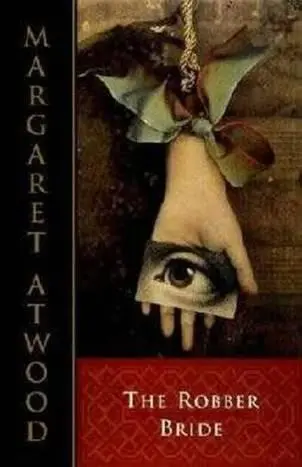
- Название:The Robber Bride
- Автор:
- Жанр:
- Год:1993
- ISBN:нет данных
- Рейтинг книги:5 / 5. Голосов: 1
-
Избранное:Добавить в избранное
- Отзывы:
-
Ваша оценка:
The Robber Bride: краткое содержание, описание и аннотация
Предлагаем к чтению аннотацию, описание, краткое содержание или предисловие (зависит от того, что написал сам автор книги «The Robber Bride»). Если вы не нашли необходимую информацию о книге — напишите в комментариях, мы постараемся отыскать её.
Even Zenia’s name is enough to provoke the old sense of outrage, of humiliation and confused pain. The truth is that at certain times—early mornings, the middle of the night—she finds it hard to believe that Zenia is really dead.’ Zenia is beautiful, smart and greedy; by turns manipulative and vulnerable, needy and ruthless; a man’s dream and a woman’s nightmare. She is also dead. Just to make absolutely sure Tony, Roz and Charis are there for the funeral. But five years on, as the three women share a sisterly lunch, the impossible happens: ‘with waves of ill will flowing out of her like cosmic radiation’, Zenia is back ...
This is the wise, unsettling, drastic story of three women whose lives share a common wound: Zenia, a woman they first met as university students in the sixties. Zenia is smart and beautiful, by turns manipulative, vulnerable—and irresistible. She has entered into their separate lives to ensnare their sympathy, betray their trust, and exploit their weaknesses. Now Zenia, thought dead, has suddenly reappeared. In this richly layered narrative, Atwood skilfully evokes the decades of the past as she retraces three women’s lives, until we are back in the present—where it’s yet to be discovered whether Zenia’s ‘pure, free-wheeling malevolence’ can still wreak havoc.
reports from the farthest reaches of the sex wars and is one of Margaret Atwood’s most intricate and subversive novels yet.
Exploring the paradox of female villainy, this tale of three fascinating women is another peerless display of literary virtuosity by the supremely gifted author of
and
. Roz, Charis and Tony all share a wound, and her name is Zenia. Beautiful, smart and hungry, by turns manipulative and vulnerable, needy and ruthless, Zenia is the turbulent center of her own neverending saga. She entered their lives in the sixties, when they were in college. Over the three decades since, she has damaged each of them badly, ensnaring their sympathy, betraying their trust, and treating their men as loot. Then Zenia dies, or at any rate the three women—with much relief -- attend her funeral. But as
begins, Roz, Charis and Tony have come together at a trendy restaraunt for their monthly lunch when in walks the seemingly resurrected Zenia...
In this consistently entertaining and profound new novel, Margaret Atwood reports from the farthest reaches of the war between the sexes with her characteristic well-crafted prose, rich and devious humor, and compassion.
The Robber Bride — читать онлайн бесплатно полную книгу (весь текст) целиком
Ниже представлен текст книги, разбитый по страницам. Система сохранения места последней прочитанной страницы, позволяет с удобством читать онлайн бесплатно книгу «The Robber Bride», без необходимости каждый раз заново искать на чём Вы остановились. Поставьте закладку, и сможете в любой момент перейти на страницу, на которой закончили чтение.
Интервал:
Закладка:
She was not sure, exactly, how West had become her friend. He had more or less materialized. He began by sitting beside her in class and borrowing her Modern History notes because he’d missed the lecture before that one, and then all of a sudden he was a part of her routine.
West was the only person she could talk to about her interest in war. She hadn’t done it yet, but she was working up to it gradually. Such a thing might take years, and he’d only been her friend for a month. For the first two weeks of this period she’d called him Stewart, like his other, his male friends, who would slap him on the shoulder, give him small punches on the arm, and say, Hey Stew, what’s new? But then= he’d come across a few of the cryptic comments she’d written in the margins of her notes—egabrag tahw, poop dlo gnirob—and she’d had to explain them. He was impressed with her ability to write backwards—That’s something, was what he said—and he’d wanted his own name reversed. He claimed to like his new name a lot better.
The girls in the residence began referring to West as Tony’s boyfriend, although they knew he wasn’t. They did it to tease. “How’s your boyfriend?” Roz would yell, grinning at Tony from the saggy depths of the orange sofa, which sagged even more when it was Roz who was sitting on it. “Hey Tonikins! How’s your secret life? How’s Mr: Beanpole? Poor me! The tall guys always go for shrimps!”
West was tall enough, but walking beside Tony made him look even taller. He lacked the solidity of the word giant; instead he was skinny, loosely strung. His legs and arms were only tentatively attached to the rest of him, and his hands and feet seemed larger than they were because his sleeves and pant legs were always an inch or two short. He was handsome in an angular, an attenuated way, like a medieval stone saint or an ordinarily handsome man who had been stretched like rubber.
He had shaggy blond hair then, and wore dark, tarnished clothing—a frayed turtleneck, sullied jeans. This was unusual for the time: most men at university still wore ties, or at least jackets. His clothes were a badge of the fringe, they gave him an outlaw’s lustre. When Tony and West had coffee together after their Modern History lecture, in one of the student coffee shops they frequented, the girls would stare at West. Then their eyes would move downwards and they would spot Tony, in her kiddie pageboy, her horn-rimmed glasses and kilry skirt and penny loafers. Then they would be puzzled.
Drinking coffee was about all Tony did with West. As they drank the coffee, they talked; although neither of them was wh’it you would call loquacious. Most of their talk was an easy silence. Sometimes they drank beer, in various dark beer parlours, or rather West did. Tony would sit on the edge of her chair, her toes barely touching the floor, and lick-the froth off the top of her draft, her tongue exploring it thoughtfully, like a cat’s. Then West would drink the rest of the beer and order two more. Four was his limit. To Tony’s relief he never drank any more than that. It was surprising that the beer parlours let Tony in, because she looked so under-age. She was under-age. They must have thought she would never dare to set foot in such places unless she was in reality twenty-two. But she was disguised as herself, one of the most successful disguises. If she’d tried to look older it wouldn’t have worked.
‘%’est said nobody took better history notes than Tony. That made her feel useful—even better, indispensable. Praised. West was taking Modern History—which wasn’t modern history at all, it was simply not Ancient History, which ended with the fall of Rome—because he was interested in folk songs and ballads, and in antique musical instruments. He played the lute, or so he said. Tony had never seen his lute. She’d never been to his room, if in fact he lived in a room. She didn’t know where he lived, or what he did in the evenings. She told herself she wasn’t interested: theirs was a friendship of the afternoons. As time went on, however, she began thinking about the rest of his life. She found herself wondering what he ate for dinner, and even breakfast. She assumed he lived with other men, or boys, because he’d told her about a guy he knew who could set fire to his own farts. He didn’t tell her this in a sniggering way, but regretfully somehow. “Imagine having that engraved on your tombstone,” he said. Tony recognized the fart-lighting as a variant of the more sedate tricks that went on in McClung Hall with the eggs and lipstick faces, and postulated a men’s residence. But she didn’t ask.
When West appeared, he said Hi. When he disappeared, he”said See you. Tony never knew when either of these things was going to happen.
In this fashion they reached November. Tony and West were sitting in a beer parlour called Montgomery’s Inn, after one of the skirmishes of the 1837 Rebellion in Upper Canada, which, in Tony’s opinion, should have gone the other way, but had been lost through stupidity and panic. Tony was licking the foam off the top of her draft beer as usual, when West said something surprising. He said he was having a party.
What he actually said was we. And he didn’t say party, he said bash.
Bash was an odd word, coming from West. Tony did not think of West as a violent person, and bash was harsh, a bodyblow term. He sounded as if he were quoting someone.
“A bash?” Tony said uncertainly. “I don’t know” She had heard the girls in the residence talking about bashes. They took place at men’s fraternities, and frequently ended with people being sick—men mostly, but sometimes girls too, either at the fraternity itself or later, in one of the McClung washrooms.
“I think you should come,” said West, gazing at her benevolently with his blue eyes. “I think you’re looking pale.”
“This is the colour I am,” said Tony defensively. She was , taken aback by the sudden concern for her health on West’s part. It seemed too polite; although, in contradiction to his offhand and sullen clothing, he always opened doors. She wasn’t used to such concern from him, or from anyone else. She found it alarming, as if he had touched her.
“Well,” said West, “I think you should get out more.”
“Out?” said Tony. She was confused: what did he mean by out? “You know,” said West. “Meet people:”
There was something almost sly about the way he said this, as if he were concealing a more devious purpose: It occurred to her that he might be trying to set her up with some man, out of misplaced solicitude, the way Roz might. Toinette! There’s someone I want you to meet! Roz would say, and Tony would sidestep and evade.
Now she said, “But I wouldn’t know anyone there:”
“You’d know me,” said West. “And you could meet the others:”
Tony didn’t say she did not want to meet any more people. It would have sounded too strange. Instead she let West write down the address for her, on a corner of paper torn from his Rise of the Renaissance textbook. He didn’t say he would pick her up, so at least it wasn’t a date. Tony couldn’t have handled a date with anyone, much less West. She couldn’t have handled the implications, or the hope. Hope of that kind might unbalance her. She didn’t want to get involved, with anyone, underlined, full stop.
The bash is up two flights of stairs, in a narrow asphalt-shingled building far downtown that forms part of a row of cut-price and army surplus stores, and fronts on the railway tracks. The stairs are steep; Tony climbs them one step at a time, helping herself up by the banister. The door at the top is open; smoke and noise are billowing out through the doorway. Tony wonders whether to knock, decides against it on the grounds that no one would hear her, and goes in.
Читать дальшеИнтервал:
Закладка:
Похожие книги на «The Robber Bride»
Представляем Вашему вниманию похожие книги на «The Robber Bride» списком для выбора. Мы отобрали схожую по названию и смыслу литературу в надежде предоставить читателям больше вариантов отыскать новые, интересные, ещё непрочитанные произведения.


Обсуждение, отзывы о книге «The Robber Bride» и просто собственные мнения читателей. Оставьте ваши комментарии, напишите, что Вы думаете о произведении, его смысле или главных героях. Укажите что конкретно понравилось, а что нет, и почему Вы так считаете.