Margaret Atwood - The Robber Bride
Здесь есть возможность читать онлайн «Margaret Atwood - The Robber Bride» весь текст электронной книги совершенно бесплатно (целиком полную версию без сокращений). В некоторых случаях можно слушать аудио, скачать через торрент в формате fb2 и присутствует краткое содержание. Год выпуска: 1993, Жанр: Современная проза, на английском языке. Описание произведения, (предисловие) а так же отзывы посетителей доступны на портале библиотеки ЛибКат.
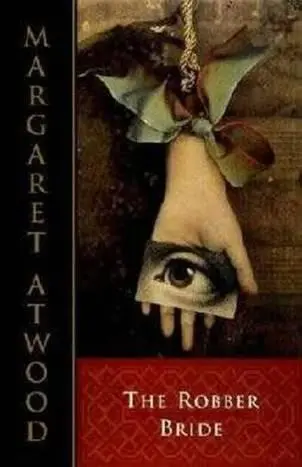
- Название:The Robber Bride
- Автор:
- Жанр:
- Год:1993
- ISBN:нет данных
- Рейтинг книги:5 / 5. Голосов: 1
-
Избранное:Добавить в избранное
- Отзывы:
-
Ваша оценка:
The Robber Bride: краткое содержание, описание и аннотация
Предлагаем к чтению аннотацию, описание, краткое содержание или предисловие (зависит от того, что написал сам автор книги «The Robber Bride»). Если вы не нашли необходимую информацию о книге — напишите в комментариях, мы постараемся отыскать её.
Even Zenia’s name is enough to provoke the old sense of outrage, of humiliation and confused pain. The truth is that at certain times—early mornings, the middle of the night—she finds it hard to believe that Zenia is really dead.’ Zenia is beautiful, smart and greedy; by turns manipulative and vulnerable, needy and ruthless; a man’s dream and a woman’s nightmare. She is also dead. Just to make absolutely sure Tony, Roz and Charis are there for the funeral. But five years on, as the three women share a sisterly lunch, the impossible happens: ‘with waves of ill will flowing out of her like cosmic radiation’, Zenia is back ...
This is the wise, unsettling, drastic story of three women whose lives share a common wound: Zenia, a woman they first met as university students in the sixties. Zenia is smart and beautiful, by turns manipulative, vulnerable—and irresistible. She has entered into their separate lives to ensnare their sympathy, betray their trust, and exploit their weaknesses. Now Zenia, thought dead, has suddenly reappeared. In this richly layered narrative, Atwood skilfully evokes the decades of the past as she retraces three women’s lives, until we are back in the present—where it’s yet to be discovered whether Zenia’s ‘pure, free-wheeling malevolence’ can still wreak havoc.
reports from the farthest reaches of the sex wars and is one of Margaret Atwood’s most intricate and subversive novels yet.
Exploring the paradox of female villainy, this tale of three fascinating women is another peerless display of literary virtuosity by the supremely gifted author of
and
. Roz, Charis and Tony all share a wound, and her name is Zenia. Beautiful, smart and hungry, by turns manipulative and vulnerable, needy and ruthless, Zenia is the turbulent center of her own neverending saga. She entered their lives in the sixties, when they were in college. Over the three decades since, she has damaged each of them badly, ensnaring their sympathy, betraying their trust, and treating their men as loot. Then Zenia dies, or at any rate the three women—with much relief -- attend her funeral. But as
begins, Roz, Charis and Tony have come together at a trendy restaraunt for their monthly lunch when in walks the seemingly resurrected Zenia...
In this consistently entertaining and profound new novel, Margaret Atwood reports from the farthest reaches of the war between the sexes with her characteristic well-crafted prose, rich and devious humor, and compassion.
The Robber Bride — читать онлайн бесплатно полную книгу (весь текст) целиком
Ниже представлен текст книги, разбитый по страницам. Система сохранения места последней прочитанной страницы, позволяет с удобством читать онлайн бесплатно книгу «The Robber Bride», без необходимости каждый раз заново искать на чём Вы остановились. Поставьте закладку, и сможете в любой момент перейти на страницу, на которой закончили чтение.
Интервал:
Закладка:
Go back, Otto, thinks Tony. She is fond of Otto, he’s =afavourite of hers; also she feels sorry for him because he had a fight with his wife that morning, before he left on this illstarred expedition, which may account for his recklessness. Losing your temper is bad for war. Otto, go back! But Otto can’t hear her, and he can’t see the world from above, as she can. If only he’d sent out scouts, if only he’d waited! But waiting can also be fatal. So can going back. He who fights and runs away may live to fight another day, or else he may just get speared from behind.
Already Otto has come too far. Already the great tweezers in the sky descend, and the green peppercorns rise up from behind the rocks, ride out of hiding, and give chase along the arid shore. Tony feels awful about this, but what can she do? She’s helpless. It’s too late. It was too late a thousand years ago. All she can do is visit the beach. She has done that, she has seen the hot dry mountains, she has pressed a small spiky flower for her scrapbook. She has bought a souvenir: a pair of salad servers, carved from olive wood.
Absent-mindedly she picks up one of Otto’s fallen cloves, dips it into her glass of water to get rid of any hairspray, and pops it into her mouth. It’s a bad habit of hers, eating parts of the armies on her map; luckily there are always replacements in the bottles on the spice shelves upstairs. But the dead soldiers would have been eaten too, one way or another; or at least dismembered, their possessions dispersed. That’s the thing about war: the polite formalities go by the wayside, and the proportion of funerals to actual deaths tends to be low. Already the Saracens are finishing off the wounded, a mercy under the (nurseless, waterless) circumstances, and stripping them of their armour and weapons. Already the scavenging peasants wait their turn. Already the vultures have gathered. ‘
It’s too late for Otto, but what about her? And if she had another chance, another turn, another beginning, with Zenia, would she have acted differently? She doesn’t know, because she’ knows too much to know.
XVIII
Tony was the first one of them to befriend Zenia; or rather, Tony was the first one to let her in, because people like Zenia can never step through your doorway, can never enter and entangle themselves in your life, unless you invite them. There has to be a recognition, an offer of hospitality, a word of greeting. Tony has come to realize this, although she didn’t at the time. The question she asks about herself now is simply: why did she do it? What was there about her, and also about Zenia, that made such a thing not only possible but necessary?
Because she did issue an invitation, there’s no doubt about it. She didn’t know she was doing it, but ignorance in such matters is no defence. She opened the door wide, and in came Zenia, like a long-lost friend, like a sister, like a wind, and Tony welcomed her.
It was a long time ago, in the early sixties, when Tony was nineteen; not a period she remembers with much pleasure, before the advent of Zenia. In retrospect it seems to her empty, cindery, devoid of comforts; though while she was undergoing it she considered that she was doing all right.
She studied a lot, she ate and slept, she rinsed out her stockings in the McClung Hall secondfloor washbasin and twisted them up in a towel and hung them neatly above the clanking radiator in her room, on a coat-hanger suspended from the curtain rod by a string. She had various little well-worn runways that got her through the weeks, like mice through a field; as long as she stayed on them she was safe. She was dogged, she plodded on, nose to the ground, wrapped in a protective numbness.
As she recalls, it was November. (She had a wall calendar on which she crossed off the days, though there was no special date she was heading towards or anticipating; but it gave her the feeling of moving forward.) She’d been living in McClung Hall for the past three years, ever since the death of her father. Her mother had died earlier and was presently in a metal canister the shape of a miniature depth charge, which she kept on a closet shelf, tucked in behind her folded sweaters. Her father was in the Necropolis, although his 1940s German pistol was in a box of old Christmas tree decorations, about all she’d kept from the family house. She’d been intending to reunite her parents—take a trowel to the Necropolis one day, plant her mother beside her father like an aluminum-alloy tulip bulb—but she was held back by the suspicion that her mother, at least, would have gone a long way to avoid such a thing. Anyway, she didn’t at all mind having her mother in her room, on her shelf, where she could keep an eye on her. (Assign her a location. Tether her down. Make her stay put.)
Tony had a room to herself because the girl who was supposed to be sharing with her had taken an overdose of sleeping pills and had had her stomach pumped, and had then disappeared. People tended to, in Tony’s experience. For weeks before she left, the roommate had stayed in bed all day with her clothes on, reading paperback novels and weeping softly. Tony hated that. It bothered her more than the sleeping pills.
Tony had the sensation of living by herself, but of course she was surrounded by others; other girls, or were they women? McClung Hall was called a women’s residence, but girls was what they said to one another. Hey girls, they would call, running up the stairs. Guess what!
Tony did not feel she had much in common with these other girls. Groups of them would spend the evenings—when they weren’t out on dates—in the Common Room, sprawled on the dispirited orangy-brown chesterfield and the three overstuffed and leaking easy chairs, in their pyjamas and housecoats and big bristly hair rollers, playing bridge and smoking and drinking coffee, and dissecting their dates.
Tony herself did not go out on dates; she did not have anybody to go with. She did not mind this; in any case, she was happier in the company of people who had died a long time ago. That way there was no painful suspense, no disappointment. Nothing to lose.
Roz was one of the Common Room girls. She had a loud voice, and called Tony Toinette, or, worse, Tonikins; even then she’d wanted to dress Tony up, like a doll. Tony hadn’t liked her, at that period. She’d considered her intrusive and crude and smothering.
The girls in general thought Tony was odd, but they weren’t hostile towards her. Instead they made a pet of her. They liked to feed her bits of the contraband food they kept hidden in their rooms—chocolate bars, cookies, potatochips. (Food in the rooms was officially forbidden, because of the cockroaches and mice.) They liked to give her little rumphngs of the hair, little squeezes. People find it hard to keep their hands off the small—so like kittens, so like babies. Tiny Tony.
They would call out to her as she scuttled past them on her way to her room: Tony! Hey! Hey Tone! How’s it goin’? Frequently Tony resisted them, or avoided them altogether. But sometimes she would go into the Common Room and drink their sedimentary coffee and nibble their sandy cookies. Then they would get her to write their names for them, backwards and forwards at the same time, one name with each hand; they would crowd around, marvelling at what she herself felt to be self-evident, a minor and spurious magic.
Tony wasn’t the only girl with a specialty. One of them could make a sound like a motorboat starting up, several—including Roz—were in the habit of drawing faces on their stomachs with eyebrow pencils and lipsticks and then performing a belly dance that made the painted mouths open and close grotesquely, and another did a trick involving a glass of water, an empty toiletpaper roll, a broomstick, an aluminum pie pan, and an egg. Tony found these accomplishments much more valid than her own. What she did required no skill, no practice; it was merely like being double-jointed, or being able to wiggle your ears.
Читать дальшеИнтервал:
Закладка:
Похожие книги на «The Robber Bride»
Представляем Вашему вниманию похожие книги на «The Robber Bride» списком для выбора. Мы отобрали схожую по названию и смыслу литературу в надежде предоставить читателям больше вариантов отыскать новые, интересные, ещё непрочитанные произведения.




Обсуждение, отзывы о книге «The Robber Bride» и просто собственные мнения читателей. Оставьте ваши комментарии, напишите, что Вы думаете о произведении, его смысле или главных героях. Укажите что конкретно понравилось, а что нет, и почему Вы так считаете.