Margaret Atwood - The Robber Bride
Здесь есть возможность читать онлайн «Margaret Atwood - The Robber Bride» весь текст электронной книги совершенно бесплатно (целиком полную версию без сокращений). В некоторых случаях можно слушать аудио, скачать через торрент в формате fb2 и присутствует краткое содержание. Год выпуска: 1993, Жанр: Современная проза, на английском языке. Описание произведения, (предисловие) а так же отзывы посетителей доступны на портале библиотеки ЛибКат.
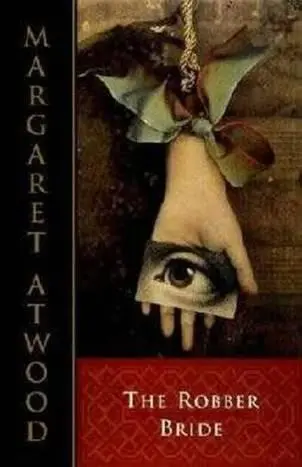
- Название:The Robber Bride
- Автор:
- Жанр:
- Год:1993
- ISBN:нет данных
- Рейтинг книги:5 / 5. Голосов: 1
-
Избранное:Добавить в избранное
- Отзывы:
-
Ваша оценка:
The Robber Bride: краткое содержание, описание и аннотация
Предлагаем к чтению аннотацию, описание, краткое содержание или предисловие (зависит от того, что написал сам автор книги «The Robber Bride»). Если вы не нашли необходимую информацию о книге — напишите в комментариях, мы постараемся отыскать её.
Even Zenia’s name is enough to provoke the old sense of outrage, of humiliation and confused pain. The truth is that at certain times—early mornings, the middle of the night—she finds it hard to believe that Zenia is really dead.’ Zenia is beautiful, smart and greedy; by turns manipulative and vulnerable, needy and ruthless; a man’s dream and a woman’s nightmare. She is also dead. Just to make absolutely sure Tony, Roz and Charis are there for the funeral. But five years on, as the three women share a sisterly lunch, the impossible happens: ‘with waves of ill will flowing out of her like cosmic radiation’, Zenia is back ...
This is the wise, unsettling, drastic story of three women whose lives share a common wound: Zenia, a woman they first met as university students in the sixties. Zenia is smart and beautiful, by turns manipulative, vulnerable—and irresistible. She has entered into their separate lives to ensnare their sympathy, betray their trust, and exploit their weaknesses. Now Zenia, thought dead, has suddenly reappeared. In this richly layered narrative, Atwood skilfully evokes the decades of the past as she retraces three women’s lives, until we are back in the present—where it’s yet to be discovered whether Zenia’s ‘pure, free-wheeling malevolence’ can still wreak havoc.
reports from the farthest reaches of the sex wars and is one of Margaret Atwood’s most intricate and subversive novels yet.
Exploring the paradox of female villainy, this tale of three fascinating women is another peerless display of literary virtuosity by the supremely gifted author of
and
. Roz, Charis and Tony all share a wound, and her name is Zenia. Beautiful, smart and hungry, by turns manipulative and vulnerable, needy and ruthless, Zenia is the turbulent center of her own neverending saga. She entered their lives in the sixties, when they were in college. Over the three decades since, she has damaged each of them badly, ensnaring their sympathy, betraying their trust, and treating their men as loot. Then Zenia dies, or at any rate the three women—with much relief -- attend her funeral. But as
begins, Roz, Charis and Tony have come together at a trendy restaraunt for their monthly lunch when in walks the seemingly resurrected Zenia...
In this consistently entertaining and profound new novel, Margaret Atwood reports from the farthest reaches of the war between the sexes with her characteristic well-crafted prose, rich and devious humor, and compassion.
The Robber Bride — читать онлайн бесплатно полную книгу (весь текст) целиком
Ниже представлен текст книги, разбитый по страницам. Система сохранения места последней прочитанной страницы, позволяет с удобством читать онлайн бесплатно книгу «The Robber Bride», без необходимости каждый раз заново искать на чём Вы остановились. Поставьте закладку, и сможете в любой момент перейти на страницу, на которой закончили чтение.
Интервал:
Закладка:
No street smarts at all, and Zenia is a street fighter. She kicks hard, she kicks low and dirty, and the only counterploy is to kick her first, with metal cleats on your boots. If there’s going to be knife play, Roz will have to rely on herself alone. She doesn’t need Tony’s analysis of knives through the ages or Charis’s desire not to discuss sharp items of cutlery because they are so negative. She just needs to know where the jugular is, so she can go for it.
The difficulty is that Zenia doesn’t have a jugular. Or if she does Roz has never been able to figure out where it is, or how to get at it. Zenia of old had no discernible heart, and by now she may not even have blood. Pure latex flows in her veins. Or molten steel. Unless she’s changed, and it hardly looks that way. In any case this is the second time round, and Roz is ready for it, and much less vulnerable, because this time there’s no more Mitch.
All of this resolution and bravura is very well, but when Roz gets back to her car she finds a little message scratched in her paint, on the driver’s door. Rich Bitch. A neatly lettered message, relatively polite—in the States it would have been Cunt—and ordinarily Roz would merely have calculated the cost of the repair and how much time it would take to get it done, and whether it’s deductible. Also she would take out her annoyance by making a scene with the parking lot attendant. Who did this? What do you mean, you don’t know? What were you, asleep? Darn it, what the heck do they pay you for?
But today she’s not in the mood. She unlocks her car, checks the back seat to make sure nobody’s in there—she hasn’t read all those sex-killing thrillers for nothing—gets in, locks the door again, and has a small cry, in her usual position, with her forehead on the steering wheel and her new cotton hankie at the ready. (The twins have outlawed paper tissues. They’re relentless, they don’t give two hoots about Maria’s extra ironing. Pretty soon Roz won’t even be allowed toilet paper, they’ll make her use old T-shirts. Or something.)
Her tears are not tears of mourning, nor of despair. They are tears of rage. Roz knows the flavour well. But at her age, rage for the sake of rage is becoming less and less worth it, because every time you grind your teeth a few of them could break off. So she blots her face, finishing with her sleeve because her hankie is soaked, re-does her lipstick (Rubicon, here I come), touches up her mascara, and guns her motor, gravel spewing from beneath her wheels. She half hopes she can graze a fender on the way out, pass along some anger—Oops! So-o-o sorry! It would be a substitute, the next best thing to strangling Zenia. But there’s no car in a prime position, and the attendant’s looking. Oh well, it’s the thought that counts.
Roz goes up to her office—Hi Nicki, Hi Suzy, How’s it going Boyce, anything important, is there some more coffee, hold the calls, say I’m in a meeting—and shuts the door. She sits in her leather chair and lights up, and ferrets in her in-basket for a chocolate, one of those round Viennese things with portraits of Mozart on them, Mozart Balls is what the kids call them, and chews and swallows, and drums her fingers on her unsatisfactory desk. Mitch is staring at her and it bothers her, so she gets up and turns the picture around, averting his gaze. You aren’tgoing to like this, she tells him. He didn’t the last time, either. Once he found out what she’d been doing.
She opens her file drawer and takes out the Z file, the same one with the glossy in it, and turns a few pages. There it all is, the skeleton of the skeleton in the closet: days, hours, places. It still hurts.
Why not use the same detective, less explaining to be done, and she was super good, Harriet, Harriet Thing, Hungarian but she wASPed her name—Harriet Bridges. Used to say she got to be a detective because if you were a Hungarian woman dealing with Hungarian men, you had to be one anyway. Roz finds the number, picks up the phorit. She has to go through a gatekeeper to get through—Harriet must be doing better if she has a secretary, or probably it’s one of those service-sharing offices—but she wheedles and pushes, and Harriet is finally not in a meeting any more, but there on the line.
“Hi, Harriet, this is Roz Andrews. Yeah, I know, it’s been years. Listen, I want you to do something for me. Actually, the same thing you did before, sort of. The same woman. Well, I know she’s dead. I mean, she was dead, but now she isn’t. I saw her! In the Toxique ...
“I haven’t the faintest. That’s where you come in!
“If I were you I’d start with the hotels, but you can’t count on her using her own name. Remember?
“I’ll send over the photo by courier. Just find her. Find out what she’s up to. Who she’s seeing. Phone me as soon as you know anything. Anything! What she has for breakfast. You know how nosy I am.
“Mark the bill Personal. Thanks. You’re a doll. We’ll do lunch!”
Roz hangs up. She ought to feel better but she doesn’t, she’s too keyed up. Now that she’s set the thing in motion she can hardly wait for the results, because until she knows exactly where Zenia is, Zenia might be anywhere. She might be outside Roz’s house right now, she might be climbing in through the window, gunny sack over her shoulder to carry away the loot. What loot? That’s the question! Roz is almost ready to go out there and do the rounds herself, mooch from hotel to hotel with her precious glossy photo under her arm, lie, insinuate, bribe the desk clerks. She’s impatient, she’s irritable, she’s avid, her skin is crawling with curiosity.
Maybe it’s menopause, now wouldn’t that be nice for a change? Maybe she’ll get that surge of energy and joie de vivre they’re always talking about. It’s long overdue.
Or maybe this isn’t raging hormones. Maybe it’s sin. One of the Seven Deadlies, or rather two of them. The nuns were always keen on Lust, and Roz has thought recently that maybe Greed was the one with her own name on it. But here comes Anger, bhndsiding her; and Envy, the worst, her old familiar, in the shape of Zenia herself, smiling and triumphant, an incandescent Venus, ascending not from a seashell but from a seething cauldron.
Let’s face it, Roz, you’re envious of Zenia. You always have been. Envious as Hell. Yes God, but so what? Judas Priest, what do I do about it? Down on your knees! Humiliate yourse f Mortify your soul! Scrub the toilet!
How long do I have to live before I’m rid of this junk, thinks Roz. The garage sale of the soul. She’ll go home early, have a snack, pour herself a small drink, run a bath, put in some of the stuff Charis keeps deluging her with, from that hophead store where she works. Groundup leaves, dried flowers, exotic roots, musty-hayfield aromas, snake oil, mole bones, age-old recipes brewed by certified crones. Not that Roz has a thing against crones, since at the rate she’s going she’ll soon be one herself
It’ll relax you, says Charis, though Roz, you have to help out! Don’t fight it! Go with it. Lie back. Float. Picture yourself in a warm ocean.
But every time Roz tries this, there are sharks.
Black Enamel
XVII
All history is written backwards, writes Tony, writing backwards. We choose a significant event and examine its causes and its consequences, but who decides whether, the event is significant? We do, and we are here; and it and its participants are there. They are long gone; at the same time, they are in our hands. Like Roman gladiators, they are under our thumbs. We make them fight their battles over again for our edification and pleasure, who fought them once for entirely other reasons.
Yet history is not a true palindrome, thinks Tony. We can’t really run it backwards and end up at a clean start. Too many of the pieces have gone missing; also we know too much, we know the outcome. Historians are the quintessential voyeurs, noses pressed to Time’s glass window. They can never actually be there on the battlefield, they can never join in those moments of supreme exaltation, or of supreme grief either. Their re-creations are at the best just patchy waxworks. Who’d choose to be God? To know the whole story, its violent dashes, its melees, its deadly conclusions, before it even begins? Too sad. And too demoralizing. For a soldier on the eve of battle; ignorance is the same as hope. Though neither one is bliss.
Читать дальшеИнтервал:
Закладка:
Похожие книги на «The Robber Bride»
Представляем Вашему вниманию похожие книги на «The Robber Bride» списком для выбора. Мы отобрали схожую по названию и смыслу литературу в надежде предоставить читателям больше вариантов отыскать новые, интересные, ещё непрочитанные произведения.



Обсуждение, отзывы о книге «The Robber Bride» и просто собственные мнения читателей. Оставьте ваши комментарии, напишите, что Вы думаете о произведении, его смысле или главных героях. Укажите что конкретно понравилось, а что нет, и почему Вы так считаете.