Margaret Atwood - The Robber Bride
Здесь есть возможность читать онлайн «Margaret Atwood - The Robber Bride» весь текст электронной книги совершенно бесплатно (целиком полную версию без сокращений). В некоторых случаях можно слушать аудио, скачать через торрент в формате fb2 и присутствует краткое содержание. Год выпуска: 1993, Жанр: Современная проза, на английском языке. Описание произведения, (предисловие) а так же отзывы посетителей доступны на портале библиотеки ЛибКат.
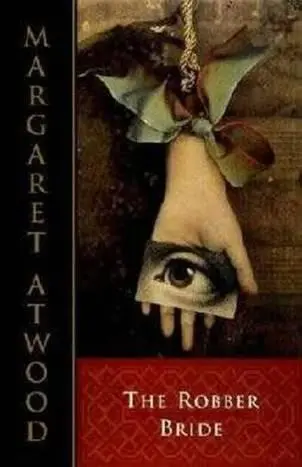
- Название:The Robber Bride
- Автор:
- Жанр:
- Год:1993
- ISBN:нет данных
- Рейтинг книги:5 / 5. Голосов: 1
-
Избранное:Добавить в избранное
- Отзывы:
-
Ваша оценка:
The Robber Bride: краткое содержание, описание и аннотация
Предлагаем к чтению аннотацию, описание, краткое содержание или предисловие (зависит от того, что написал сам автор книги «The Robber Bride»). Если вы не нашли необходимую информацию о книге — напишите в комментариях, мы постараемся отыскать её.
Even Zenia’s name is enough to provoke the old sense of outrage, of humiliation and confused pain. The truth is that at certain times—early mornings, the middle of the night—she finds it hard to believe that Zenia is really dead.’ Zenia is beautiful, smart and greedy; by turns manipulative and vulnerable, needy and ruthless; a man’s dream and a woman’s nightmare. She is also dead. Just to make absolutely sure Tony, Roz and Charis are there for the funeral. But five years on, as the three women share a sisterly lunch, the impossible happens: ‘with waves of ill will flowing out of her like cosmic radiation’, Zenia is back ...
This is the wise, unsettling, drastic story of three women whose lives share a common wound: Zenia, a woman they first met as university students in the sixties. Zenia is smart and beautiful, by turns manipulative, vulnerable—and irresistible. She has entered into their separate lives to ensnare their sympathy, betray their trust, and exploit their weaknesses. Now Zenia, thought dead, has suddenly reappeared. In this richly layered narrative, Atwood skilfully evokes the decades of the past as she retraces three women’s lives, until we are back in the present—where it’s yet to be discovered whether Zenia’s ‘pure, free-wheeling malevolence’ can still wreak havoc.
reports from the farthest reaches of the sex wars and is one of Margaret Atwood’s most intricate and subversive novels yet.
Exploring the paradox of female villainy, this tale of three fascinating women is another peerless display of literary virtuosity by the supremely gifted author of
and
. Roz, Charis and Tony all share a wound, and her name is Zenia. Beautiful, smart and hungry, by turns manipulative and vulnerable, needy and ruthless, Zenia is the turbulent center of her own neverending saga. She entered their lives in the sixties, when they were in college. Over the three decades since, she has damaged each of them badly, ensnaring their sympathy, betraying their trust, and treating their men as loot. Then Zenia dies, or at any rate the three women—with much relief -- attend her funeral. But as
begins, Roz, Charis and Tony have come together at a trendy restaraunt for their monthly lunch when in walks the seemingly resurrected Zenia...
In this consistently entertaining and profound new novel, Margaret Atwood reports from the farthest reaches of the war between the sexes with her characteristic well-crafted prose, rich and devious humor, and compassion.
The Robber Bride — читать онлайн бесплатно полную книгу (весь текст) целиком
Ниже представлен текст книги, разбитый по страницам. Система сохранения места последней прочитанной страницы, позволяет с удобством читать онлайн бесплатно книгу «The Robber Bride», без необходимости каждый раз заново искать на чём Вы остановились. Поставьте закладку, и сможете в любой момент перейти на страницу, на которой закончили чтение.
Интервал:
Закладка:
Sometimes they would beg her to sing backwards for them, and if they pestered enough and if Tony was feeling strong, she would oblige. In her off-key, surprisingly raspy voice, the voice of a choir-child with a cold, she would sing:
Gnilrad ym ho, Gnilrad ym ho, Gnilrad ym ho, Enitn(e)meic, Reverof (e)nog dna tsol er(a) uoy, Yrros lufdaerd,
Enitn(e)melc.
In order to make it scan she would claim that three of the vowels were silent, and that uo was a diphthong. Why not? All languages had such tics, and this was her language; so its rules and its irregularities were at her mercy.
The other girls found this song hilarious, especially since Tony never cracked a smile, never twinkled, never twitched. She did it straight. The truth was that she didn’t find it funny, this song about a woman who had drowned in a ludicrous fashion, who was not mourned, who was ultimately forgotten. She found it sad. Lost and gone forever. Why did they laugh?
When she wasn’t with these girls she didn’t think much about them—about their edgy jokes, their group smell of pyjamas and hair gel and damp flesh and talcum, their welcoming chirps and clucks, their indulgent smirks behind her back: droll Tony. Instead she thought about wars.
-Wars, and also battles, which were not the same thing.
What she liked was to replay decisive battles, to see if they could conceivably have been won by the losing side. She studied the maps and the accounts, the disposition of troops, the technologies. A different choice of ground could have tipped the scales, or a different way of thinking, because thought could be a technology. A strong religious faith, because God too was a military weapon. Or a different weather, a different season. Rain was crucial; snow also. So was luck.
She had no biases, she was never for one side and against the other. The battles were problems that might have been solved in another way. Some had been unwinnable, no matter what; others not. She kept a battle notebook, with her alternative solutions and the scores. The scores were the men lost. “Lost,” they were called, as if they had been forgetfully misplaced somewhere and would be found again later. Really it meant killed. Lost and gone forever. Dreadful sorry, the generals would say afterwards, if they themselves were still alive.
She was smart enough not to mention this interest of hers to the other girls. If known about, it would have pushed her over the edge: from strange but cute to truly pathological. She wanted to retain the option of cookies.
There were a few other girls in residence who were like Tony, who snuck past the housecoated bridge players and avoided communal meals. These girls didn’t band together; they didn’t even speak to one another, apart from nods and hellos. Tony suspected them of having secret preoccupations, secret and risible and unacceptable ambitions, like her own.
One of these isolates was Charis. Her name wasn’t Charis then, but plain Karen. (It changed sometime in the sixties, when there were a lot of nomenclatural mutations.) Charis—Karen was a thin girl; willowy was one of the words that came to mind, like willows, with their swaying branches, their shivering fountains of blonde leaves. The other word was amnesiac.
Charis meandered: Tony saw her sometimes, on the way to and from classes, wandering slantways across the street, always—it seemed—in danger of being run over. She wore long dirndl skirts with wedges of slip showing beneath them; things fell out of her purses, or rather her bags, which were woven, ravelling, and embroidered. When she strayed into the Common Room it was always to ask if anyone had seen her other glove, her mauve scarf, her fountain pen. Usually no one had.
One evening when Tony was coming back from the library she saw Charis climbing down the McClung fire escape at the side of the building. She was wearing what looked like her nightgown; at any rate it was long and white and billowy. She reached the bottom platform, hung by her hands for a minute, then dropped the last few yards and began to walk towards Tony. Her feet were bare.
She was sleepwalking, Tony decided. She wondered what to do. She knew you weren’t supposed to wake sleepwalkers, although she had forgotten why. Charis was none of her business, she’d never said more than two words to her, but she felt she ought to follow her to make sure no moving vehicles bumped into her. (If this had been happening now Tony would have included rape among the possibilities: a young woman in a nightgown, outside in the dark, in downtown Toronto, would be heavily at risk. Charis might have been at risk then too, but rape was not among Tony’s daily-life categories at that time. Rape went with pillage, and was historical.)
Charis didn’t go far. She walked through several piles of raked-up leaves, from the maples and chestnuts on the McClung lawn; then she turned around and walked back through them again, with Tony sneaking along behind her like a butterfly collector. After that she sat down under one of the trees.
Tony wondered how long she was going to stay there. It was getting cold, and she wanted to go inside; but she couldn’t just leave Charis out on the lawn, sitting under a tree in her nightgown. So she sat down under the tree next to Charis’s. The ground was not dry. Tony hoped nobody would see her out there, but luckily it was quite dark and she had on a grey coat. Unlike Charis, who glimmered faintly.
After a while a voice spoke to Tony out of the darkness. “I’m not asleep,” it said. “But thank you anyway.”
Tony was annoyed. She felt she had been led on. She didn’t find this behaviour of Charis’s—traipsing around in her bare feet and her nightgown—at all mysterious or intriguing. She found it theatrical and bizarre. Roz and the girls in the Common Room might be abrasive, but at least they were solid and uncomplicated, they were known quantities. Charis on the other hand was slippery and translucent and potentially clinging, like soap film or gelatin or the prehensile tentacles of sea anemones. If you touched her, some of her might come off on you. She was contagious, and better left alone.
XIX
None of the McClung Hall girls had anything to do with Zenia. And Zenia would have nothing to do with them. She wouldn’t have lived in a women’s residence if forced at gunpoint, as she said to Tony the first time she set foot in the place. This dump, she called it.
(Why had she come? To borrow something. What was it? Tony doesn’t wish to remember, but remembers anyway: it was money. Zenia was always running short. Tony found it embarrassing to be asked, but she would have found it more embarrassing still to refuse. What she finds embarrassing now is that she so naively, so tamely, so obligingly forked over.)
“Residence is for small people,” Zenia said, gazing contemptuously around her, at the institutional paintwork, the shoddy chairs in the Common Room, the comic strips cut out of the newspaper and Scotch-taped to the girls’ doors.
“Right,” said Tony, heavily.
Zenia looked down at Tony, smiling, correcting herself. “Imaginatively small. I don’t mean you.”
Tony was relieved, because Zenia’s contempt was a work of art. It was so nearly absolute; it was a great privilege to find yourself excluded from it. You felt reprieved, you felt vindicated, you felt grateful; or this is what Tony felt, pattering off to her room, locating her little chequebook, writing out her little cheque. Offering it up. Zenia took it carelessly, folded it twice, and stuck it into her sleeve. Both of them tried to act as if nothing had happened; as if nothing had changed hands, as if nothing at all was owed.
How she must have hated me for that, thinks Tony.
So Tony did not meet Zenia among the girls at McClung Hall. She met her instead through her friend West.
Читать дальшеИнтервал:
Закладка:
Похожие книги на «The Robber Bride»
Представляем Вашему вниманию похожие книги на «The Robber Bride» списком для выбора. Мы отобрали схожую по названию и смыслу литературу в надежде предоставить читателям больше вариантов отыскать новые, интересные, ещё непрочитанные произведения.






Обсуждение, отзывы о книге «The Robber Bride» и просто собственные мнения читателей. Оставьте ваши комментарии, напишите, что Вы думаете о произведении, его смысле или главных героях. Укажите что конкретно понравилось, а что нет, и почему Вы так считаете.