Margaret Atwood - The Robber Bride
Здесь есть возможность читать онлайн «Margaret Atwood - The Robber Bride» весь текст электронной книги совершенно бесплатно (целиком полную версию без сокращений). В некоторых случаях можно слушать аудио, скачать через торрент в формате fb2 и присутствует краткое содержание. Год выпуска: 1993, Жанр: Современная проза, на английском языке. Описание произведения, (предисловие) а так же отзывы посетителей доступны на портале библиотеки ЛибКат.
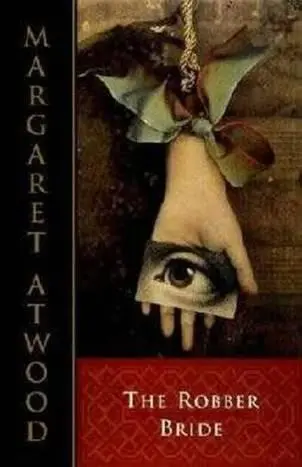
- Название:The Robber Bride
- Автор:
- Жанр:
- Год:1993
- ISBN:нет данных
- Рейтинг книги:5 / 5. Голосов: 1
-
Избранное:Добавить в избранное
- Отзывы:
-
Ваша оценка:
The Robber Bride: краткое содержание, описание и аннотация
Предлагаем к чтению аннотацию, описание, краткое содержание или предисловие (зависит от того, что написал сам автор книги «The Robber Bride»). Если вы не нашли необходимую информацию о книге — напишите в комментариях, мы постараемся отыскать её.
Even Zenia’s name is enough to provoke the old sense of outrage, of humiliation and confused pain. The truth is that at certain times—early mornings, the middle of the night—she finds it hard to believe that Zenia is really dead.’ Zenia is beautiful, smart and greedy; by turns manipulative and vulnerable, needy and ruthless; a man’s dream and a woman’s nightmare. She is also dead. Just to make absolutely sure Tony, Roz and Charis are there for the funeral. But five years on, as the three women share a sisterly lunch, the impossible happens: ‘with waves of ill will flowing out of her like cosmic radiation’, Zenia is back ...
This is the wise, unsettling, drastic story of three women whose lives share a common wound: Zenia, a woman they first met as university students in the sixties. Zenia is smart and beautiful, by turns manipulative, vulnerable—and irresistible. She has entered into their separate lives to ensnare their sympathy, betray their trust, and exploit their weaknesses. Now Zenia, thought dead, has suddenly reappeared. In this richly layered narrative, Atwood skilfully evokes the decades of the past as she retraces three women’s lives, until we are back in the present—where it’s yet to be discovered whether Zenia’s ‘pure, free-wheeling malevolence’ can still wreak havoc.
reports from the farthest reaches of the sex wars and is one of Margaret Atwood’s most intricate and subversive novels yet.
Exploring the paradox of female villainy, this tale of three fascinating women is another peerless display of literary virtuosity by the supremely gifted author of
and
. Roz, Charis and Tony all share a wound, and her name is Zenia. Beautiful, smart and hungry, by turns manipulative and vulnerable, needy and ruthless, Zenia is the turbulent center of her own neverending saga. She entered their lives in the sixties, when they were in college. Over the three decades since, she has damaged each of them badly, ensnaring their sympathy, betraying their trust, and treating their men as loot. Then Zenia dies, or at any rate the three women—with much relief -- attend her funeral. But as
begins, Roz, Charis and Tony have come together at a trendy restaraunt for their monthly lunch when in walks the seemingly resurrected Zenia...
In this consistently entertaining and profound new novel, Margaret Atwood reports from the farthest reaches of the war between the sexes with her characteristic well-crafted prose, rich and devious humor, and compassion.
The Robber Bride — читать онлайн бесплатно полную книгу (весь текст) целиком
Ниже представлен текст книги, разбитый по страницам. Система сохранения места последней прочитанной страницы, позволяет с удобством читать онлайн бесплатно книгу «The Robber Bride», без необходимости каждый раз заново искать на чём Вы остановились. Поставьте закладку, и сможете в любой момент перейти на страницу, на которой закончили чтение.
Интервал:
Закладка:
Roz has her own list. She still does Battered Women, she still does Rape Victims, she still does Homeless Moms. How much compassion is enough? She’s never known, and you have to draw the line somewhere, but she still does Abandoned Grannies. She no longer attends the formal dinner-dances though. She can hardly go alone, and it’s too depressing, rounding up some sort of a date. There would be takers, but what would they want in return? She recalls the dispiriting period after Mitch’s departure, when she was suddenly fair game and all those husbands-on-the-make came out of the woodwork, one hand on her thigh, one eye on her bank balance. Quite a few drinks she shouldn’t have drunk, quite a few entanglements that did her no good at all, and how to get them out of her bleached-bone-coloured bedroom in the morning without the kids seeing? Thanks a bunch, she thinks, but no thanks.
“B’nai Brith?” says Boyce. “The Marian Society?”
“Nothing religious, Boyce,” says Roz. “You know the rule.” God is complicated enough without being used as a fundraiser.
At eleven they take a meeting in the boardroom, with a new company, a little something Roz is thinking of investing in. Boyce puts on his businessman look, solemn and dull, conservative as heck, Roz could hug him to bits and she sure hopes his own mother appreciates him. She remembers her very first meeting like this: she’d grown up thinking business was something mysterious, something way beyond her, something her father did behind closed doors. Something only fathers did, thatgirls were forever too dull-witted to understand. But it was just a bunch of men sitting in a room, frowning and pondering and twiddling their gold-filled pens and trying to fake each other out. She’d sat there watching, trying to keep her mouth from falling open in astonishment. Hey! Is this all there is? Holy Moly, I can do this! And she can, she can do it better. Better than most. Most of the time.
Canadian businessmen are such wimps, by and large; they think if they keep their money under the pillow the nickels will breed with the dimes and give birth to quarters. All that chest thumping they did over the free trade thing! We have to be aggressive, they said, and now they’re whining and sucking their thumbs and asking for tax breaks. Or else moving their businesses south of the border. Aggressively Canadian, what a contradiction in terms, it is to laugh! Roz herself is a gambler. Not reckless gambling—informed gambling; but gambling nonetheless. Otherwise, where’s the fun?
This group is from Lookmakers: cheap but high-quality cosmetics, and no bunny-torturing, it goes without saying. They started as a house-party outfit, like Tupperware, and then expanded with a special line for actresses and models; but now they’re growing like mad and they want a retail outlet, with franchises a possibility. Roz thinks there’s something to it. She’s done her homework, or rather Boyce has, and in a recession—let’s not mince words, depression—women buy more lipsticks. A little prezzie to yourself, a little reward, not that expensive and it cheers you up. Roz knows all about it. She may be rich but she can still think poor, it’s an advantage. She likes the name, too, Z,ookmakers. It’s bracing, it implies effort, a striding forth, a rolling up of the sleeves. A taking of risks.
Lookmakers is two men and two women, thirty-odd, obsequious to break your heart, with a lot of diagrams and photos and samples and graphs. The poor sweeties have worked their tiny behinds off for this meeting, so although Roz has already made up her mind she lets them do their pitch, while she sits back in her chair and makes memo notes in her head about a fresh product line. She’s tired of just moving money around the map, she’s ready for something more hands-on again. This could be quite exciting! She’ll get them to do some different names, move away from the languor, the toxicity and musky heaviness that was all the rage a few years ago. She has a flair.
“What do you think, B.©yce?” she says, after the quartet have bowed and scraped their way out and Boyce has said they’d call them tomorrow. Never make the deal on the same day, is Roz’s motto. Let them cool their jets, it gets the price down. “Should we have a flutter?”
“My eyes, my ancient, glittering eyes, are gay,” says Boyce. “Yeats: “
“So are mine,” says Roz. “A controlling interest, as usual?” Roz has burned her fingers a few times, she doesn’t buy anything now that she can’t control.
“I must say, Ms. Andrews,” says Boyce, admiringly, “you have a gourmet’s taste for the underbelly.”
“Darn it, Boyce,” says Roz, “don’t make me sound so blood-thirsty. It’s just good business.”
Roz goes back to her office and flips through the pink slips of her phone messages, shuffling them like cards: these for Boyce to answer, these for Suzy, these for herself. She scribbles on them, instructions, comments. She feels good, revved up for innovation.
Now there’s a pause; she just has time for a quick smoke. She sits down in her expensive leather-upholstered chair, behind her expensive desk, sleek, modern, handmade, no longer satisfying. It’s time for a change of desk; what she’d like is something antique, with all those cute little hidden drawers. From her desktop the twins, age nine, look out at her from their photo, in their pink birthday-parry dresses, mauling a long-gone cat. Then later, in their black semi-formals, at the annual Father-Daughter Dance put on by the school, an odd event considering the widespread shortage of fathers. Roz made Larry go, and coerced Boyce into being the second man. The twins said he was a cool dancer. Next to the four of them, silver-framed, is Larry all by himself, in his graduation gown, so serious. A worry.
Next to him is Mitch.
Guilt descends, billowing softly like a huge grey parachute, riderless, the harness empty. Her gold wedding ring weighs heavy as lead on her hand. She should dump this picture of him, grinning at her so jauntily from the art nouveau brass frame, but with that uncertainty in the eyes. Always, but she didn’t see it. Not my fault, she tells him. Zenia is still here, in this building, in this room; tiny fragments of her burnt and broken soul infest the old woodwork like termites, gnawing away from within. Roz should have the place fumigated. What are those people called? Exorcists. But she doesn’t believe in them.
On impulse she rummages in her desk drawer, finds the poisonous file, and buzzes next door for Boyce. She’s never told him anything about this, never discussed it, and he’s only worked for her two years; maybe he doesn’t know the story. Though everyone must know it, surely: this is gossip city. “Boyce, your honest opinion. What do you think?”
What she hands him is an eight-by-ten colour glossy of Zenia, a studio portrait, the same one they’d used for Wise Woman World when Zenia was the editor, and also the one Roz herself passed to the private detective when she was going through that humiliating snoop act. A dark dress with texture, plushy, V—necked of course—if you’ve got it, flaunt it, even if it’s sryrofoam; the long white throat, the dark electrical hair, the left eyebrow quirked, the mulberry-coloured mouth curved up at the edges in that maddening, secretive smile.
My own monster, thinks Roz. I thought I could control her: Then she broke loose.
Boyce assumes, or pretends to assume, that Zenia is someone Roz is considering as a model for Lookmakers. He holds the photo between thumb and forefinger as if it has germs, purses his lips. “The chair she sat in, like a burnished throne, etcetera,” he says. “The leather garterbelt brigade, I’d say. Whips and chains, and overdone; I mean, that hair looks like a wig. Definitely not the nineties, Ms. Andrews. Vieux jeu, and don’t you think she’s a little old for our target market?”
Читать дальшеИнтервал:
Закладка:
Похожие книги на «The Robber Bride»
Представляем Вашему вниманию похожие книги на «The Robber Bride» списком для выбора. Мы отобрали схожую по названию и смыслу литературу в надежде предоставить читателям больше вариантов отыскать новые, интересные, ещё непрочитанные произведения.


Обсуждение, отзывы о книге «The Robber Bride» и просто собственные мнения читателей. Оставьте ваши комментарии, напишите, что Вы думаете о произведении, его смысле или главных героях. Укажите что конкретно понравилось, а что нет, и почему Вы так считаете.