Margaret Atwood - The Robber Bride
Здесь есть возможность читать онлайн «Margaret Atwood - The Robber Bride» весь текст электронной книги совершенно бесплатно (целиком полную версию без сокращений). В некоторых случаях можно слушать аудио, скачать через торрент в формате fb2 и присутствует краткое содержание. Год выпуска: 1993, Жанр: Современная проза, на английском языке. Описание произведения, (предисловие) а так же отзывы посетителей доступны на портале библиотеки ЛибКат.
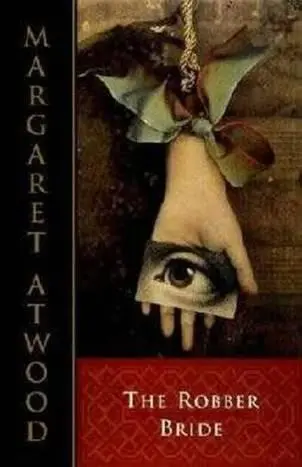
- Название:The Robber Bride
- Автор:
- Жанр:
- Год:1993
- ISBN:нет данных
- Рейтинг книги:5 / 5. Голосов: 1
-
Избранное:Добавить в избранное
- Отзывы:
-
Ваша оценка:
The Robber Bride: краткое содержание, описание и аннотация
Предлагаем к чтению аннотацию, описание, краткое содержание или предисловие (зависит от того, что написал сам автор книги «The Robber Bride»). Если вы не нашли необходимую информацию о книге — напишите в комментариях, мы постараемся отыскать её.
Even Zenia’s name is enough to provoke the old sense of outrage, of humiliation and confused pain. The truth is that at certain times—early mornings, the middle of the night—she finds it hard to believe that Zenia is really dead.’ Zenia is beautiful, smart and greedy; by turns manipulative and vulnerable, needy and ruthless; a man’s dream and a woman’s nightmare. She is also dead. Just to make absolutely sure Tony, Roz and Charis are there for the funeral. But five years on, as the three women share a sisterly lunch, the impossible happens: ‘with waves of ill will flowing out of her like cosmic radiation’, Zenia is back ...
This is the wise, unsettling, drastic story of three women whose lives share a common wound: Zenia, a woman they first met as university students in the sixties. Zenia is smart and beautiful, by turns manipulative, vulnerable—and irresistible. She has entered into their separate lives to ensnare their sympathy, betray their trust, and exploit their weaknesses. Now Zenia, thought dead, has suddenly reappeared. In this richly layered narrative, Atwood skilfully evokes the decades of the past as she retraces three women’s lives, until we are back in the present—where it’s yet to be discovered whether Zenia’s ‘pure, free-wheeling malevolence’ can still wreak havoc.
reports from the farthest reaches of the sex wars and is one of Margaret Atwood’s most intricate and subversive novels yet.
Exploring the paradox of female villainy, this tale of three fascinating women is another peerless display of literary virtuosity by the supremely gifted author of
and
. Roz, Charis and Tony all share a wound, and her name is Zenia. Beautiful, smart and hungry, by turns manipulative and vulnerable, needy and ruthless, Zenia is the turbulent center of her own neverending saga. She entered their lives in the sixties, when they were in college. Over the three decades since, she has damaged each of them badly, ensnaring their sympathy, betraying their trust, and treating their men as loot. Then Zenia dies, or at any rate the three women—with much relief -- attend her funeral. But as
begins, Roz, Charis and Tony have come together at a trendy restaraunt for their monthly lunch when in walks the seemingly resurrected Zenia...
In this consistently entertaining and profound new novel, Margaret Atwood reports from the farthest reaches of the war between the sexes with her characteristic well-crafted prose, rich and devious humor, and compassion.
The Robber Bride — читать онлайн бесплатно полную книгу (весь текст) целиком
Ниже представлен текст книги, разбитый по страницам. Система сохранения места последней прочитанной страницы, позволяет с удобством читать онлайн бесплатно книгу «The Robber Bride», без необходимости каждый раз заново искать на чём Вы остановились. Поставьте закладку, и сможете в любой момент перейти на страницу, на которой закончили чтение.
Интервал:
Закладка:
Is Roz being too negative? Could be. But she’s had some bad experiences.
Maybe she handled it wrong. She was dumber then. Threw her weight around, acted normal. Had a few tantrums. I didn’t say tomorrow, I said now! Let’s see a little professionalism around here! By now she knows that if you’re a woman and you hire women, you have to make them into girlfriends, into pals; you have to pretend you’re all equal, which is hard when you’re twice their age. Or else you have to baby them. You have to mother them, you have to take care of them. Roz has enough people in her life to mother already, and who is there to baby and mother and take care of her? Nobody; which is why she hired Boyce.
She takes the elevator up, and gets off on the top floor. “Hi, Suzy,” she says to the receptionist there. “How’s tricks?”
“Great, Ms. Andrews,” says Suzy, giving a dutiful smile. She’s been around longer than Nicki.
Boyce is in his office, which is right beside her own office and has a gold-lettered title: Assistant to Ms. President. Boyce is always in his office when she gets to work. “Hi, $oyce,” she says to him.
“Good morning, Ms. Andrews,” says Boyce gravely, rising from behind his desk. Boyce is studiously formal. Every one of his thin chestnut-coloured hairs is in order, his shirt collar is impeccable, his suit is a masterpiece of understatement.
“Let’s run over it,” says Roz, and Boyce nods. “Coffee?” he says.
“Boyce, you’re an angel,” says Roz, and Boyce disappears and comes back with some, it’s hot and fresh, he’s just made it. Roz has remained standing so she can now experience the pleasure of having Boyce pull out her chair for her, which he proceeds to do. Roz sits down, as gracefully as she can manage, in this skirt—Boyce brings out the lady in her, such as it is—and Boyce says, as he never fails to do, “I must say, Ms. Andrews, you’re looking very well this morning, and that’s an attractive ensemble you’re wearing.”
“Boyce, I love your tie,” Roz says, “it’s new, isn’t it?” and Boyce beams with pleasure. Or rather he glows quietly. Boyce rarely shows his teeth.
She adores Boyce! Boyce is delicious! She gets such a kick out of him, she could give him such a hug, although she would never dare to do a thing like that. She doesn’t think BoyceT would stand for it. Boyce is nothing if not reserved.
Boyce is also twenty-eight, a lawyer by training, smart as a whip, and gay. He dealt with the gayness right up front, at the job interview. “You might as well know immediately,” he said to her, “it saves time-wasting speculation. I’m gay as a grig, but I won’t embarrass you in public. My straight act is impeccable. A grig, in case you ever wondered, can mean either a shortlegged hen or a young eel. I prefer the young eel version, myself.”
“Thanks, “ said Roz, who found she had not known the least thing about grigs; she’d thought it must be some ethnic slur, like wop. She could see at once that Boyce was a person who would fill in the blanks for her without being asked. “Boyce, you’re hired:”
“Cream?” says Boyce now. He always inquires, because he deduces Roz’s intermittent diets. He is so courteous!
“Please,” says Roz, and Boyce pours some and then lights her cigarette for her. It’s amazing, she thinks, what you have to do to get treated like a woman in this town. No, not like a woman. Like a lady. Like a lady president. Boyce has a sense of style, that’s what it is, and also a sense of decorum. He respects hierarchies, he appreciates good china, he colours within the lines. He likes the fact that there’s a ladder, with rungs on it, because he wants to go up it. And up is where he’s going, if Roz has anything to say about it, because Boyce has real talent, and she’s perfectly willing to help him. In return for his loyalty, needless to say.
As for what Boyce thinks of her, she has no idea. Though she does hope that, please God, he doesn’t see her as his mother. Maybe he pictures her as a large, soft-bodied man, in drag. Maybe he hates women, maybe he wants to be one. Who cares, as long as he performs?
Roz cares, but she can’t afford to.
Boyce closes the office door to show the rest of the world that Roz is occupied. He pours a coffee for himself, buzzes Suzy to ask her to stop all calls, and gives Roz the first thing she wants to see every morning, namely his rundown of how her remaining stocks are doing.
“What d’you think, Boyce?” says Roz.
“Half a league, half a league, half a league onward, all in the valley of Death rode the Fortune Five Hundred,” says Boyce, who likes both reading and quoting. “Tennyson,” he adds, for Roz’s benefit.
“That one I got,” says Roz. “So it’s bad, eh?”
“Things fall apart, the centre cannot hold,” says Boyce. “Yeats: “
“Sell, or hang on?” says Roz.
“The way down is the way up. Eliot,” says Boyce. “How long can you wait?”
“No problem,” says Roz. “I would,” says Boyce.
What would Roz do without Boyce? He’s becoming indispensable to her. Sometimes she thinks he’s a surrogate son; on the other hand, he might be a surrogate daughter. On rare occasions she’s even weaselled him into going shopping with her—he has such good taste in clothes—though she suspects him of maybe egging her on, just a little, for his own concealed and sardonic amusement. He was implicated, for instance, in the orange bathrobe.
“Ms. Andrews, it’s time to let loose,” was what he said. “Carpe diem.”
“Which means?” said Roz.
“Seize the day,” said Boyce. “Gather ye rosebuds while ye may. Though myself, I’d rather be the gatheree:”
This surprised Roz, because Boyce never gets that explicit inside the office walls. He must have, of course, another life—an evening life, about which she knows nothing. A private life, ‘ into which she is sweetly but firmly not invited.
“What’re you doing tonight?” she was so unwise as to ask him once. (Hoping for what? That he would maybe go to a movie with her, or something. She gets lonely, why not admit it? She gets hugely, cavernously lonely, and then she eats. Eats and drinks and smokes, filling up her inner spaces. As best she can.)
“Some of us are going to see the Clichettes,” said Boyce. “You know. They do lip-sync parodies of songs, they dress up like women.”
“Boyce,” said Roz, “they are women.”
“Well, you know what I mean,” said Boyce.
Who was some of us? A group of men, probably. Young men, young gay men. She worries about Boyce’s health. More specifically, and let’s be frank—could he maybe have AIDS? He’s young enough to have missed it, to have found out about it in time. She didn’t know how to ask, but as usual Boyce divined her need. When she’d commented, once too often, on the flu he’d had trouble shaking last spring, he’d said, “Don’t fret so much, Ms. Andrews. Time will not wither me, nor Acquired Immune Deficiency Syndrome stale. This little piggy can take care of himself.” Which is only part of an answer, but it’s all the answer she’s going to get.
After the stocks rundown, Roz and Boyce go over this month’s batch of beautifully typed pleas, with embossed letterheads and signatures in real ink (Roz always tests them, by licking her finger; it’s just as well to know who’s cheating, and who on the other hand is truly pretentious). This one wants her to be an honorary patron, a title she hates, because how can you be a patron without being patronizing, and anyway it should be honorary matron, but that would be something else again. This other one wants to soak her a thousand bucks to attend some body-parts fundraising dance. Hearts, Lungs and Livers, Eyes; Ears, and Kidneys, all have their proponents; some, knowing how Torontonians-will do anything to disguise themselves, are even going into costume balls. Roz is waiting for the Testicle Society, herself. The Ball Costume Ball. She used to love masquerade parties; maybe it would perk her up some to come as a scrotum. That, or the Ovarian Cysts; for that, she’d make the effort.
Читать дальшеИнтервал:
Закладка:
Похожие книги на «The Robber Bride»
Представляем Вашему вниманию похожие книги на «The Robber Bride» списком для выбора. Мы отобрали схожую по названию и смыслу литературу в надежде предоставить читателям больше вариантов отыскать новые, интересные, ещё непрочитанные произведения.






Обсуждение, отзывы о книге «The Robber Bride» и просто собственные мнения читателей. Оставьте ваши комментарии, напишите, что Вы думаете о произведении, его смысле или главных героях. Укажите что конкретно понравилось, а что нет, и почему Вы так считаете.