Anthony Powell - Casanova’s Chinese Restaurant
Здесь есть возможность читать онлайн «Anthony Powell - Casanova’s Chinese Restaurant» весь текст электронной книги совершенно бесплатно (целиком полную версию без сокращений). В некоторых случаях можно слушать аудио, скачать через торрент в формате fb2 и присутствует краткое содержание. Жанр: Современная проза, на английском языке. Описание произведения, (предисловие) а так же отзывы посетителей доступны на портале библиотеки ЛибКат.
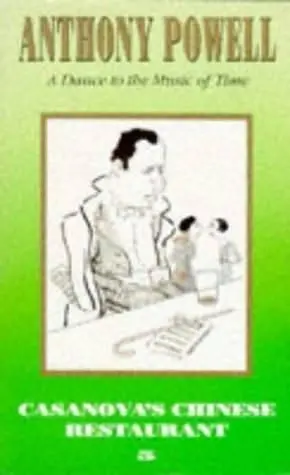
- Название:Casanova’s Chinese Restaurant
- Автор:
- Жанр:
- Год:неизвестен
- ISBN:нет данных
- Рейтинг книги:5 / 5. Голосов: 1
-
Избранное:Добавить в избранное
- Отзывы:
-
Ваша оценка:
Casanova’s Chinese Restaurant: краткое содержание, описание и аннотация
Предлагаем к чтению аннотацию, описание, краткое содержание или предисловие (зависит от того, что написал сам автор книги «Casanova’s Chinese Restaurant»). Если вы не нашли необходимую информацию о книге — напишите в комментариях, мы постараемся отыскать её.
The novels follow Nicholas Jenkins, Kenneth Widmerpool and others, as they negotiate the intellectual, cultural and social hurdles that stand between them and the “Acceptance World.”
Casanova’s Chinese Restaurant — читать онлайн бесплатно полную книгу (весь текст) целиком
Ниже представлен текст книги, разбитый по страницам. Система сохранения места последней прочитанной страницы, позволяет с удобством читать онлайн бесплатно книгу «Casanova’s Chinese Restaurant», без необходимости каждый раз заново искать на чём Вы остановились. Поставьте закладку, и сможете в любой момент перейти на страницу, на которой закончили чтение.
Интервал:
Закладка:
Mrs Maclintick snatched facetiously at him.
‘You know perfectly well I should hate any of those places,’ she said gaily, ‘and I believe you are only trying to get me there to make me feel uncomfortable.’
Miss Weedon remained unruffled.
‘I had no idea you were planning anything like that, Charles.’
‘It wasn’t exactly planned,’ said Stringham. ‘Just one of those brilliant improvisations that come to me of a sudden. My career has been built up on them. One of them brought me here tonight.’
‘But I haven’t agreed to come with you yet,’ said Mrs Maclintick, with some archness. ‘Don’t be too sure of that.’
‘I recognise, Madam, I can have no guarantee of such an honour,’ said Stringham, momentarily returning to his former tone. ‘I was not so presumptuous as to take your company for granted. It may even be that I shall venture forth into the night – by no means for the first time in my chequered career – on a lonely search for pleasure.’
‘Wouldn’t it really be easier to accept my offer of a lift?’ said Miss Weedon.
She spoke so lightly, so indifferently, that no one could possibly have guessed that in uttering those words she was issuing an order. There was no display of power. Even Stringham must have been aware that Miss Weedon was showing a respect for his own situation that was impeccable.
‘Much, much easier, Tuffy,’ he said. ‘But who am I to be given a life of ease?
Not for ever by still waters
Would we idly rest and stay…
I feel just like the hymn. Tonight I must take the hard road that leads to pleasure.’
‘We could give this lady a lift home too, if she liked,’ said Miss Weedon.
She glanced at Mrs Maclintick as if prepared to accept the conveyance of her body at whatever the cost. It was a handsome offer on Miss Weedon’s part, a very handsome offer. No just person could have denied that.
‘But I am not much in the mood for going home, Tuffy,’ said Stringham, ‘and I am not sure that Mrs Maclintick is either, in spite of her protests to the contrary. We are young. We want to see life. We feel we ought not to limit our experience to musical parties, however edifying.’
There was a short pause.
‘If only I had known this, Charles,’ said Miss Weedon.
She spoke sadly, almost as if she were deprecating her own powers of dominion, trying to minimise them because their very hugeness embarrassed her; like the dictator of some absolutist state who assures journalists that his most imperative decrees have to take an outwardly parliamentary form.
‘If only I had known,’ she said, ‘I could have brought your notecase. It was lying on the table in your room.’
Stringham laughed outright.
‘Correct, as usual, Tuffy,’ he said.
‘I happened to notice it.’
‘Money,’ said Stringham. ‘It is always the answer.’
‘But even if I had brought it, you would have been much wiser not to stay up late.’
‘Even if you had brought it, Tuffy,’ said Stringham, ‘the situation would remain unaltered, because there is no money in it.’
He turned to Mrs Maclintick.
‘Little Bo-Peep,’ he said, ‘I fear our jaunt is off. We shall have to visit Dicky Umfraville’s club, or the Bag of Nails, some other night.’
He made a movement to show he was ready to follow Miss Weedon.
‘I didn’t want to drag you away,’ she said, ‘but I thought it might save trouble as I happen to have the car with me.’
‘Certainly it would,’ said Stringham. ‘Save a lot of trouble. Limitless trouble. Untold trouble. I will bid you all good night.’
After that, Miss Weedon had him out of the house in a matter of seconds. There was the faintest suspicion of a reel as he followed her through the door. Apart from that scarcely perceptible lurch, Stringham’s physical removal was in general accomplished by her with such speed and efficiency that probably no one but myself recognised this trifling display of unsteadiness on his feet. The moral tactics were concealed almost equally successfully until the following day, when they became plain to me. The fact was, of course, that Stringham was kept without money; or at least on that particular evening Miss Weedon had seen to it that he had no more money on him than enabled buying the number of drinks that had brought him to his mother’s house. He must have lost his nerve as to the efficacy of his powers of cashing a cheque; perhaps no longer possessed a cheque-book. Otherwise, he would undoubtedly have proceeded with the enterprise set on foot. Possibly fatigue, too, stimulated by the sight of Miss Weedon, had played a part in evaporating desire to paint the town red in the company of Mrs Maclintick; perhaps in the end Stringham was inwardly willing to ‘go quietly’. That was the most likely of all. While these things had been happening, Moreland and Priscilla slipped away. I found myself alone with Mrs Maclintick.
‘Who was she, I should like to know,’ said Mrs Maclintick. ‘Not that I wanted all that to go wherever it was he wanted to take me. Not in the least. It was just that he was so pressing. But what a funny sort of fellow he is. I didn’t see why that old girl should butt in. Is she one of his aunts?’
I was absolved from need to explain about Miss Weedon to Mrs Maclintick, no easy matter to embark upon, by seeing Carolo drifting towards us. A dinner jacket made him look more melancholy than ever.
‘Coming?’ he enquired.
‘Where’s Maclintick?’
‘Gone home.’
‘Full of whisky, I bet.’
‘You bet.’
‘All right.’
Stringham had made no great impression on her. She must have seen him as one of those eccentric figures naturally to be encountered in rich houses of this kind. That was probably the most judicious view of Stringham for her to take. Certainly there was no way for Mrs Maclintick to guess that a small, violent drama had been played out in front of her; nor would she have been greatly interested if some explanation of the circumstances could have been revealed. Now – in her tone to Carolo – she re-entered, body and soul, the world in which she normally lived. The two of them went off together. I began to look once more for Isobel. By the door Commander Foxe was saying goodbye to Max Pilgrim.
‘Well,’ said Commander Foxe, when he saw me, ‘that was neatly arranged, wasn’t it?’
‘What was?’
‘Persuading Charles to go home.’
‘Lucky Miss Weedon happened to look in, you mean?’
‘There was a good reason for that.’
‘Oh?’
‘I rang her up and told her to come along,’ said Commander Foxe briefly.
That answer was such a simple one that I could not imagine why I had not guessed it without having to be told.
Those very obvious tactical victories are always the victories least foreseen by the onlooker, still less the opponent. Mrs Foxe herself might feel lack of dignity in summoning Miss Weedon to remove her own son from the house; for Buster, no such delicacy obstructed the way. Indeed, this action could be seen as a beautiful revenge for much owed to Stringham in the past; the occasion, for example, when Buster and I had first met in the room next door, and Stringham, still a boy, had seemed to order Buster from the house. No doubt other old scores were to be paid off. The relationship between Commander Foxe and Miss Weedon herself was also to be considered. Like two rival powers-something about Miss Weedon lent itself to political metaphor – who temporarily abandon their covert belligerency to combine against a third, there was a brief alliance; but also, for Miss Weedon, diplomatically speaking, an element of face-losing. She had been forced to allow her rival to invoke the treaty which demanded that in certain circumstances she should invest with troops her own supposedly pacific protectorate or mandated territory. In fact there had been a victory for Commander Foxe all round. He was not disposed to minimise his triumph.
Читать дальшеИнтервал:
Закладка:
Похожие книги на «Casanova’s Chinese Restaurant»
Представляем Вашему вниманию похожие книги на «Casanova’s Chinese Restaurant» списком для выбора. Мы отобрали схожую по названию и смыслу литературу в надежде предоставить читателям больше вариантов отыскать новые, интересные, ещё непрочитанные произведения.


Обсуждение, отзывы о книге «Casanova’s Chinese Restaurant» и просто собственные мнения читателей. Оставьте ваши комментарии, напишите, что Вы думаете о произведении, его смысле или главных героях. Укажите что конкретно понравилось, а что нет, и почему Вы так считаете.