Anthony Powell - Casanova’s Chinese Restaurant
Здесь есть возможность читать онлайн «Anthony Powell - Casanova’s Chinese Restaurant» весь текст электронной книги совершенно бесплатно (целиком полную версию без сокращений). В некоторых случаях можно слушать аудио, скачать через торрент в формате fb2 и присутствует краткое содержание. Жанр: Современная проза, на английском языке. Описание произведения, (предисловие) а так же отзывы посетителей доступны на портале библиотеки ЛибКат.
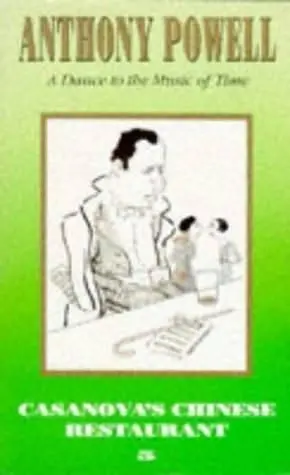
- Название:Casanova’s Chinese Restaurant
- Автор:
- Жанр:
- Год:неизвестен
- ISBN:нет данных
- Рейтинг книги:5 / 5. Голосов: 1
-
Избранное:Добавить в избранное
- Отзывы:
-
Ваша оценка:
Casanova’s Chinese Restaurant: краткое содержание, описание и аннотация
Предлагаем к чтению аннотацию, описание, краткое содержание или предисловие (зависит от того, что написал сам автор книги «Casanova’s Chinese Restaurant»). Если вы не нашли необходимую информацию о книге — напишите в комментариях, мы постараемся отыскать её.
The novels follow Nicholas Jenkins, Kenneth Widmerpool and others, as they negotiate the intellectual, cultural and social hurdles that stand between them and the “Acceptance World.”
Casanova’s Chinese Restaurant — читать онлайн бесплатно полную книгу (весь текст) целиком
Ниже представлен текст книги, разбитый по страницам. Система сохранения места последней прочитанной страницы, позволяет с удобством читать онлайн бесплатно книгу «Casanova’s Chinese Restaurant», без необходимости каждый раз заново искать на чём Вы остановились. Поставьте закладку, и сможете в любой момент перейти на страницу, на которой закончили чтение.
Интервал:
Закладка:
‘Pity about poor old Charles,’ he said.
‘I’ll have to say good night.’
‘Come again soon.’
‘That would be nice.’
A general movement to leave was taking place among the guests. Mrs Maclintick and Carolo had already disappeared. Gossage still remained deep in conversation with Lady Huntercombe. There was no sign of the Morelands, or of Priscilla. Isobel was talking to Chandler. We went to find our hostess and say goodbye. Mrs Foxe was listening to the famous conductor, like Gossage, unable to tear himself away from the party.
‘I do hope the Morelands enjoyed themselves,’ said Mrs Foxe. ‘It was so sad Matilda should have had a headache and had to go home. I am sure she was right to slip away. She is such a wonderful wife for someone like him. As soon as he heard she had gone, he said he must go too. Such a strain for a musician to have a new work performed. Like a first night – and Norman tells me first nights are agony.’
Mrs Foxe spoke the last word with all the feeling Chandler had put into it when he told her that. Robert joined us in taking leave.
‘It was rather sweet of Charles to look in, wasn’t it?’ said Mrs Foxe. ‘I would have asked him, of course, if I hadn’t known parties were bad for him. I saw you talking to him. How did you think he was?’
‘I hadn’t seen him for ages. He seemed just the same. We had a long talk.’
‘And you were glad to see him again?’
‘Yes, of course.’
‘I think he was right to go back with Tuffy. He can be rather difficult sometimes, you know.’
‘Well, yes.’
‘I do hope everyone enjoyed themselves,’ said Mrs Foxe. ‘There was a Mr Maclintick who had had rather a lot to drink by the time he left. I think he is a music critic. He was so sweet when he came to say goodbye to me. He said: “Thank you very much for asking me, Mrs Foxe. I don’t like grand parties like this one and I am not coming to another, but I appreciate your kindness in supporting Moreland as a composer.” I said I so much agreed with him about grand parties – which I simply hate – but I couldn’t imagine why he should think this was one. All the same, I said, I should arrange it quite differently if I ever gave another, and I hoped he would change his mind and come. “Well, I shan’t come,” he said. I told him I knew he would because I should ask him so nicely. He said: “I suppose you are right, and I shall.” Then he slipped down two or three steps. I do hope he gets home all right. Such a relief when people speak their minds.’
‘What’s happened to Priscilla?’ Isobel asked Robert.
‘Somebody gave her a lift.’
At that moment Lord Huntercombe broke in between us. Carrying a piece of china in his hand, he was delighted by some discovery he had just made. Mrs Foxe turned towards him.
‘Amy,’ he said, ‘are you aware that this quatrefoil cup is a forgery?’
4
IF SO TORTUOUS a comparison of mediocre talent could ever be resolved, St John Clarke was probably to be judged a ‘better’ writer than Isbister was painter. However, when St John Clarke died in the early spring, he was less well served than his contemporary in respect of obituaries. Only a few years before, Isbister had managed to capture, perhaps helped finally to expend, what was left of an older, more sententious tradition of newspaper panegyric. There were more reasons for this than the inevitably changing taste in mediocrity. The world was moving into a harassed era. At the time of St John Clarke’s last illness, the National Socialist Party of Danzig was in the headlines; foreign news more and more often causing domestic events to be passed over almost unnoticed. St John Clarke was one of these casualties. If Mark Members was to be believed, St John Clarke himself would have seen this unfair distribution of success, even posthumous success, as something in the nature of things. In what Members called ‘one of St J.’s breakfast table agonies of self-pity’, the novelist had quite openly expressed the mortification he felt in contrasting his old friend’s lot with his own.
‘Isbister was beloved of the gods, Mark,’ he had cried aloud, looking up with a haggard face from The Times of New Year’s Day and its list of awards, ‘R.A. before he was forty-five – Gold Medallist of the Paris Salon – Diploma of Honour at the International Exhibition at Amsterdam – Commander of the Papal Order of Pius IX – refused a knighthood. Think of it, Mark, a man the King would have delighted to honour. What recognition have I had compared with these?’
‘Why did Isbister refuse a knighthood?’ Members had asked.
‘To spite his wife.’
‘That was it, was it?’
‘Those photographs the Press resurrected of Morwenna standing beside him looking out to sea,’ said St John Clarke, ‘they were antediluvian – diluvian possibly. It was the Flood they were looking at, I expect. They’d been living apart for years when he died. Of course Isbister himself said he had decided worldly honours were unbefitting an artist. That didn’t prevent him from telling everyone of the offer. Absolutely everyone. He had it both ways.’
In those days Members was still anxious to soothe his employer.
‘Well, you’ve had a lot of enjoyable parties and country house visits to look back on, St J.,’ he said. ‘Rather a different life from Isbister’s, but a richer one in my eyes.’
‘One week-end at Dogdene twenty years ago,’ St John Clarke had answered bitterly. ‘Forced to play croquet with Lord Lonsdale… Two dinners at the Huntercombes’, both times asked the same night as Sir Horrocks Rusby…’
This was certainly inadequate assessment of St John Clarke’s social triumphs, which, for a man of letters, had been less fruitless than at that moment his despair presented them. Members, knowing what was expected of him, brushed away with a smile such melancholy reminiscences.
‘But it will come…’ he said.
‘It will come, Mark. As I sit here, the Nobel Prize will come.’
‘Alas,’ said Members, concluding the story, ‘it never does.’
As things fell out, the two most alert articles to deal with St John Clarke were written, ironically enough, by Members and Quiggin respectively, both of whom spared a few crumbs of praise for their former master, treating him at no great length as a ‘personality’ rather than a writer: Members, in the weekly of which he was assistant literary editor, referring to ‘an ephemeral, if almost painfully sincere, digression into what was for him the wonderland of jauviste painting’; Quiggin, in a similar, rather less eminent publication to which he contributed when hard up, guardedly emphasising the deceased’s ‘underlying, even when patently bewildered, sympathy with the Workers’ Cause’. No other journal took sufficient interest in the later stages of St John Clarke’s career to keep up to date about these conflicting aspects of his final decade. They spoke only of his deep love for the Peter Pan statue in Kensington Gardens and his contributions to Queen Mary’s Gift Book. Appraisal of his work unhesitatingly placed Fields of Amaranth as the peak of his achievement, with E’en the Longest River or The Heart is Highland – opinion varied – as a poor second. The Times Literary Supplement found ‘the romances of Renaissance Italy and the French Revolution smacked of Wardour Street, the scenes from fashionable life in the other novels tempered with artificiality, the delineations of poverty less realistic than Gissing’s’.
I was surprised by an odd feeling of regret that St John Clarke was gone. Even if an indifferent writer, his removal from the literary scene was like the final crumbling of a well-known landmark; unpleasing perhaps, at the same time possessed of a deserved renown for having withstood demolition for so long. The anecdotes Members and Quiggin put round about him had given St John Clarke a certain solidity in my mind; more, in a way, than his own momentary emergence at Lady Warminster’s. This glimpse of him, then total physical removal, brought home, too, the blunt postscript of death. St John Clarke had merely looked ill at Hyde Park Gardens; now, like John Peel, he had gone far, far away, with his pen and his press-cuttings in the morning; become one of those names to which the date of birth and death may be added in parentheses, as their owners speed to oblivion from out of reference books and ‘literary pages’ of the newspapers.
Читать дальшеИнтервал:
Закладка:
Похожие книги на «Casanova’s Chinese Restaurant»
Представляем Вашему вниманию похожие книги на «Casanova’s Chinese Restaurant» списком для выбора. Мы отобрали схожую по названию и смыслу литературу в надежде предоставить читателям больше вариантов отыскать новые, интересные, ещё непрочитанные произведения.


Обсуждение, отзывы о книге «Casanova’s Chinese Restaurant» и просто собственные мнения читателей. Оставьте ваши комментарии, напишите, что Вы думаете о произведении, его смысле или главных героях. Укажите что конкретно понравилось, а что нет, и почему Вы так считаете.