Anthony Powell - Casanova’s Chinese Restaurant
Здесь есть возможность читать онлайн «Anthony Powell - Casanova’s Chinese Restaurant» весь текст электронной книги совершенно бесплатно (целиком полную версию без сокращений). В некоторых случаях можно слушать аудио, скачать через торрент в формате fb2 и присутствует краткое содержание. Жанр: Современная проза, на английском языке. Описание произведения, (предисловие) а так же отзывы посетителей доступны на портале библиотеки ЛибКат.
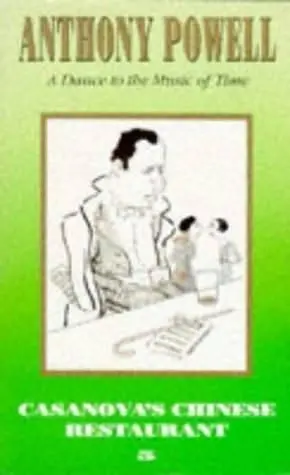
- Название:Casanova’s Chinese Restaurant
- Автор:
- Жанр:
- Год:неизвестен
- ISBN:нет данных
- Рейтинг книги:5 / 5. Голосов: 1
-
Избранное:Добавить в избранное
- Отзывы:
-
Ваша оценка:
Casanova’s Chinese Restaurant: краткое содержание, описание и аннотация
Предлагаем к чтению аннотацию, описание, краткое содержание или предисловие (зависит от того, что написал сам автор книги «Casanova’s Chinese Restaurant»). Если вы не нашли необходимую информацию о книге — напишите в комментариях, мы постараемся отыскать её.
The novels follow Nicholas Jenkins, Kenneth Widmerpool and others, as they negotiate the intellectual, cultural and social hurdles that stand between them and the “Acceptance World.”
Casanova’s Chinese Restaurant — читать онлайн бесплатно полную книгу (весь текст) целиком
Ниже представлен текст книги, разбитый по страницам. Система сохранения места последней прочитанной страницы, позволяет с удобством читать онлайн бесплатно книгу «Casanova’s Chinese Restaurant», без необходимости каждый раз заново искать на чём Вы остановились. Поставьте закладку, и сможете в любой момент перейти на страницу, на которой закончили чтение.
Интервал:
Закладка:
‘Some women think one has nothing better to do than to lie awake listening to anecdotes about their first husband,’ said Stringham. ‘Milly Andriadis was like that – no doubt still is – and I must say, if one were prepared to forgo one’s beauty sleep, one used to hear some remarkable things from her. Playing the gramophone is another matter. Your friend had a right to complain.’
‘That was what the judge thought,’ said Mrs Maclintick.
‘What used he to play?’ asked Priscilla.
‘Military marches,’ said Mrs Maclintick, ‘night after night. Not surprising the poor woman had to go into a home after getting her divorce.’
‘My mother would have liked that,’ said Stringham. ‘She adores watching troops march past. She always says going to reviews was the best part of being married to Piers Warrington.’
‘Not in the middle of the night,’ said Priscilla. ‘He might have chosen something quieter. Tales from Hoffmann or Handel’s Cradle Song.’
‘Nonsense,’ said Moreland. ‘Aut Sousa aut Nihil has always been my motto in cases of that sort. Think if the man had played Hindemith. At least he wasn’t a highbrow.’
‘He was just another musical husband,’ said Mrs Maclintick fiercely. ‘I am not saying he was any worse than Maclintick, I am not saying he was any better. I am just telling you the way musicians treat their wives. Telling you the sort of husband I have to put up with.’
‘My own complaint about marriage is a very different one,’ said Stringham. ‘I admit my former wife was not musical. That might have made things worse. All the same, you never know. If she had been, she could have talked all the time about music while her sister, Anne, was chattering away about Braque and Dufy. It would have formed a counter-irritant. Poor Anne. Marrying Dicky Umfraville was a dreadful judgment on her. Still, a party is no place for vain regrets – certainly not vain regrets about one’s ex-sister-in-law.’
‘You should have seen Maclintick’s sister,’ said Mrs Maclintick, ‘if you are going to grumble about your sister-in-law.’
‘We will visit her, if necessary, dear lady, later in the evening,’ said Stringham. ‘The night is still young.’
‘You can’t,’ said Mrs Maclintick. ‘She’s dead.’
‘My condolences,’ said Stringham. ‘But, as I was saying, my former wife was not musical. Music did not run in the family. Mountfichet was not a house to stimulate music. You might compose a few dirges there, I suppose. Even they would have cheered the place up – the morning-room especially.’
‘I was going to stay at Mountfichet once,’ said Priscilla. ‘Then Hugo got chicken-pox and we were all in quarantine.’
‘You had a narrow escape, Lady Priscilla,’ said Stringham. ‘You are unaware of your good fortune. No, what I object to about marriage is not the active bad behaviour – like your musical friend playing the gramophone in the small hours. I could have stood that. I sleep abominably anyway. The gramophone would while away time in bed when one lies awake thinking about love. What broke me was the passive resistance. That was what got me down.’
Moreland began to laugh unrestrainedly again, thrusting the handkerchief in his mouth until it nearly choked him. He too had had a good deal to drink. Mrs Maclintick clenched her teeth in obvious approval of what Stringham had said. Stringham went on uninterrupted.
‘It is a beautiful morning,’ he said. ‘For some reason you feel relatively well that day. You make some conciliatory remark. No answer. You think she hasn’t heard. Still asleep perhaps. You speak again. A strangled sigh. What’s wrong? You begin to go through in your mind all the awful things you might have done.’
‘Maclintick never dreams of going through the awful things he has done,’ said Mrs Maclintick. ‘It would take far too long for one thing. Anyway, he never thinks about them at all. If you so much as mention one or two of them, he gets out of bed and sleeps on the sofa in his work-room.’
‘Look here,’ said Moreland, still laughing convulsively, ‘I really cannot have my old friend Maclintick maligned in this manner without a word of protest. I know you are married to him, and marriage gives everyone all sorts of special rights where complaining is concerned-’
‘You begin adding up your sins of commission and omission,’ Stringham continued inexorably. ‘Did one get tight? It seems months and months since one was tight, so it can’t be that. Did one say something silly the night before? Much more likely. Not that remark about the colour of her father’s face at breakfast? It couldn’t have been that. She enjoyed that – even laughed a little. I don’t know whether any of you ever met my former father-in-law, Major the Earl of Bridgnorth, late the Royal Horse Guards, by the way? His is a name to conjure with on the Turf. When I was married to his elder daughter, the beautiful Peggy, I was often to be seen conjuring with it on the course at Epsom, and elsewhere, but with little success, all among the bookies and Prince Monolulu and the tipster who wears an Old Harrovian tie and has never given a loser.’
‘You are getting off the point, my dear sir,’ said Moreland. ‘We are discussing marriage, not racing. Matrimony is the point at issue.’
Stringham made a gesture to silence him. I had never before seen Moreland conversationally so completely mastered. It was hard to imagine what the two of them would have made of each other in more sober circumstances. They were very different. Stringham had none of Moreland’s passionate self-identification with the arts; Moreland was without Stringham’s bitter grasp of social circumstance. At the same time they had something in common. There was also much potential antipathy. Each would probably have found the other unsympathetic over a long period.
‘And then,’ said Stringham, lowering his voice and raising his eyebrows slightly, ‘one wonders about making love… counts up on one’s fingers… No… It can’t be that…’
Mrs Maclintick gave a raucous laugh.
‘I know!’ Stringham now almost shouted, as if in sudden enlightenment. ‘I’ve got it. It was going on about what a charming girl Rosie Manasch is. That was a bloody silly thing to do, when I know Peggy hates Rosie like poison. But I’m wandering… talking of years ago… of the days before Rosie married Jock Udall…’
‘Heavens,’ said Moreland. ‘Do you know the Manasches? I once conducted at a charity concert in their house.’
Stringham ignored him.
‘But then, on the other hand,’ he went on, in a slower, much quieter voice, ‘Rosie may have nothing whatever to do with it. One’s wife may be ill. Sickening for some terrible disease. Something to which one has never given a thought. She is sinking. Wasting away under one’s eyes. It is just one’s own callousness about her state. That is all that’s wrong. You begin to get really worried. Should you get up and summon a doctor right away?’
‘The doctor always tells Maclintick to drink less,’ said Mrs Maclintick. ‘Always the same story. “Put a drop more water in it,” he says, “then you will feel better.” You might just as well talk to a brick wall. Maclintick is not going to drink less because a doctor tells him to. If he won’t stop after what I’ve said to him, is it likely he will knock off for a doctor? Why should he?’
‘Why, indeed, you little rogue?’ said Stringham, tapping Mrs Maclintick’s knee with a folded copy of the concert programme, which had somehow found its way into his hand. ‘Well, of course, in the end you discover that all this ill humour is nothing to do with yourself at all. In fact your wife is hardly aware that she is living in the same house with you. It was something that somebody said about her to someone who gossiped to somebody she knew when that somebody was having her hair done. Neither less nor more than that. All the same, it is you, her husband, who has to bear the brunt of those ill-chosen remarks by somebody about something. I’ve talked it all over with Ted Jeavons and he quite agrees.’
Читать дальшеИнтервал:
Закладка:
Похожие книги на «Casanova’s Chinese Restaurant»
Представляем Вашему вниманию похожие книги на «Casanova’s Chinese Restaurant» списком для выбора. Мы отобрали схожую по названию и смыслу литературу в надежде предоставить читателям больше вариантов отыскать новые, интересные, ещё непрочитанные произведения.


Обсуждение, отзывы о книге «Casanova’s Chinese Restaurant» и просто собственные мнения читателей. Оставьте ваши комментарии, напишите, что Вы думаете о произведении, его смысле или главных героях. Укажите что конкретно понравилось, а что нет, и почему Вы так считаете.