Anthony Powell - Casanova’s Chinese Restaurant
Здесь есть возможность читать онлайн «Anthony Powell - Casanova’s Chinese Restaurant» весь текст электронной книги совершенно бесплатно (целиком полную версию без сокращений). В некоторых случаях можно слушать аудио, скачать через торрент в формате fb2 и присутствует краткое содержание. Жанр: Современная проза, на английском языке. Описание произведения, (предисловие) а так же отзывы посетителей доступны на портале библиотеки ЛибКат.
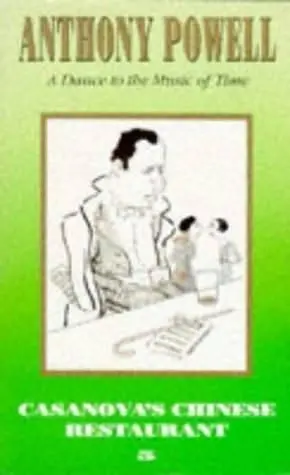
- Название:Casanova’s Chinese Restaurant
- Автор:
- Жанр:
- Год:неизвестен
- ISBN:нет данных
- Рейтинг книги:5 / 5. Голосов: 1
-
Избранное:Добавить в избранное
- Отзывы:
-
Ваша оценка:
Casanova’s Chinese Restaurant: краткое содержание, описание и аннотация
Предлагаем к чтению аннотацию, описание, краткое содержание или предисловие (зависит от того, что написал сам автор книги «Casanova’s Chinese Restaurant»). Если вы не нашли необходимую информацию о книге — напишите в комментариях, мы постараемся отыскать её.
The novels follow Nicholas Jenkins, Kenneth Widmerpool and others, as they negotiate the intellectual, cultural and social hurdles that stand between them and the “Acceptance World.”
Casanova’s Chinese Restaurant — читать онлайн бесплатно полную книгу (весь текст) целиком
Ниже представлен текст книги, разбитый по страницам. Система сохранения места последней прочитанной страницы, позволяет с удобством читать онлайн бесплатно книгу «Casanova’s Chinese Restaurant», без необходимости каждый раз заново искать на чём Вы остановились. Поставьте закладку, и сможете в любой момент перейти на страницу, на которой закончили чтение.
Интервал:
Закладка:
‘Of course it is all quite innocent,’ said Matilda. ‘That is the worst thing about it from my point of view. It would be much easier if he had fallen for some old tart like myself he could sleep with for a spell, then leave when he was bored.’
‘When did all this start up?’
In asking the question, I committed myself in some degree to acceptance of her premises about Moreland and Priscilla. There seemed no alternative.
‘Oh, I don’t know. A month or two ago. They met at that office where she works. I knew something of the sort had happened when he came home that day.’
‘But they met first at our flat.’
‘They’d met before you produced her at your flat. They kept quiet about knowing each other when they met there.’
I spared a passing thought for the slyness of Priscilla; also for Matilda’s all-embracing information service. Before more could be said about this uncomfortable subject, two things happened to break up our conversation. First of all the distinguished conductor – rather specially noted for his appreciation of feminine attractions – presented himself with a great deal of flourish to pay his respects to Matilda. He was known to admire her, but until that moment had been unable to escape from persons who wanted to take this opportunity of chatting with a celebrity of his calibre, finally being pinned down by Lady Huntercombe, who had descended upon him after failing to capture Robert. He had already made some opening remarks of a complimentary kind to Matilda, consciously recalling by their form of expression the elaborate courtesies of an earlier age – and I was preparing to leave Matilda to him – when my attention was diverted to something that had taken place at the far end of the room.
This was nothing less than the arrival of Stringham. At first I could hardly believe my eyes. There he was standing by the door talking to Buster. The scene was only made credible by the fact that Buster looked extremely put out. After what had been said that evening, Stringham was certainly the last person to be expected to turn up at his mother’s party. He was not wearing evening clothes, being dressed, in fact, in a very old tweed suit and woollen jumper. As usual he looked rather distinguished in these ancient garments, which could not have less fitted the occasion, but somehow at the same time seemed purposely designed to make Buster appear overdressed. Stringham himself was, as formerly, perfectly at ease, laughing a lot at something he had just remarked to Buster, who, with wrinkled forehead and raised eyebrows, had for once lost all his air of lazy indifference to life, and seemed positively to be miming the part of a man who has suddenly received a disagreeable surprise. Stringham finished what he had to say, clapped Buster on the back, and turned towards his mother who came up at that moment. I was too far away to hear Mrs Foxe’s words, but, as she kissed her son affectionately, she was clearly welcoming him in the manner appropriate to one returned unexpectedly from a voyage round the world. At the same time, unlike her husband, she showed no surprise or discomposure at Stringham’s arrival. They spoke together for a second or two, then she returned to her conversation with Lord Huntercombe. Stringham turned away from her and strolled across the room, gazing about him with a smile. Catching sight of me suddenly, he drew back with a movement of feigned horror, then made towards the place where I was standing. I went to meet him.
‘My dear Nick.’
‘Charles.*
‘I had no idea you had musical tastes, Nick. Why did you keep them from me all these years? Because I never asked, I suppose. One always finds the answer to everything in one’s own egotism. But how nice to meet again. I am a recluse now. I see nobody. I expect you already knew that. Everybody seems to know by now. It is just a bit like being a leper, only I don’t actually have to carry a bell. They decided to let me off that. Thought I should make too much of a row, I suppose. You can’t imagine what a pleasure it is to come unexpectedly upon an old friend one knew several million years ago.’
There could be no doubt that he was drunk, but, within the vast area comprised by that term, among the immensely varied states of mind and body which intoxication confers, Stringham’s at this moment was that controlled exhilaration of spirit more akin to madness than carousal, which some addicts can achieve after a single glass. He looked rather ghastly when you were close to him, his skin pale and mottled, his eyes sunken and bloodshot. Even so, there was plenty of the old dash about his manner.
‘I had no idea my mother would be giving a party tonight,’ he said. ‘Just thought I would drop in and have a word with her by the fireside as I haven’t seen her for some time. What do I find but a whirl of gaiety. I really came along to tease Buster. I like doing that from time to time. It cheers me up for some reason. You know I now live in a flat at the top of a house owned by a relation of your wife’s – Molly Jeavons, one of the most delightful and charming of people. I sometimes hear about you both from her or from Ted. I dote on Ted. He hasn’t been very well lately, you know, and he gives wonderful descriptions of what is going on in his lower intestine – that war wound of his. One need never be bored when Ted gets on to that subject. He and I sometimes go out for the quickest of quick drinks. I am not supposed to have much in the way of drink these days. Neither is Ted. I am trying to knock off, really-but it seems such a bore to be a total abstainer, as I believe such people are called. I can have just one drink still, you know. I don’t have to keep off it utterly.’
He said these words in such an appealing tone that I felt torn inwardly to think of the condition he must be in, of the circumstances in which he must live. His awareness of his own state seemed almost worse than total abandonment to the bottle. It looked very much as if he might just have come on to his mother’s house that night from one of those ‘very quick drinks’ with Jeavons; perhaps felt unable to bring himself to return to Miss Weedon’s flat and paint in gouache – if it was really with painting that he therapeutically ordered his spare time. His life with Miss Weedon was impossible to contemplate.
‘Do you know this fellow Moreland?’ he went on. ‘I gather from Buster that the party is being given in Moreland’s honour – that he is a famous musician apparently. It just shows how right it is that I should have to live as a hermit, not to know that Moreland is a famous musician – and have to be told by Buster. All the same, it cuts both ways. If you are a hermit, you can’t be expected to keep up with all the latest celebrities. Buster, of course, was quite incapable of giving any real information about Moreland, the party, the guests, or anything else. He is awfully stupid, poor old Buster. An absolute ape. You know a fact that strikes one very forcibly as one grows older is that some people are intelligent and some are stupid. I don’t set up as an intellectual myself – even though I am a great hand with the paintbrush, did they tell you that, Nick? – but if I were as ill-informed as Buster, I should take steps to educate myself. Go to a night-school or hire a well-read undergraduate to teach me a few things in the long vac. The person I shall have to get hold of is Norman. He will tell me all about everything. Have you met Norman yet? He is simply charming. He is – well, I don’t want to labour the point, and I can see from your face you have guessed what I was going to say, and you are quite right. All the same, my mother has taken him up in a big way. You must meet Norman, Nick.’
‘But I know him well. I have known him for years.’
‘I am surprised at the company you must have been keeping, Nick. Known him for years, indeed. I shouldn’t have thought it of you. And a married man too. But you do agree, don’t you, that Norman is a delightful fellow?’
Читать дальшеИнтервал:
Закладка:
Похожие книги на «Casanova’s Chinese Restaurant»
Представляем Вашему вниманию похожие книги на «Casanova’s Chinese Restaurant» списком для выбора. Мы отобрали схожую по названию и смыслу литературу в надежде предоставить читателям больше вариантов отыскать новые, интересные, ещё непрочитанные произведения.


Обсуждение, отзывы о книге «Casanova’s Chinese Restaurant» и просто собственные мнения читателей. Оставьте ваши комментарии, напишите, что Вы думаете о произведении, его смысле или главных героях. Укажите что конкретно понравилось, а что нет, и почему Вы так считаете.