Anthony Powell - Casanova’s Chinese Restaurant
Здесь есть возможность читать онлайн «Anthony Powell - Casanova’s Chinese Restaurant» весь текст электронной книги совершенно бесплатно (целиком полную версию без сокращений). В некоторых случаях можно слушать аудио, скачать через торрент в формате fb2 и присутствует краткое содержание. Жанр: Современная проза, на английском языке. Описание произведения, (предисловие) а так же отзывы посетителей доступны на портале библиотеки ЛибКат.
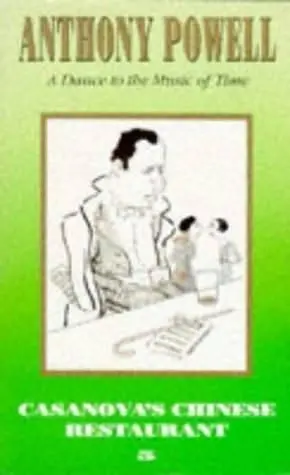
- Название:Casanova’s Chinese Restaurant
- Автор:
- Жанр:
- Год:неизвестен
- ISBN:нет данных
- Рейтинг книги:5 / 5. Голосов: 1
-
Избранное:Добавить в избранное
- Отзывы:
-
Ваша оценка:
Casanova’s Chinese Restaurant: краткое содержание, описание и аннотация
Предлагаем к чтению аннотацию, описание, краткое содержание или предисловие (зависит от того, что написал сам автор книги «Casanova’s Chinese Restaurant»). Если вы не нашли необходимую информацию о книге — напишите в комментариях, мы постараемся отыскать её.
The novels follow Nicholas Jenkins, Kenneth Widmerpool and others, as they negotiate the intellectual, cultural and social hurdles that stand between them and the “Acceptance World.”
Casanova’s Chinese Restaurant — читать онлайн бесплатно полную книгу (весь текст) целиком
Ниже представлен текст книги, разбитый по страницам. Система сохранения места последней прочитанной страницы, позволяет с удобством читать онлайн бесплатно книгу «Casanova’s Chinese Restaurant», без необходимости каждый раз заново искать на чём Вы остановились. Поставьте закладку, и сможете в любой момент перейти на страницу, на которой закончили чтение.
Интервал:
Закладка:
‘Have some beetroot,’ she said. ‘It is fresh today.’
Moreland and Maclintick did not take long to penetrate into a region of musical technicality from which I was excluded by ignorance; so that while they talked, and Carolo scratched away in the corner, just as Maclintick had described, I found Mrs Maclintick thrown on my hands. In her latest mood, she turned out to have a side to her no less tense than her temper displayed on arrival, but more loquacious. In fact a flow of words began to stem from her which seemed to have been dammed up for months. No doubt Maclintick was as silent in the home as out of it, and his wife was glad of an outlet for her reflexions. Indeed, her desire to talk was now so great that it was hard to understand why we had been received in the first instance with so little warmth. Mrs Maclintick’s dissatisfaction with life had probably reached so advanced a stage that she was unable to approach any new event amiably, even when proffered temporary alleviation of her own chronic spleen. Possibly Moreland’s friendship with her husband irked her, suggesting a mental intimacy from which she was excluded, more galling in its disinterested companionship than any pursuit of other women on Maclintick’s part. She began to review her married life aloud.
‘I can’t think why Maclintick goes about looking as he does. He just won’t buy a new suit. He could easily afford one. Of course, Maclintick doesn’t care what he looks like. He takes no notice of anything I say. I suppose he is right in one way. It doesn’t matter what he looks like the way we live. I don’t know what he does care about except Irish whiskey and the Russian composers and writing that book of his. Do you think it will ever get finished? You know he has been at it for seven years. That’s as long as we’ve been married No, I’m wrong. He told me he started it before he met me. Eight or nine years, then. I tell him no one will read it when it is finished. Who wants to read a book about the theory of music, I should like to know? He says himself there is too much of that sort of thing published as it is. It is not that the man hasn’t got ability. He is bright enough in his way. It is just that he doesn’t know how to go about things. Then all these friends of his, like Moreland and you, encourage him, tell him he’s a genius, and the book will sell in thousands. What do you do? Are you a musician? A critic, I expect. I suppose you are writing a book yourself.’
‘I am not a music critic. I am writing a book.’
‘Musical?’
‘No – a novel.’
‘A novel?’ said Mrs Maclintick.
The idea of writing a novel seemed to displease her only a little less than the production of a work on musical theory.
‘What is it to be called?’
‘I don’t know yet.’
‘Have you written any other novels?’
I told her. She shook her head, no more in the mood for literature than music. All the time she treated Maclintick as if he were not present in the flesh; and, since he and Moreland were deeply engaged with questions of pitch and rhythm, both were probably unaware of these reflections on her domestic situation.
‘And then this house. You can see for yourself it is like a pig-sty. I slave sixteen hours a day to keep it clean. No good. Might as well not attempt it. Maclintick isn’t interested in whether his house is clean or not. What I say is, why can’t we go and live in Putney? Where I want to live is never considered, of course. Maclintick likes Pimlico, so Pimlico it has to be. The place gives me the pip. Well, don’t you agree yourself? Even if we move, it has to be somewhere else in Pimlico, and the packing up is more trouble than it is worth. I should like a bit of garden. Can’t have that here. Not even a window-box. Of course Maclintick hates the sight of a flower.’
I quoted St John Clarke’s opinion that the beauty of flowers is enhanced by metropolitan surroundings. Mrs Maclintick did not reply. Her attention had been distracted by Carolo who had begun to pile his sheets of music together and stow them away in a portfolio.
‘Come and have a drink with us, Carolo, before you go,’ she said, with greater warmth than she had shown until that moment. ‘Maclintick will get some more beer. We could all do with another drop. Here is the jug, Maclintick. Don’t take all the cheese, Moreland. Leave a little for the rest of us.’
Maclintick did not look specially pleased at this suggestion of Carolo joining us at the table, but he too welcomed the idea of more beer, immediately picking up the chipped jug and once more setting off with it to the pub. A chair was drawn up for Carolo, who accepted the invitation with no more than mumbled, ungracious agreement; to which he added the statement that he would not be able to stay long. I had not set eyes on him since that night in the Mortimer. Carolo looked just the same: pale; unromantic; black wavy hair a shade longer and greasier than before. Mrs Maclintick gave him a glance that was almost affectionate.
‘Have you got to go out tonight, Carolo?’ she said. ‘There is a little mutton left.’
Carolo shook his head, looking wearily at the residue of the joint, the remains of which were not specially tempting. He seemed in a thoughtful mood, but, when Maclintick reappeared with the jug and poured him out a glass, he drank a deep draught of the beer with apparent gratification. After wiping his mouth with a handkerchief, he spoke in his harsh, North Country voice.
‘How have you been, Moreland?’ he asked.
‘Much as usual,’ said Moreland. ‘And you?’
‘Pretty middling. How’s Matilda?’
‘Having a baby,’ said Moreland flushing; and, as if he referred to speak no more for the moment about that particular subject, went on: ‘You know, in that book I was reading upstairs, Chabrier says that the Spanish fleas have their own national song – a three-four tune in F major that Berlioz introduces into the Damnation of Faust.’
‘The Spanish fleas must be having a splendid time nowadays,’ said Maclintick, ‘biting both sides indiscriminately.’
‘The International Brigade could certainly make a tasty dish,’ said Moreland, ‘not to mention the German and Italian “volunteers”. As a matter of fact the fleas probably prefer the Germans. More blonds.’
‘I hope to God Franco doesn’t win,’ said Mrs Maclintick, as if that possibility had at this moment just struck her.
‘Who do you want to win?’ said Maclintick gruffly. ‘The Communists?’
Up till then Maclintick had been on the whole in a better temper than usual. The arrival at the table of Carolo had unsettled him. He now showed signs of wanting to pick a quarrel with someone. His wife was clearly the easiest person present with whom to come into conflict. Biting and sucking noisily at his pipe he glared at her. It looked as if the Spanish war might be a matter of controversy of some standing between them; a source of contention as a married couple, rather than a political difference. Maclintick’s views on politics could never be foretold. Violent, changeable, unorthodox, he tended to dislike the Left as much as the Right. He had spoken very bitterly.
‘I would rather have the Communists than the Fascists,’ said Mrs Maclintick, compressing her lips.
‘Only because you think it is the done thing to be on the Left,’ said Maclintick, with an enraging smile. ‘There isn’t a middle-brow in the country who isn’t expressing the same sentiment. They should try a little practical Communism and see how they like it. You are no exception, I assure you.’
He removed his pipe from his mouth and swallowed hard. Moreland was obviously becoming uneasy at the turn things were taking. He began kicking his foot against the side of his chair.
‘I am Pinkish myself,’ he said laughing.
Читать дальшеИнтервал:
Закладка:
Похожие книги на «Casanova’s Chinese Restaurant»
Представляем Вашему вниманию похожие книги на «Casanova’s Chinese Restaurant» списком для выбора. Мы отобрали схожую по названию и смыслу литературу в надежде предоставить читателям больше вариантов отыскать новые, интересные, ещё непрочитанные произведения.


Обсуждение, отзывы о книге «Casanova’s Chinese Restaurant» и просто собственные мнения читателей. Оставьте ваши комментарии, напишите, что Вы думаете о произведении, его смысле или главных героях. Укажите что конкретно понравилось, а что нет, и почему Вы так считаете.