Anthony Powell - Casanova’s Chinese Restaurant
Здесь есть возможность читать онлайн «Anthony Powell - Casanova’s Chinese Restaurant» весь текст электронной книги совершенно бесплатно (целиком полную версию без сокращений). В некоторых случаях можно слушать аудио, скачать через торрент в формате fb2 и присутствует краткое содержание. Жанр: Современная проза, на английском языке. Описание произведения, (предисловие) а так же отзывы посетителей доступны на портале библиотеки ЛибКат.
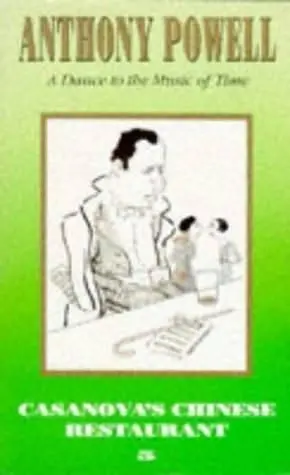
- Название:Casanova’s Chinese Restaurant
- Автор:
- Жанр:
- Год:неизвестен
- ISBN:нет данных
- Рейтинг книги:5 / 5. Голосов: 1
-
Избранное:Добавить в избранное
- Отзывы:
-
Ваша оценка:
Casanova’s Chinese Restaurant: краткое содержание, описание и аннотация
Предлагаем к чтению аннотацию, описание, краткое содержание или предисловие (зависит от того, что написал сам автор книги «Casanova’s Chinese Restaurant»). Если вы не нашли необходимую информацию о книге — напишите в комментариях, мы постараемся отыскать её.
The novels follow Nicholas Jenkins, Kenneth Widmerpool and others, as they negotiate the intellectual, cultural and social hurdles that stand between them and the “Acceptance World.”
Casanova’s Chinese Restaurant — читать онлайн бесплатно полную книгу (весь текст) целиком
Ниже представлен текст книги, разбитый по страницам. Система сохранения места последней прочитанной страницы, позволяет с удобством читать онлайн бесплатно книгу «Casanova’s Chinese Restaurant», без необходимости каждый раз заново искать на чём Вы остановились. Поставьте закладку, и сможете в любой момент перейти на страницу, на которой закончили чтение.
Интервал:
Закладка:
‘I don’t know about those things,’ he had once said to me. ‘If I don’t know about things, they do not interest me. Even if artistic matters attracted me – which they do not – I should not allow myself to dissipate my energies on them.’
Now, he stood staring at me as if my presence in the nursing home was an insoluble, an irritating, mystery. I explained once more that I had been visiting Isobel.
‘Oh, yes,’ said Widmerpool. ‘You married one of the Tollands, did you not, Nicholas? I was sorry not to have come to your wedding. That was some time ago… nearly… as a matter of fact, I was far too busy. I should like to give you a wedding present. You must tell me something you want, even though I was not able to turn up at the ceremony. After all, we have known each other a long time now. A little piece of silver perhaps. I will consult my mother who arranges such things. Your wife is not suffering from anything serious, I hope. I believe I once met her at her aunt’s, Lady Molly Jeavons. Perhaps it was one of her sisters.’
The meeting had, indeed, taken place. Isobel had mentioned it. She had not cared for Widmerpool. That was one of the reasons why I had made no effort to keep in touch with him. In any case I should never have gone out of my way to seek him, knowing, as one does with certain people, that the rhythm of life would sooner or later be bound to bring us together again. However, I remembered that I owed him a meal. Guilt as to this unfulfilled obligation was strengthened by awareness that he was capable of complaining publicly that I had never invited him in return. Preferring to avoid this possibility, I decided on the spot to ask Widmerpool, before we parted company, to lunch at my club; in fact while Isobel’s convalescence gave an excuse for not bringing him to our flat.
‘I have been enjoying a brief rest here,’ he said. ‘An opportunity to put right a slight mischief with boils. Some tests have been made. I leave tomorrow, agog for work again.’
‘Isobel goes tomorrow, too. She will keep rather quiet for a week or two.’
‘Quite so, quite so,’ said Widmerpool, dismissing the subject.
He turned abruptly on his heel, muttering something about ‘arranging a meeting in the near future’, at the same time making a rapid movement towards the door of frosted glass at which he had been aiming when first accosted by Brandreth.
‘Can you lunch with me next Tuesday – at my club?’
Widmerpool paused for a second to give thought to this question, once more began to frown.
‘Tuesday? Tuesday? Let me think. I have something on Tuesday. I must have. No, perhaps I haven’t. Wait a minute. Let me look at my book. Yes… Yes. As it happens, I can lunch with you on Tuesday. But not before half-past one. Certainly not before one-thirty. More likely one-thirty-five.’
Quickening his step, drawing his dressing-gown round him as if to keep himself more separate from us, he passed through the door almost at a run. His displacement immediately readjusted in Moreland’s favour Brandreth’s social posture.
‘To return to Wagner,’ Brandreth said, ‘you remember Wanderlust , Mr Moreland, of course you do, when Siegfried sings: “From the wood forth I wander, never to return!” – how does it go? – ”Aus dem Wald fort in die Welt zieh ’n; nimmer kehr’ich zurüch!” Now, it always seems to me the greatest pity that in none of the productions of The Ring I have ever heard, has the deeper pessimism of these words been given full weight…’
Brandreth began to make movements with his hands as if he were climbing an invisible rope. Moreland disengaged us brutally from him. We descended the stairs.
‘Who was the man in the dressing-gown with spectacles?’ Moreland asked, when we had reached the street.
‘He is called Kenneth Widmerpool. In the City. I have known him a long time.’
‘I can’t say I took to him,’ Moreland said. ‘But, look here, what a business married life is. I hope to goodness Matilda will be all right. There are various worrying aspects. I sometimes think I shall go off my head. Perhaps I am off it already. That would explain a lot. What are you doing tonight? I am on my way to the Maclinticks. Why not come too?’
Without waiting for an answer, he began to recount all that had been happening to Matilda and himself since we had last met; various absurd experiences they had shared; how they sometimes got on each other’s nerves; why they had returned to London; where they were going to live. There had been some sort of a row with the municipal authorities at the seaside resort. Moreland held decided professional opinions; he could be obstinate. Some people, usually not the most intelligent, found working with him difficult. I heard some of his story, telling him in return how the film company for which I had been script-writing had decided against renewing my contract; that I was now appearing on the book page of a daily paper; also reviewing from time to time for the weekly of which Mark Members was assistant literary editor.
‘Mark recommended Dr Brandreth to us,’ Moreland said. ‘A typical piece of malice on his part. Brandreth is St John Clarke’s doctor – or was when Mark was St John Clarke’s secretary. Gossip is the passion of his life, his only true emotion – but he can also put you on the rack about music.’
‘Is he looking after Matilda?’
‘A gynaecologist does that. He is not a music-lover, thank God. Of course, a lot of women have babies. One must admit that. No doubt it will be all right. It just makes one a bit jumpy. Look here, Nick, you must come to the Maclinticks’. It would be more cheerful if there were two of us.’
‘Should I be welcome?’
‘Why not? Have you developed undesirable habits since we last met?’
‘I never think Maclintick much likes me.’
‘Likes you?’ said Moreland. ‘What egotism on your part. Of course he doesn’t like you. Maclintick doesn’t like anybody.’
‘He likes you.’
‘We have professional ties. As a matter of fact, Maclintick doesn’t really hate everyone as much as he pretends. I was being heavily humorous.’
‘All the same, he shows small visible pleasure in meeting most people.’
‘One must rise above that. It is a kindness to do so. Maclintick does not get on too well with his wife. The occasional company of friends eases the situation.’
‘You do make this social call sound tempting.’
‘If nobody ever goes there, I am afraid Maclintick will jump into the river one of these days, or hang himself with his braces after a more than usually gruelling domestic difference. You must come.’
‘All right. Since you present it as a matter of life and death.’
We took a bus to Victoria, then passed on foot into a vast, desolate region of stucco streets and squares upon which a doom seemed to have fallen. The gloom was cosmic. We traversed these pavements for some distance, proceeding from haunts of seedy, grudging gentility into an area of indeterminate, but on the whole increasingly unsavoury, complexion.
‘Maclintick is devoted to this part of London,’ Moreland said. ‘I am not sure that I agree with him. He says his mood is for ever Pimlico. I grant that a sympathetic atmosphere is an important point in choosing a residence. It helps one’s work. All the same, tastes differ. Maclintick is always to be found in this neighbourhood, though never for long in the same place.’
‘He never seems very cheerful when I meet him.’
I had run across Maclintick only a few times with Moreland since our first meeting in the Mortimer.
‘He is a very melancholy man,’ Moreland agreed. ‘Maclintick is very melancholy. He is disappointed, of course.’
‘About himself as a musician?’
Читать дальшеИнтервал:
Закладка:
Похожие книги на «Casanova’s Chinese Restaurant»
Представляем Вашему вниманию похожие книги на «Casanova’s Chinese Restaurant» списком для выбора. Мы отобрали схожую по названию и смыслу литературу в надежде предоставить читателям больше вариантов отыскать новые, интересные, ещё непрочитанные произведения.


Обсуждение, отзывы о книге «Casanova’s Chinese Restaurant» и просто собственные мнения читателей. Оставьте ваши комментарии, напишите, что Вы думаете о произведении, его смысле или главных героях. Укажите что конкретно понравилось, а что нет, и почему Вы так считаете.