Anthony Powell - Casanova’s Chinese Restaurant
Здесь есть возможность читать онлайн «Anthony Powell - Casanova’s Chinese Restaurant» весь текст электронной книги совершенно бесплатно (целиком полную версию без сокращений). В некоторых случаях можно слушать аудио, скачать через торрент в формате fb2 и присутствует краткое содержание. Жанр: Современная проза, на английском языке. Описание произведения, (предисловие) а так же отзывы посетителей доступны на портале библиотеки ЛибКат.
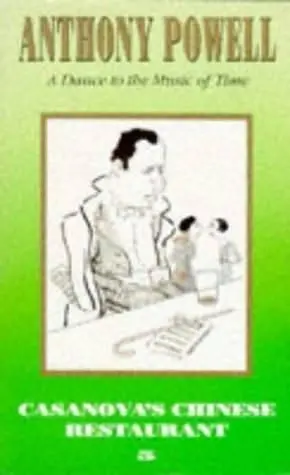
- Название:Casanova’s Chinese Restaurant
- Автор:
- Жанр:
- Год:неизвестен
- ISBN:нет данных
- Рейтинг книги:5 / 5. Голосов: 1
-
Избранное:Добавить в избранное
- Отзывы:
-
Ваша оценка:
Casanova’s Chinese Restaurant: краткое содержание, описание и аннотация
Предлагаем к чтению аннотацию, описание, краткое содержание или предисловие (зависит от того, что написал сам автор книги «Casanova’s Chinese Restaurant»). Если вы не нашли необходимую информацию о книге — напишите в комментариях, мы постараемся отыскать её.
The novels follow Nicholas Jenkins, Kenneth Widmerpool and others, as they negotiate the intellectual, cultural and social hurdles that stand between them and the “Acceptance World.”
Casanova’s Chinese Restaurant — читать онлайн бесплатно полную книгу (весь текст) целиком
Ниже представлен текст книги, разбитый по страницам. Система сохранения места последней прочитанной страницы, позволяет с удобством читать онлайн бесплатно книгу «Casanova’s Chinese Restaurant», без необходимости каждый раз заново искать на чём Вы остановились. Поставьте закладку, и сможете в любой момент перейти на страницу, на которой закончили чтение.
Интервал:
Закладка:
St John Clarke made a gesture to show that he was throwing himself on Lady Warminster’s mercy. She, on her part, did not appear at all unwilling to learn something of Erridge’s affairs in this manner, although she can have had no very clear picture of St John Clarke’s aims, which were certainly not easy to clarify. No doubt he himself liked the idea of interfering in Erridge’s business, but at the same time did not wish to be brought once more in contact with Quiggin. Lady Warminster must have found it flattering to be offered the position of St John Clarke’s confidante, which would at once satisfy curiosity and be in the best interests of the family. If Erridge never came back from Spain – an eventuality which had to be considered – there was no knowing what messes might have to be cleared up. Besides, Erridge’s plans often changed. His doings had to be coped with empirically. Like less idealistic persons, he was primarily interested in pleasing himself, even though his pleasures took unusual form. Little could be guessed from an outward examination of these enthusiasms at any given moment.
‘Write to me, Mr Clarke, or telephone,’ said Lady Warminster, ‘whenever you think I can be of help. Should my health not allow me to see you at that moment, we will arrange something later.’
I had by then seen too much of Lady Warminster and her stepchildren to be surprised by the calm with which news of this sort was accepted. My own temper was in sympathy with such an attitude of mind. I looked forward to hearing Quiggin’s account of the current Erridge situation. Possibly Quiggin himself might decide to go to Spain. Such a move was not to be ruled out. No doubt he too intended to keep an eye on Erridge’s affairs; the best way to do that might be to attach himself to Erridge’s person. The development of St John Clarke as a close friend of Erridge must be very unsympathetic to Quiggin. St John Clarke’s appeal to Lady Warminster was unexpected. He had managed to get most of it said without attracting much attention from the rest of the party, who were discussing their own affairs, but the general drift of his muttered words probably caused the turn conversation took when it became general once more.
‘Do you hold any view on what the outcome in Spain will be, Mr Clarke?’ asked George.
St John Clarke made a gesture with his fingers to be interpreted as a much watered-down version of the Popular Front’s clenched fist. Now that he had had his word with Lady Warminster about Erridge, he seemed more cheerful, although I was again struck by the worn, unhealthy texture of his skin. He still possessed plenty of nervous energy, but had lost his earlier flush. His cheeks were grey and pasty in tone. He looked a sick man.
‘Franco cannot win,’ he said.
‘What about the Germans and Italians?’ said George. ‘It doesn’t look as if non-intervention will work. It has been a failure from the start.’
‘In that case,’ said St John Clarke, evidently glad to find an opportunity to pronounce this sentence, ‘can you blame Caballero for looking elsewhere for assistance.’
‘Russia?’
‘In support of Spain’s elected government.’
‘Personally, I am inclined to think Franco will win,’ said George.
‘Is that to your taste?’ asked St John Clarke mildly.
‘Not particularly,’ George said. ‘Especially if that has got to include Hitler and Mussolini. But then Russia isn’t to my taste either. It is hard to feel much enthusiasm for the way the Government side go on, or, for that matter, the way they were going before the war broke out.’
‘People like myself look forward to a social revolution in a country that has remained feudal far too long,’ said St John Clarke, speaking now almost benignly, as if the war in Spain was being carried on just to please him personally, and he himself could not help being flattered by the fact. ‘We cannot always be living in the past.’
This expressed preference for upheaval for its own sake roused Roddy Cutts. He began to move forward his knives and forks so that they made a pattern on the table, evidently a preliminary to some sort of a speech. St John Clarke was about to expand his view on revolution, when Roddy cut him short in measured, moderate, parliamentary tones.
‘The question is,’ Roddy said, ‘whether the breakdown of the internal administration of Spain – and nobody seriously denies the existence of a breakdown – justified a military coup d’état. Some people think it did, others disagree entirely. My own view is that we should not put ourselves in the position of seeming to encourage a political adventurer of admittedly Fascist stamp, while at the same time expressing in no uncertain terms our complete lack of sympathy for any party or parties which allow the country’s rapid disintegration into a state of lawlessness, which can only lead, through Soviet intrigue, to the establishment of a Communist regime.’
‘I think both sides are odious,’ said Priscilla. ‘Norah backs the Reds, like Erry. She and Eleanor Walpole-Wilson have got a picture of La Pasionaria stuck up on the mantelpiece of their sitting-room. I asked them if they approved of shooting nuns.’
St John Clarke’s expression suggested absolute neutrality on that point.
‘The tradition of anti-clericalism in Spain goes back a long way, Lady Priscilla,’ he said, ‘especially in Catalonia.’
Roddy Cutts had no doubt been studying Spanish history too, because he said: ‘You will find an almost equally unbroken record of Royalism in Navarre, Mr Clarke.’
‘I haven’t been in Spain for years,’ said Lady Warminster, in her low, musical voice, speaking scarcely above a whisper. ‘I liked the women better than the men. Of course they all have English nannies.’
Luncheon at an end, St John Clarke established himself with Blanche in a corner of the drawing-room, where he discoursed of the humour of Dickens in a rich, sonorous voice, quite unlike the almost falsetto social diction he had employed on arrival. Blanche smiled gently, while with many gestures and grimaces St John Clarke spoke of Mr Micawber and Mrs Nickleby. They were still there, just beginning on Great Expectations, when I set out for the nursing home, carrying messages of good-will to Isobel from the rest of the family.
A future marriage, or a past one, may be investigated and explained in terms of writing by one of its parties, but it is doubtful whether an existing marriage can ever be described directly in the first person and convey a sense of reality. Even those writers who suggest some of the substance of married life best, stylise heavily, losing the subtlety of the relationship at the price of a few accurately recorded, but isolated, aspects. To think at all objectively about one’s own marriage is impossible, while a balanced view of other people’s marriage is almost equally hard to achieve with so much information available, so little to be believed. Objectivity is not, of course, everything in writing; but, even after one has cast objectivity aside, the difficulties of presenting marriage are inordinate. Its forms are at once so varied, yet so constant, providing a kaleidoscope, the colours of which are always changing, always the same. The moods of a love affair, the contradictions of friendship, the jealousy of business partners, the fellow feeling of opposed commanders in total war, these are all in their way to be charted. Marriage, partaking of such – and a thousand more – dual antagonisms and participations, finally defies definition. I thought of some of these things on the way to the nursing home.
‘How were they all?’ asked Isobel.
We went over the luncheon party in detail; discussed the news about Erridge. Isobel was returning the following day, so that there were domestic arrangements to be rehearsed, mysteries of the labyrinth of married life fallen into abeyance with her imprisonment, now to be renewed with her release.
Читать дальшеИнтервал:
Закладка:
Похожие книги на «Casanova’s Chinese Restaurant»
Представляем Вашему вниманию похожие книги на «Casanova’s Chinese Restaurant» списком для выбора. Мы отобрали схожую по названию и смыслу литературу в надежде предоставить читателям больше вариантов отыскать новые, интересные, ещё непрочитанные произведения.


Обсуждение, отзывы о книге «Casanova’s Chinese Restaurant» и просто собственные мнения читателей. Оставьте ваши комментарии, напишите, что Вы думаете о произведении, его смысле или главных героях. Укажите что конкретно понравилось, а что нет, и почему Вы так считаете.