Anthony Powell - Casanova’s Chinese Restaurant
Здесь есть возможность читать онлайн «Anthony Powell - Casanova’s Chinese Restaurant» весь текст электронной книги совершенно бесплатно (целиком полную версию без сокращений). В некоторых случаях можно слушать аудио, скачать через торрент в формате fb2 и присутствует краткое содержание. Жанр: Современная проза, на английском языке. Описание произведения, (предисловие) а так же отзывы посетителей доступны на портале библиотеки ЛибКат.
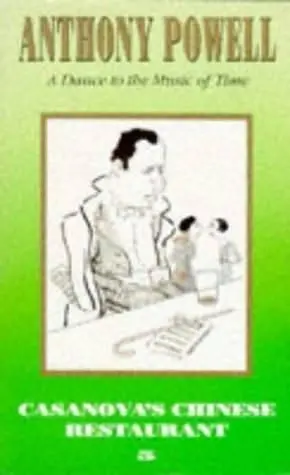
- Название:Casanova’s Chinese Restaurant
- Автор:
- Жанр:
- Год:неизвестен
- ISBN:нет данных
- Рейтинг книги:5 / 5. Голосов: 1
-
Избранное:Добавить в избранное
- Отзывы:
-
Ваша оценка:
Casanova’s Chinese Restaurant: краткое содержание, описание и аннотация
Предлагаем к чтению аннотацию, описание, краткое содержание или предисловие (зависит от того, что написал сам автор книги «Casanova’s Chinese Restaurant»). Если вы не нашли необходимую информацию о книге — напишите в комментариях, мы постараемся отыскать её.
The novels follow Nicholas Jenkins, Kenneth Widmerpool and others, as they negotiate the intellectual, cultural and social hurdles that stand between them and the “Acceptance World.”
Casanova’s Chinese Restaurant — читать онлайн бесплатно полную книгу (весь текст) целиком
Ниже представлен текст книги, разбитый по страницам. Система сохранения места последней прочитанной страницы, позволяет с удобством читать онлайн бесплатно книгу «Casanova’s Chinese Restaurant», без необходимости каждый раз заново искать на чём Вы остановились. Поставьте закладку, и сможете в любой момент перейти на страницу, на которой закончили чтение.
Интервал:
Закладка:
‘That – and other things. He is always hard up. Then he has an aptitude for quarrelling with anyone who might be of use to him professionally. He is writing a great tome on musical theory which never seems to get finished.’
‘What is his wife like?’
‘Like a wife.’
‘Is that how you feel about marriage?’
‘Well, not exactly,’ said Moreland laughing. ‘But you know one does begin to understand all the music-hall jokes and comic-strips about matrimony after you have tried a spell of it yourself. Don’t you agree?’
‘And Mrs Maclintick is a good example?’
‘You will see what I mean.’
‘What is Maclintick’s form about women? I can never quite make out.’
‘I think he hates them really – only likes whores.’
‘Ah.’
‘At least that is what Gossage used to say.’
‘That’s a known type.’
‘All the same, Maclintick is also full of deeply romantic, hidden away sentiments about Wein, Weib und Gesang. That is his passionate, carefully concealed side. The gruffness is intended to cover all that. Maclintick is terrified of being thought sentimental. I suppose all his bottled-up feelings came to the surface when he met Audrey.’
‘And the prostitutes?’
‘He told Gossage he found them easier to converse with than respectable ladies. Of course, Gossage – you can imagine how he jumped about telling me this – was speaking of a period before Maclintick’s marriage. No reason to suppose that sort of thing takes place now.’
‘But if he hates women, why do you say he is so passionate?’
‘It just seems to have worked out that way. Audrey is one of the answers, I suppose.’
The house, when we reached it, turned out to be a small, infinitely decayed two-storey dwelling that had seen better days; now threatened by a row of mean shops advancing from one end of the street and a fearful slum crowding up from the other. Moreland’s loyalty to his friends – in a quiet: way considerable – prevented me from being fully prepared for Mrs Maclintick. That she should have come as a surprise was largely my own fault. Knowing Moreland, I ought to have gathered more from his disjointed, though on the whole decidedly cautionary, account of the Maclintick household. Besides, from the first time of meeting Maclintick – when he had gone to the telephone in the Mortimer – the matrimonial rows of the Maclinticks had been an accepted legend. However much one hears about individuals, the picture formed in the mind rarely approximates to the reality. So it was with Mrs Maclintick. I was not prepared for her in the flesh. When she opened the door to us, her formidable discontent with life swept across the threshold in scorching, blasting waves. She was a small dark woman with a touch of gipsy about her, this last possibility suggested by sallow skin and bright black eyes. Her black hair was worn in a fringe. Some men might have found her attractive. I was not among them, although at the same time not blind to the fact that she might be capable of causing trouble where men were concerned. Mrs Maclintick said nothing at the sight of us, only shrugging her shoulders. Then, standing starkly aside, as if resigned to our entry in spite of an overpowering distaste she felt for the two of us, she held the door open wide. We passed within the Maclintick threshold.
‘It’s Moreland – and another man.’
Mrs Maclintick shouted, almost shrieked these words, while at the same time she twisted her head sideways and upwards towards a flight of stairs leading to a floor above, where Maclintick might be presumed to sit at work. We followed her into a sitting-room in which a purposeful banality of style had been observed; only a glass-fronted bookcase full of composers’ biographies and works of musical reference giving some indication of Maclintick’s profession.
‘Find somewhere to sit,’ said Mrs Maclintick, speaking if the day, bad enough before, had been finally ruined by arrival. ‘He will be down soon.’
Moreland seemed no more at ease in face of this reception than myself. At the same time he was evidently used to such welcomes in that house. Apart from reddening slightly, he showed no sign of expecting anything different in the way of reception. After telling Mrs Maclintick my name, he spoke a few desultory words about the weather, then made for the bookcase. I had the impression this was his accustomed gambit on arrival in that room. Opening its glass doors, he began to examine the contents of the shelves, as if – a most unlikely proposition – he had never before had time to consider Maclintick’s library. After a minute or two, during which we all sat in silence, he extracted a volume and began to turn over its pages. At this firm treatment, which plainly showed he was not going to allow his hostess’s ill humour to perturb him, Mrs Maclintick unbent a little.
‘How is your wife, Moreland?’ she asked, after picking up and rearranging some sewing upon which she must have been engaged on our arrival. ‘She is having a baby, isn’t she?’
‘Any day now,’ said Moreland.
Either he scarcely took in what she said, or did not consider her a person before whom he was prepared to display the anxiety he had earlier expressed to me on that subject, because he did not raise his eyes from the book, and, a second after she had spoken, gave one of his sudden loud bursts of laughter. This amusement was obviously caused by something he had just read. For a minute or two he continued to turn the pages, laughing to himself.
‘This life of Chabrier is enjoyable,’ he said, still without looking up. ‘How wonderful he must have been dressed as a bull-fighter at the fancy dress ball at Granada. What fun it all was in those days. Much gayer than we are now. Why wasn’t one a nineteenth-century composer living in Paris and hobnobbing with the Impressionist painters?’
Mrs Maclintick made no reply to this rhetorical question which appeared in no way to fire within her nostalgic daydreams. She was about to turn her attention, as if unwillingly, towards myself, with the air of a woman who had given Moreland a fair chance and found him wanting, when Maclintick came into the room. He was moving unhurriedly, as if he had arrived downstairs to search for something he had forgotten, and was surprised to find his wife entertaining guests. Despondency, as usual, seemed to have laid an icy grip on him. He wore bedroom slippers and was pulling at a pipe. However, he brightened a little when he saw Moreland, screwing up his eyes behind the small spectacles and beginning to nod his head as if humming gently to himself. I offered some explanation of my presence in the house, to which Maclintick muttered a brief, comparatively affirmative acknowledgement. Without saying more, he made straight for a cupboard from which he took bottles and glasses.
‘What have you been up to all day?’ asked Mrs Maclintick. ‘I thought you were going to get the man to see about the gas fire. You haven’t moved from the house as far as I know. I wish you’d stick to what you say. I could have got hold of him myself, if I’d known you weren’t going to do it.’
Maclintick did not answer. He removed the cork from a bottle, the slight ‘pop’ of its emergence appearing to embody the material of a reply to his wife, at least all the reply he intended to give.
‘I’ve been looking at this book on Chabrier,’ said Moreland. ‘What an enjoyable time he had in Spain.’
Maclintick grunted. He hummed a little. Chabrier did not appear to interest him. He poured out liberal drinks for everyone and handed them round. Then he sat down.
‘Have you become a father yet, Moreland?’ he asked.
He spoke as if he grudged having to make so formal an enquiry of so close a friend.
Читать дальшеИнтервал:
Закладка:
Похожие книги на «Casanova’s Chinese Restaurant»
Представляем Вашему вниманию похожие книги на «Casanova’s Chinese Restaurant» списком для выбора. Мы отобрали схожую по названию и смыслу литературу в надежде предоставить читателям больше вариантов отыскать новые, интересные, ещё непрочитанные произведения.


Обсуждение, отзывы о книге «Casanova’s Chinese Restaurant» и просто собственные мнения читателей. Оставьте ваши комментарии, напишите, что Вы думаете о произведении, его смысле или главных героях. Укажите что конкретно понравилось, а что нет, и почему Вы так считаете.