Anthony Powell - Casanova’s Chinese Restaurant
Здесь есть возможность читать онлайн «Anthony Powell - Casanova’s Chinese Restaurant» весь текст электронной книги совершенно бесплатно (целиком полную версию без сокращений). В некоторых случаях можно слушать аудио, скачать через торрент в формате fb2 и присутствует краткое содержание. Жанр: Современная проза, на английском языке. Описание произведения, (предисловие) а так же отзывы посетителей доступны на портале библиотеки ЛибКат.
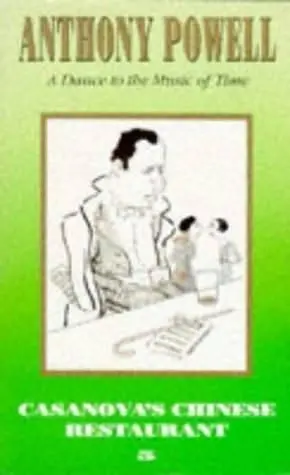
- Название:Casanova’s Chinese Restaurant
- Автор:
- Жанр:
- Год:неизвестен
- ISBN:нет данных
- Рейтинг книги:5 / 5. Голосов: 1
-
Избранное:Добавить в избранное
- Отзывы:
-
Ваша оценка:
Casanova’s Chinese Restaurant: краткое содержание, описание и аннотация
Предлагаем к чтению аннотацию, описание, краткое содержание или предисловие (зависит от того, что написал сам автор книги «Casanova’s Chinese Restaurant»). Если вы не нашли необходимую информацию о книге — напишите в комментариях, мы постараемся отыскать её.
The novels follow Nicholas Jenkins, Kenneth Widmerpool and others, as they negotiate the intellectual, cultural and social hurdles that stand between them and the “Acceptance World.”
Casanova’s Chinese Restaurant — читать онлайн бесплатно полную книгу (весь текст) целиком
Ниже представлен текст книги, разбитый по страницам. Система сохранения места последней прочитанной страницы, позволяет с удобством читать онлайн бесплатно книгу «Casanova’s Chinese Restaurant», без необходимости каждый раз заново искать на чём Вы остановились. Поставьте закладку, и сможете в любой момент перейти на страницу, на которой закончили чтение.
Интервал:
Закладка:
‘Not yet,’ said Moreland. ‘I find it rather a trial waiting. Like the minute or two before the lights go out when you are going to conduct.’
Maclintick continued to hum.
‘Can’t imagine why people want a row of kids,’ he said. ‘Life is bad enough without adding that worry to the rest of one’s other troubles.’
Being given a drink must have improved Mrs Maclintick’s temper for the moment, because she asked me if I too were married. I told her about Isobel being about to leave a nursing home.
‘Everyone seems to want babies nowadays,’ said Mrs Maclintick. ‘It’s extraordinary. Maclintick and I never cared for the idea.’
She was about to enlarge on this subject when the bell rang, at the sound of which she went off to open the front door.
‘How are you finding things now that you are back in London?’ Maclintick asked.
‘So-so,’ said Moreland. ‘Having to do a lot of hack work to keep alive.’
From the passage came sounds of disconnected talk. It was a man’s voice. Whomever Mrs Maclintick had admitted to the house, instead of joining us in the sitting-room continued downstairs to the basement, making a lot of noise with his boots on the uncarpeted stairs. Mrs Maclintick returned to her chair and the knickers she was mending. Maclintick raised his eyebrows.
‘Carolo?’ he asked.
‘Yes.’
‘What’s happened to his key?’
‘He lost it.’
‘Again?’
‘Yes.’
‘Carolo is always losing keys,’ said Maclintick. ‘He’ll have to pay for a new one himself this time. It costs a fortune keeping him in keys. I can’t remember whether I told you Carolo has come to us as a lodger, Moreland.’
‘No,’ said Moreland, ‘you didn’t. How did that happen?’
Moreland seemed surprised, for some reason not best pleased at this piece of information.
‘He was in low water,’ Maclintick said, speaking as if he were himself not specially anxious to go into detailed explanations. ‘So were we. It seemed a good idea at the time. I’m not so sure now. In fact I’ve been thinking of getting rid of him.’
‘How is he doing?’ asked Moreland. ‘Carolo is always very particular about what jobs he will take on. All that business about teaching being beneath his dignity.’
‘He says he likes time for that work of his he is always tinkering about with,’ said Maclintick. ‘I shall be very surprised if anything ever comes of it.’
‘I like Carolo here,’ said Mrs Maclintick. ‘He gives very little trouble. I don’t want to die of melancholia, never seeing a soul.’
‘What do you mean?’ said Maclintick. ‘Look at the company we have got tonight. What I can’t stick is having Carolo scratching away at the other end of the room when I am eating. Why can’t he keep the same hours as other people?’
‘You are always saying artists ought to be judged by different standards from other people,’ said Mrs Maclintick fiercely. ‘Why shouldn’t Carolo keep the hours he likes? He is an artist, isn’t he?’
‘Carolo may be an artist,’ said Maclintick, puffing out a long jet of smoke from his mouth, ‘but he is a bloody unsuccessful one nowadays. One of those talents that have dried up in my opinion. I certainly don’t see him blossoming out as a composer. Look here, you two had better stay to supper. As Audrey says, we don’t often have company. You can see Carolo then. Judge for yourselves. It is going to be one of his nights in. I can tell from the way he went down the stairs.’
‘He has got to work somewhere, hasn’t he?’ said Mrs Maclintick, whose anger appeared to be rising again after a period of relative calm. ‘His bedroom is much too cold in this weather. You use the room with a gas fire in it yourself, the only room where you can keep warm. Even then you can’t be bothered to get it repaired. Do you want Carolo to freeze to death?’
‘It’s my house, isn’t it?’
‘You say you don’t want him in the sitting-room. Why did you tell him he could work in the room off the kitchen if you don’t want him there?’
‘I am not grumbling,’ said Maclintick, ‘I am just warning these two gendemen what to expect – that is to say Carolo scribbling away at a sheet of music at one end of the room, and some cold beef and pickles at the other.’
‘Mutton,’ said Mrs Maclintick.
‘Mutton, then. We can get some beer in a jug from the local.’
‘Doesn’t Carolo ever eat himself?’ Moreland asked.
‘He often meals with us as a matter of fact,’ said Mrs Maclintick. ‘I don’t know why Maclintick should make all this fuss suddenly. It is just when Carolo has other plans that he works while we are having supper. Then he eats out later. He likes living on snacks. I tell him it’s bad for him, but he doesn’t care. What is so very extraordinary about all that?’
Her husband disregarded her.
‘Then you are both going to stay,’ he said, almost anxiously. ‘That is fixed. Where is the big jug, Audrey? I’ll get some beer. What does everyone like? Bitter? Mild-and-bitter?’
Moreland had probably been expecting this invitation from the start, but the Maclinticks’ bickering about Carolo seemed to have put him out, so that, giving a hasty glance in my direction as if to learn whether or not I was prepared to fall in with this suggestion, he made some rambling, inconclusive answer which left the whole question in the air. Moreland was subject to fits of jumpiness of that sort; certainly the Maclinticks, between them, were enough to make anyone ill at ease. However, Maclintick now obviously regarded the matter as settled. The prospect of enjoying Moreland’s company for the rest of the evening evidently cheered him. His tone in suggesting different brews of beer sounded like a gesture of conciliation towards his wife and the world in general. I did not much look forward to supper at the Maclinticks, but there seemed no easy way out. Moreland’s earlier remarks about Maclintick’s need for occasional companionship were certainly borne out by this visit. The Maclinticks, indeed, as a married couple, gave the impression of being near the end of their tether. When, for example, Mona and Peter Templer had quarrelled – or, later, when Mona’s interlude with Quiggin had been punctuated with bad temper and sulkiness – the horror had been less acute, more amenable to adjustment, than the bleak despair of the Maclinticks’ union. Mrs Maclintick’s hatred of everything and everybody – except, apparently, Carolo, praise of whom was in any case apparently little more than a stick with which to beat Maclintick – caused mere existence in the same room with her to be disturbing. She now made for the basement, telling us she would shout in due course an invitation to descend. Simultaneously, Maclintick set off for the pub at the end of the street, taking with him a large, badly chipped china jug to hold the beer.
‘I am afraid I’ve rather let you in for this,’ said Moreland, when we were alone.
His face displayed that helpless, worried look which it would sometimes take on; occasions when Matilda, nowadays probably took charge of the situation. No doubt he found life both worrying and irksome, waiting for her to give birth, himself by this time out of the habit of living on his own.
‘Is it usually like this here?’
‘Rather tougher than usual.’
We waited for some minutes in the sitting-room, Moreland returning to the life of Chabrier, while I turned over the pages of an illustrated book about opera, chiefly looking at the pictures, but thinking, too, of the curious, special humour of musicians, and also of the manner in which they write; ideas, words and phrases gushing out like water from a fountain, so utterly unlike the stiff formality of painters’ prose. After a time, Mrs Maclintick yelled from the depths that we were to join her. Almost at the same moment, Maclintick returned with the beer. We followed him downstairs to the basement. There, in a room next to the kitchen, a table was laid. We settled ourselves round it. Maclintick filled some tumblers; Mrs Maclintick began to carve the mutton. Carolo was immediately manifest. Although, architecturally speaking, divided into separate parts, the Maclinticks’ dining-room was not a large one, the table taking up most of one end. Maclintick’s objection to their lodger working while he and his wife were making a meal seemed valid enough when the circumstances revealed themselves. Carolo sat, his face to the wall, engrossed with a pile of music. He looked round when Moreland and I entered the room, at the same time giving some sort of a hurried greeting, but he did not rise, or pause from his work, for more than a second. Mrs Maclintick’s temper had improved again; now she appeared almost glad that Moreland and I had stayed.
Читать дальшеИнтервал:
Закладка:
Похожие книги на «Casanova’s Chinese Restaurant»
Представляем Вашему вниманию похожие книги на «Casanova’s Chinese Restaurant» списком для выбора. Мы отобрали схожую по названию и смыслу литературу в надежде предоставить читателям больше вариантов отыскать новые, интересные, ещё непрочитанные произведения.


Обсуждение, отзывы о книге «Casanova’s Chinese Restaurant» и просто собственные мнения читателей. Оставьте ваши комментарии, напишите, что Вы думаете о произведении, его смысле или главных героях. Укажите что конкретно понравилось, а что нет, и почему Вы так считаете.