Anthony Powell - Casanova’s Chinese Restaurant
Здесь есть возможность читать онлайн «Anthony Powell - Casanova’s Chinese Restaurant» весь текст электронной книги совершенно бесплатно (целиком полную версию без сокращений). В некоторых случаях можно слушать аудио, скачать через торрент в формате fb2 и присутствует краткое содержание. Жанр: Современная проза, на английском языке. Описание произведения, (предисловие) а так же отзывы посетителей доступны на портале библиотеки ЛибКат.
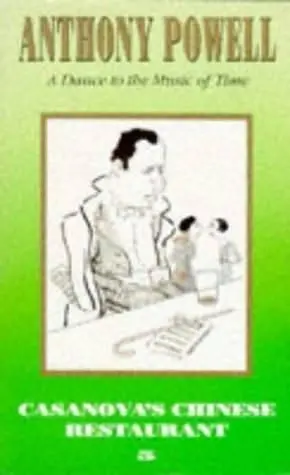
- Название:Casanova’s Chinese Restaurant
- Автор:
- Жанр:
- Год:неизвестен
- ISBN:нет данных
- Рейтинг книги:5 / 5. Голосов: 1
-
Избранное:Добавить в избранное
- Отзывы:
-
Ваша оценка:
Casanova’s Chinese Restaurant: краткое содержание, описание и аннотация
Предлагаем к чтению аннотацию, описание, краткое содержание или предисловие (зависит от того, что написал сам автор книги «Casanova’s Chinese Restaurant»). Если вы не нашли необходимую информацию о книге — напишите в комментариях, мы постараемся отыскать её.
The novels follow Nicholas Jenkins, Kenneth Widmerpool and others, as they negotiate the intellectual, cultural and social hurdles that stand between them and the “Acceptance World.”
Casanova’s Chinese Restaurant — читать онлайн бесплатно полную книгу (весь текст) целиком
Ниже представлен текст книги, разбитый по страницам. Система сохранения места последней прочитанной страницы, позволяет с удобством читать онлайн бесплатно книгу «Casanova’s Chinese Restaurant», без необходимости каждый раз заново искать на чём Вы остановились. Поставьте закладку, и сможете в любой момент перейти на страницу, на которой закончили чтение.
Интервал:
Закладка:
We used to see a good deal of the Morelands in those days dining together sometimes at Foppa’s, sometimes at the Strasbourg, afterwards going to a film, or, as Moreland really preferred, sitting in a pub and talking. He would develop a passion for one particular drinking place – never the Mortimer after marriage – then tire of it, inclination turning to active aversion. Isobel and Matilda got on well together. They were about the same age; they had the nursing home in common. Matilda had recovered quickly, after an unpromising start. She found apparent relief in describing the discomfort she had suffered, although speaking always in a manner to cast a veil of unreality over the experience. Lively, violent, generous, she was subject, like Moreland himself, to bouts of deep depression. On the whole the life they lived together – so wholly together – seemed to suit her. Perhaps, after all, people were right to think of her as intended by nature for a man’s mistress and companion, rather than as cast for the role of mother.
‘Matilda’s father was a chemist,’ Moreland once remarked, when we were alone together, ‘but he is dead now – so one cannot get special terms for purges and sleeping pills.’
‘And her mother?’
‘Married again. They were never on very good terms. Matty left home very young. I think everyone was rather glad when she struck out on her own.’
Two of my sisters-in-law, as it happened, had come across Matilda in pre-Moreland days. These were Veronica, George Tolland’s wife, and Norah, who shared a flat with Eleanor Walpole-Wilson. Veronica, whose father was an auctioneer in a country town not far from Stourwater Castle, was one of the few people to know something of Matilda’s early life. They had, indeed, been at school together.
‘I was much older, of course,’ Veronica said. ‘I just remember her right down at the bottom of the junior school, a little girl you couldn’t help noticing. She was called Betty Updike then.’
‘How did you ever discover Matilda was the same girl?’
‘When I was living at home and divorcing Fred, I met a local girl in the High Street who’d got a job on the Daily Mail . She began to talk about Sir Magnus Donners and said: “Do you know the piece called Matilda Wilson he is always seen around with is really Betty Updike”.’
There was nothing particularly surprising about Matilda having taken a new name for the stage. Many people did that. It was something to be expected. The manner in which Matilda had first met Sir Magnus was more interesting.
‘This girl told me Matilda Wilson came down one term to help the school dramatic society do A Midsummer Night’s Dream ,’ said Veronica. ‘They had got permission to act the play at Stourwater. Sir Magnus, wandering round, came across Matilda Wilson dressing up a lot of little girls as elves. That went pretty well.’
It seemed as credible a story as any other. Once involved with Sir Magnus, Matilda had, of course, been ‘seen everywhere’; within the limitations of the fact that Sir Magnus preferred to keep his girl of the moment as much as possible to himself, allowing her to meet no more of his own friends than strictly necessary for his own entertainment when the two of them could not be alone together. Certainly that had been true of the time when Sir Magnus was associated with Baby Wentworth, alleged by Barnby to have ‘given notice’ on this very account. There had been a lot of gossip about Matilda when she was ‘with’ Sir Magnus. When, not long before my own marriage, I had stayed with Quiggin and Mona in the cottage lent them by Erridge, Quiggin had even talked too much about Matilda for Mona’s taste.
‘Oh, yes,’ Mona had said, in her irritated drawl, ‘Matilda Wilson – one of those plain girls men for some extraordinary reason like running after. Because they are not much trouble, I suppose.’
Norah Tolland had encountered Matilda in quite different circumstances; in fact having drinks with Heather Hopkins, the pianist, who had formerly inhabited one of the lower floors of the house in Chelsea where Norah and Eleanor Walpole-Wilson occupied the attics. At the period of which I am speaking – about two years after my own marriage – Norah and Eleanor had both found themselves jobs and become very ‘serious’, talking a lot about politics and economics and how best to put the world right. They were now rather ashamed of their Heather Hopkins days.
‘Poor old Hopkins,’ Norah said, when I mentioned her once. ‘Such a pity she goes round looking and talking like the most boring kind of man. Her flat might be the bar in a golf club. She is a good-hearted creature in her own way.’
‘You get tired of all that clumping about,’ said Eleanor, kicking some bedroom slippers out of sight under the sofa. ‘And besides, Heather isn’t in the least interested in world affairs. One does ask a little sense of responsibility in people.’
However, things had been very different some years before. Then, Hopkins had thrilled Norah and Eleanor with her eyeglass and her dinner-jacket and her barrack-room phrases. Matilda had been brought to the Hopkins flat by a young actress at that time much admired by the hostess. The gathering was, of course, predominantly female, and Matilda, often found attractive by her own sex, but herself preferring men even in an unaggressively masculine form, had spent most of the evening talking to Norman Chandler. She met him for the first time at this Hopkins party. Through Chandler, Matilda had subsequently obtained a foothold in that branch of the theatre which had led in due course to her part in The Duchess of Malfi. Norah, usually sparing of praise, had been impressed by Matilda, to whom, as it happened, she only managed to speak a couple of words in the course of the evening.
‘I thought she was rather wonderful,’ said Norah.
Moreland himself had first met his future wife at a time when Matilda’s connexion with Sir Magnus, if not completely severed, had been at least considerably relaxed. Moreland’s behaviour on this occasion had been characteristic. He had fallen deeply in love, immediately overwhelming Matilda with that combination of attention and forgetfulness which most women found so disconcerting in his addresses. For once, however, that approach worked very well. Matilda was won. There had already been some ups and downs in their relationship by the time I was allowed to meet her, but, in principle, they were satisfied enough with each other before marriage; they still seemed satisfied when we used to meet them and dine together at Foppa’s or the Strasbourg. I discounted Moreland’s casual outbursts against marriage as an institution; indeed, took his word for it that, as he used to explain, these complaints were a sign of living in a world of reality, not a palace of dreams.
‘People always treat me as if I was a kind of 1880 bohemian,’ he used to say. ‘On the contrary, I am the sane Englishman with his pipe.’
It was on one of these evenings at the Strasbourg that he announced his symphony was finished and about to be performed. Although Moreland never talked much about his own compositions, I knew he had been working on the symphony for a long time.
‘Norman’s friend, Mrs Foxe, is going to give a party for it,’ he said.
‘But how lovely,’ said Isobel. ‘Will Mrs Foxe and Norman stand at the top of the stairs, side by side, receiving the guests?’
‘I hope so,’ said Moreland. ‘An example to all of us. A fidelity extremely rare among one’s friends.’
‘Does Mrs Foxe still live in a house somewhere off Berkeley Square?’ I asked.
‘That’s it,’ said Moreland. ‘With objects like mammoth ice-cream cornets on either side of the front door for putting out the torches after you have paid off your sedan chair.’
Читать дальшеИнтервал:
Закладка:
Похожие книги на «Casanova’s Chinese Restaurant»
Представляем Вашему вниманию похожие книги на «Casanova’s Chinese Restaurant» списком для выбора. Мы отобрали схожую по названию и смыслу литературу в надежде предоставить читателям больше вариантов отыскать новые, интересные, ещё непрочитанные произведения.


Обсуждение, отзывы о книге «Casanova’s Chinese Restaurant» и просто собственные мнения читателей. Оставьте ваши комментарии, напишите, что Вы думаете о произведении, его смысле или главных героях. Укажите что конкретно понравилось, а что нет, и почему Вы так считаете.