Anthony Powell - Casanova’s Chinese Restaurant
Здесь есть возможность читать онлайн «Anthony Powell - Casanova’s Chinese Restaurant» весь текст электронной книги совершенно бесплатно (целиком полную версию без сокращений). В некоторых случаях можно слушать аудио, скачать через торрент в формате fb2 и присутствует краткое содержание. Жанр: Современная проза, на английском языке. Описание произведения, (предисловие) а так же отзывы посетителей доступны на портале библиотеки ЛибКат.
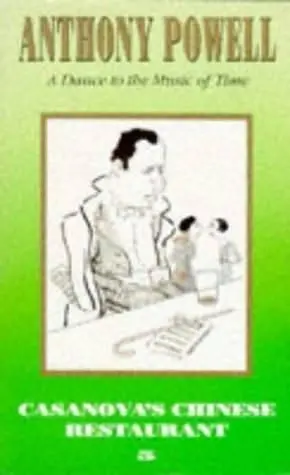
- Название:Casanova’s Chinese Restaurant
- Автор:
- Жанр:
- Год:неизвестен
- ISBN:нет данных
- Рейтинг книги:5 / 5. Голосов: 1
-
Избранное:Добавить в избранное
- Отзывы:
-
Ваша оценка:
Casanova’s Chinese Restaurant: краткое содержание, описание и аннотация
Предлагаем к чтению аннотацию, описание, краткое содержание или предисловие (зависит от того, что написал сам автор книги «Casanova’s Chinese Restaurant»). Если вы не нашли необходимую информацию о книге — напишите в комментариях, мы постараемся отыскать её.
The novels follow Nicholas Jenkins, Kenneth Widmerpool and others, as they negotiate the intellectual, cultural and social hurdles that stand between them and the “Acceptance World.”
Casanova’s Chinese Restaurant — читать онлайн бесплатно полную книгу (весь текст) целиком
Ниже представлен текст книги, разбитый по страницам. Система сохранения места последней прочитанной страницы, позволяет с удобством читать онлайн бесплатно книгу «Casanova’s Chinese Restaurant», без необходимости каждый раз заново искать на чём Вы остановились. Поставьте закладку, и сможете в любой момент перейти на страницу, на которой закончили чтение.
Интервал:
Закладка:
‘I am not sure that I like parties at that house,’ said Matilda. ‘We have been there once or twice. I can stand grand parties less and less anyway.’
She was having one of her moods that night, but it was on the whole true to say that since marriage Moreland had increasingly enjoyed going to parties, especially parties like that offered by Mrs Foxe; Matilda, less and less.
‘You talk as if we spent our life in a whirl of champagne and diamonds,’ Moreland said. ‘Anyway, it won’t be as grand as all that. Mrs Foxe has promised just to ask our own sordid friends.’
‘Who,’ asked Isobel, ‘apart from us?’
‘I’d far rather go off quietly by ourselves somewhere after the thing is over and have supper with Isobel and Nick,’ Matilda said. ‘That would be much more fun.’
‘It is rather an occasion, darling,’ said Moreland, vexed at these objections. ‘After all, I am noted among composers for the smallness of my output. I don’t turn out a symphony every week like some people. A new work by me ought to be celebrated with a certain flourish – if only to encourage the composer himself.’
‘I just hate parties nowadays.’
‘There are only going to be about twenty or thirty people,’ Moreland said. ‘I know Edgar Deacon used to assure us that “the saloon, rather than the salon, is the true artist’s milieu”, but his own pictures were no great advertisement for that principle. Personally, I feel neither subservience nor resentment at the prospect of being entertained by Mrs Foxe in luxurious style.’
‘Have you ever talked to her naval husband?’ I asked.
‘There is a smooth, hearty fellow about the house sometimes,’ Moreland said. ‘A well-fed air, and likes a good mahogany-coloured whisky. I once heard him give an anguished cry when the footman began to splash in too much soda. I never knew he was her husband. He doesn’t look in the least like a husband.’
‘Of course he is her husband,’ said Matilda. ‘What an ass you are. He pinched my leg the night we were having supper with them after Turandot. That is one of the reasons I turned against the house.’
‘Darling, I’m sure he didn’t. Just your swank.’
‘I told you when we got home. I even showed you the bruise. You must have been too tight to see it.’
‘He always seems scrupulously well behaved to me,’ Moreland said. ‘Rather afraid of Mrs Foxe, as a matter of fact. I understand why, now she turns out to be his wife.’
Soon after this meeting with the Morelands came the period of crisis leading up to the Abdication, one of those public events which occupied the minds not only of those dedicated by temperament to eternal discussion of what they read about in the newspapers, but of everyone else in the country of whatever age, sex, or social class. The constitutional and emotional issues were left threadbare by debate. Barnby would give his views on the controversy in his most down-to-earth manner; Roddy Cutts treated it with antiseptic discretion; Frederica’s connexion with the Court caused her to show herself in public as little as possible, but she did not wholly avoid persecution at the hands of friends and relations vainly hoping for some unreleased titbit.
‘I shall have a nervous breakdown if they don’t settle things soon,’ said Robert Tolland. ‘I don’t expect you hear any news, Frederica?’
‘I can assure you, Robert, my own position is equally nerve-racking,’ said Frederica. ‘And I hear no news.’
She certainly looked dreadfully worried. I found Members and Quiggin discussing the ineluctable topic when I went to collect a book for review.
‘I am of course opposed in principle to monarchy, like all other feudal survivals,’ Quiggin was saying. ‘But if the country must have a king, I consider it desirable, indeed essential that he should marry a divorcée. Two divorces – double as good. I am no friend of the civilisation of Big Business, but at least an American marriage is better than affiliation with our own so-called aristocracy.’
Members laughed dryly.
‘Have you taken part in a procession of protest yet, J.G.?’ he asked, now in a sufficiently strong economic position vis-à-vis his old friend to treat Quiggin’s indignation with amused irony. ‘I believe all kinds of distinguished people from the intellectual world have been parading the streets with sandwich boards expressing outraged royalist sentiments.’
‘I regard the whole matter as utterly trivial in any case,’ said Quiggin, irritably shoving a handful of recently published novels back into the shelf behind Members’s desk, tearing the paper wrappers of two of them by the violence of his action. ‘You asked me my views, Mark, and I’ve told you what they are. Like Gibbon, I dismiss the subject with impatience. Perhaps you will produce a book of some interest this week, a change from these interminable autobiographies of minor criminals which flow so freely from the press and to which I am for ever condemned by you.’
I met Moreland in the street just after the story had broken in the newspapers.
‘Isn’t this just my luck?’ he said. ‘Now nobody is going to listen to music, look at a picture, or read a book, for months on end. We can all settle down happily to discussions every evening about Love and Duty.’
‘Fascinating subjects.’
‘They are in one’s own life. Less so, where others are concerned.’
‘You speak with feeling.’
‘Do I? Just my naturally vehement way of expressing myself.’
As it turned out, once the step had been taken, the Abdication become a matter of history, everything resumed an accustomed routine with much greater ease than popularly foreseen. There appeared no reason to suppose the box office for Moreland’s symphony would suffer. Priscilla (who had eventually taken the job in the organisation raising money for the promotion of opera) reported, for example, that the cross-section of the public seen through this particular microscope seemed to have settled down, after some weeks of upheaval, to its normal condition. Priscilla was not particularly interested in music – less so than Robert – but naturally this employment had brought her in touch to some degree with the musical world. At the same time, I was surprised when, the day before Moreland’s work was to be performed, Priscilla rang up and asked if she could come with us the following evening. Isobel answered the telephone.
‘I didn’t know you often went to concerts,’ she said.
‘I don’t unless I have a free ticket,’ said Priscilla.
‘Did you get a free ticket for this one?’
‘Yes.’
‘Who gave it you?’
‘One of the persons whose music is going to be played.’
‘I thought they were all dead, or living abroad, except Hugh Moreland.’
‘Hugh Moreland gave me the ticket.’
‘I didn’t know you knew him.’
‘Of course I do.’
‘Oh, yes. You met him with us, didn’t you?’
‘And other times too. I meet him in my office.’
‘You never mentioned it.’
‘Look here, can I come with you and Nick, or can’t I?’ said Priscilla. ‘I am just asking. If you think being seen in my company will get you a bad name, I’ll go alone and pretend I don’t know either of you if we meet in the bar. Nothing easier.’
This conversation was reported later by Isobel, with the information that Priscilla was dining with us the following night.
‘Typical of Hugh to present a ticket to Priscilla, who is not in the least interested in music,’ I said, ‘when all sorts of people who might be useful to him would have been delighted to be remembered in that way.’
The statement was true, at the same time disingenuous. I was a little aware of that at the time. It was a priggish remark; not even genuinely priggish. There seemed no point in adding that it was obviously more fun to give a ticket to a pretty girl like Priscilla, rather than to some uncouth musical hanger-on whose gratification might ultimately pay a doubtful dividend. I felt it one of those occasions when a show of worldliness might be used as a smoke-screen. But why should a smoke-screen be required?
Читать дальшеИнтервал:
Закладка:
Похожие книги на «Casanova’s Chinese Restaurant»
Представляем Вашему вниманию похожие книги на «Casanova’s Chinese Restaurant» списком для выбора. Мы отобрали схожую по названию и смыслу литературу в надежде предоставить читателям больше вариантов отыскать новые, интересные, ещё непрочитанные произведения.


Обсуждение, отзывы о книге «Casanova’s Chinese Restaurant» и просто собственные мнения читателей. Оставьте ваши комментарии, напишите, что Вы думаете о произведении, его смысле или главных героях. Укажите что конкретно понравилось, а что нет, и почему Вы так считаете.