Anthony Powell - Casanova’s Chinese Restaurant
Здесь есть возможность читать онлайн «Anthony Powell - Casanova’s Chinese Restaurant» весь текст электронной книги совершенно бесплатно (целиком полную версию без сокращений). В некоторых случаях можно слушать аудио, скачать через торрент в формате fb2 и присутствует краткое содержание. Жанр: Современная проза, на английском языке. Описание произведения, (предисловие) а так же отзывы посетителей доступны на портале библиотеки ЛибКат.
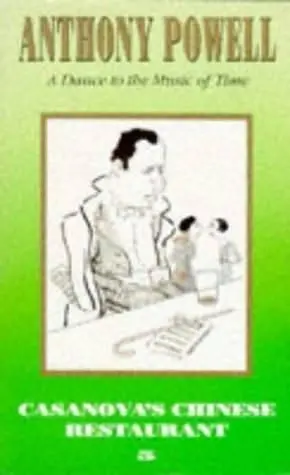
- Название:Casanova’s Chinese Restaurant
- Автор:
- Жанр:
- Год:неизвестен
- ISBN:нет данных
- Рейтинг книги:5 / 5. Голосов: 1
-
Избранное:Добавить в избранное
- Отзывы:
-
Ваша оценка:
Casanova’s Chinese Restaurant: краткое содержание, описание и аннотация
Предлагаем к чтению аннотацию, описание, краткое содержание или предисловие (зависит от того, что написал сам автор книги «Casanova’s Chinese Restaurant»). Если вы не нашли необходимую информацию о книге — напишите в комментариях, мы постараемся отыскать её.
The novels follow Nicholas Jenkins, Kenneth Widmerpool and others, as they negotiate the intellectual, cultural and social hurdles that stand between them and the “Acceptance World.”
Casanova’s Chinese Restaurant — читать онлайн бесплатно полную книгу (весь текст) целиком
Ниже представлен текст книги, разбитый по страницам. Система сохранения места последней прочитанной страницы, позволяет с удобством читать онлайн бесплатно книгу «Casanova’s Chinese Restaurant», без необходимости каждый раз заново искать на чём Вы остановились. Поставьте закладку, и сможете в любой момент перейти на страницу, на которой закончили чтение.
Интервал:
Закладка:
‘Not colder than Rupe’s heart,’ Chandler had commented. ‘It was my suggestion. He may have a profile like Apollo, but he’s got a mind like Hampstead Garden Suburb.’
The Huntercombes, as well as the celebrated conductor, were certainly contributed to the party by Mrs Foxe rather than by Moreland. Once – as I knew from remarks let fall by Stringham in the past – Mrs Foxe would have regarded Lady Huntercombe as dreadfully ‘slow’, and laughed at her clothes, which were usually more dramatic than fashionable. However, now that Mrs Foxe’s energies were so largely directed towards seeking ways of benefiting Chandler and his friends, Lord Huntercombe’s many activities in the art world had to be taken into account. In his capacity as trustee of more than one public gallery, Lord Huntercombe was, it was true, concerned with pictures rather than with music or the theatre. At the same time, his well recognised abilities in his own field had brought him a seat on several committees connected with other branches of the arts or activities of a generally ‘cultural’ sort. Lord Huntercombe, small and immensely neat, was indeed a man to be reckoned with. He had caught napping one of the best known Bond Street dealers in the matter of a Virgin and Child by Benozzo Gozzoli (acquired from the gallery as the work of a lesser master, later resoundingly identified), also so nicely chosen the moment to dispose of his father’s collection of English pastels that he obtained nearly twice their market value.
Lady Huntercombe, as usual majestically dressed in a black velvet gown, wore a black ribbon round her neck clipped with an elaborate ornament in diamonds. She took a keen interest in music, more so than her husband, who liked to be able himself to excel in his own spheres of patronage, and was not musically inclined. I remembered Lady Huntercombe expressing her disappointment after Stringham’s wedding at the manner in which the choir had sung the anthem. ‘Dreadfully sharp,’ I heard her say at the reception. ‘It set my teeth on edge.’ Now she was talking to Matilda, to the accompaniment of animated and delighted shakings of her forefinger, no doubt indicative of some special pleasure she had taken in Moreland’s symphony; apparently at the same time trying to persuade Matilda – who seemed disposed to resist these advances – to accept some invitation or other similar commitment.
Moving towards the inner room, I observed that Chandler’s small bronze of Truth Unveiled by Time, long ago bought from the Caledonian Market and rescued from Mr Deacon’s shop after his death, had now come finally to rest on the console table under the Romney. Chandler himself was standing beside the table, stirring a glass of champagne with a gold swizzle-stick borrowed from Commander Foxe. Although Chandler might hold Mrs Foxe under his sway, she, on her part, had in some degree tamed him too. His demeanour had been modified by prolonged association with her. He was no longer quite the gamin of the Mortimer.
‘Hullo, my dear,’ he said. ‘Fizz always gives me terrible hiccups, unless I take the bubbles away. You know Buster, of course.’
Commander Foxe, greyer now, a shade bulkier than when I had last seen him, was at the same time, if possible, more dignified as a result of these outward marks of maturity. He retained in his dress that utter perfection of turn-out that stopped so brilliantly short of seeming no more than the trappings of a tailor’s dummy. His manner, on the other hand, had greatly changed. He had become chastened, almost humble. I could not imagine how I had ever found him alarming; although, even with this later development of geniality, there still existed a suggestion that below the surface he knew how to make himself disagreeable if need be. I mentioned where we had last met. He at once recollected or pretended to recollect, the occasion; the essence of good manners and friendliness, almost obsequious in his desire to please.
‘Poor old Charles,’ he said. ‘Of course I remember you were a friend of his. Do you ever see him these days? Well, of course, nobody does much, do they? All the same, it hasn’t worked out too badly. Do you remember Miss Weedon, Amy’s secretary? Rather a formidable lady. Oh, you know all about that, do you? Yes, Molly Jeavons is an aunt of your wife’s, of course. Quite a solution for Charles in a way. It gives him the opportunity to live a quiet life for a time. Norman goes round and sees Charles sometimes, don’t you, Norman?’
‘I simply adore Charles,’ said Chandler, ‘but I’m rather afraid of that gorgon who looks after him – I believe you are too, Buster.’
Buster laughed, almost achieving his savage sneer of former times. He did not like Miss Weedon. I remembered that. He was no doubt glad to have ridded the house of Stringham too. They had never got on well together.
‘At least Tuffy keeps Charles in order,’ Buster said. ‘If one hasn’t any self-discipline, something of the sort unfortunately has to be applied from the outside. It is a hard thing to say, but there it is. Are you in this musical racket yourself? I hear Hugh Moreland’s symphony was very fine. I couldn’t manage to get there myself, much to my regret.’
I felt a pang of horror at the way his family now talked of Stringham: as if he had been put away from view like a person suffering from a horrible, unmentionable disease, or become some terrifying legendary figure, fearful as the Glamis monster, about whom it was appropriate to joke as dreadful to behold, but at the same time a being past serious credence. All the same, it was hard to know what else they could do about him, how better behave towards him Stringham, after all, was their problem, not mine. I myself could offer no better solution than Miss Weedon; was in no position to disparage his own relations so far as their conduct towards Stringham was concerned.
‘They were a bit hurried in seeing our former King off the premises, weren’t they?’ said Buster, changing the subject to public events, possibly because he feared his last words might provoke musical conversation. ‘Some of one’s friends have been caught on the wrong foot about it all. Still, I expect he will have a much better time on his own in the long run. His later job was not one I should care to take on.’
‘My dear, you’d do it superbly,’ said Chandler. ‘I always think that when I look at that photograph of you in tropical uniform.’
‘No, no, nonsense, Norman,’ said Buster, not displeased at this attribution to himself of potentially royal aptitudes. ‘I should be bored to death. I can’t in the least imagine myself opening Parliament and all that sort of thing.’
Chandler signified his absolute disagreement.
‘I must go off and have a word with Auntie Gossage now,’ he said, ‘or the old witch will fly off on a broomstick and complain about being cut. See you both later.’
‘What a wonderful chap Norman is,’ said Buster, speaking with unaccustomed warmth. ‘You know I sometimes wonder what Amy would do without him. Or me, either, for that matter. He runs the whole of our lives. He can do anything from arranging the flowers to mixing the best Tom Collins I have ever drunk. So talented in other ways too. Ever seen him act? Then, as for dancing and playing the saxophone… Well, I’ve never met a man like him.’
There seemed no end to Buster’s admiration for Chandler. I did not disagree, although surprised, rather impressed, by Buster’s complete freedom from jealousy. It was not that one supposed that Chandler was ‘having an affair’ with Mrs Foxe – although no one can speak with certainty, as Barnby used to insist, about any two people in that connexion – but, apart from any question of physical relationship, she obviously loved Chandler, even if this might not be love of quite the usual sort. A husband, even a husband as unprejudiced as Buster, might have felt objection on personal, or merely general, grounds. Many men who outwardly resembled Buster would, on principle, have disliked a young man of Chandler’s appearance and demeanour; certainly disliked for ever seeing someone like that about the house. Either natural tolerance had developed in Buster as he had grown older, or there were other reasons why his wife’s infatuation with Chandler satisfied him; after all Matilda had alleged the pinching of her leg. Possibly Chandler kept Mrs Foxe from disturbing Buster in his own amusements. If that was the reason, Buster showed a good grace in the manner in which he followed his convenience; in itself a virtue not universally practised. Perhaps he was a little aware that he had displayed himself to me in an unexpected light.
Читать дальшеИнтервал:
Закладка:
Похожие книги на «Casanova’s Chinese Restaurant»
Представляем Вашему вниманию похожие книги на «Casanova’s Chinese Restaurant» списком для выбора. Мы отобрали схожую по названию и смыслу литературу в надежде предоставить читателям больше вариантов отыскать новые, интересные, ещё непрочитанные произведения.


Обсуждение, отзывы о книге «Casanova’s Chinese Restaurant» и просто собственные мнения читателей. Оставьте ваши комментарии, напишите, что Вы думаете о произведении, его смысле или главных героях. Укажите что конкретно понравилось, а что нет, и почему Вы так считаете.