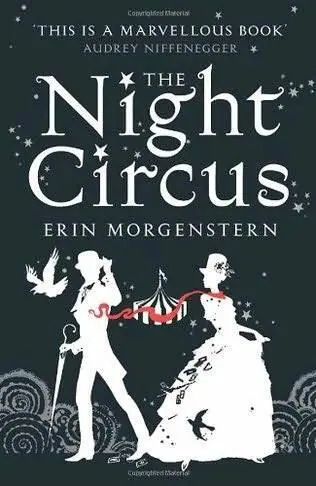
Erin Morgenstern - The Night Circus
Здесь есть возможность читать онлайн «Erin Morgenstern - The Night Circus» весь текст электронной книги совершенно бесплатно (целиком полную версию без сокращений). В некоторых случаях можно слушать аудио, скачать через торрент в формате fb2 и присутствует краткое содержание. Жанр: Современная проза, на английском языке. Описание произведения, (предисловие) а так же отзывы посетителей доступны на портале библиотеки ЛибКат.
- Название:The Night Circus
- Автор:
- Жанр:
- Год:неизвестен
- ISBN:нет данных
- Рейтинг книги:4 / 5. Голосов: 1
-
Избранное:Добавить в избранное
- Отзывы:
-
Ваша оценка:
The Night Circus: краткое содержание, описание и аннотация
Предлагаем к чтению аннотацию, описание, краткое содержание или предисловие (зависит от того, что написал сам автор книги «The Night Circus»). Если вы не нашли необходимую информацию о книге — напишите в комментариях, мы постараемся отыскать её.
The circus arrives without warning. No announcements precede it. It is simply there, when yesterday it was not. Within the black-and-white striped canvas tents is an utterly unique experience full of breathtaking amazements. It is called Le Cirque des Rêves, and it is only open at night.
But behind the scenes, a fierce competition is underway – a duel between two young magicians, Celia and Marco, who have been trained since childhood expressly for this purpose by their mercurial instructors. Unbeknownst to them, this is a game in which only one can be left standing, and the circus is but the stage for a remarkable battle of imagination and will. Despite themselves, however, Celia and Marco tumble headfirst into love – a deep, magical love that makes the lights flicker and the room grow warm whenever they so much as brush hands.
True love or not, the game must play out, and the fates of everyone involved, from the cast of extraordinary circus performers to the patrons, hang in the balance, suspended as precariously as the daring acrobats overhead.
Written in rich, seductive prose, this spell-casting novel is a feast for the senses and the heart.
The Night Circus — читать онлайн бесплатно полную книгу (весь текст) целиком
Ниже представлен текст книги, разбитый по страницам. Система сохранения места последней прочитанной страницы, позволяет с удобством читать онлайн бесплатно книгу «The Night Circus», без необходимости каждый раз заново искать на чём Вы остановились. Поставьте закладку, и сможете в любой момент перейти на страницу, на которой закончили чтение.
Интервал:
Закладка:
He turns and walks away, moving so quickly that the candle flames shiver with the motion of the air.
“I miss you,” Isobel says as he leaves, but the sentiment is crushed by the clatter of the beaded curtain falling closed behind him.
She tugs the black mist of her veil back down over her face.
AFTER THE LAST of her querents has departed in the early hours of the morning, Isobel takes her Marseilles deck from her pocket. She carries it with her always though she has a separate deck for circus readings, a custom-made version in black and white and shades of grey.
From the Marseilles deck she draws a single card. She knows which it will be before she turns it over. The angel emblazoned on the front is only a confirmation of what she already suspects.
She does not return it to the deck.
Atmosphere: LONDON, SEPTEMBER 1891
The circus has arrived near London, the train creeping in just after nightfall without drawing any notice. The train cars collapse, doors and halls sliding apart, silently forming chains of windowless rooms. Canvas stripes unfurl around them, uncoiled ropes snapping taut and platforms assembling themselves amongst carefully draped curtains.
(The company assumes there is a crew that accomplishes this feat while they unpack their trunks, though some aspects of the transition are clearly automated. This was once the case, but now there is no crew, no unseen stagehands moving bits of scenery to their proper places. They are no longer necessary.)
The tents sit quiet and dark, as the circus will not be open to the public until the following evening.
While most of the performers are spending the night in the city visiting old friends and favorite pubs, Celia Bowen sits alone in her backstage suite.
Her rooms are modest in comparison to others hidden behind the circus tents, but they are filled with books and well-worn furniture. Mismatched candles burn merrily on every available surface, illuminating the sleeping doves in their cages hanging amongst sweeping curtains of richly colored tapestries. A cozy sanctuary, comfortable and quiet.
The knock on the door comes as a surprise.
“Is this how you intend to spend your entire night?” Tsukiko asks, glancing at the book in Celia’s hand.
“I take it you came to suggest an alternative?” Celia asks. The contortionist does not often visit solely for the sake of visiting.
“I have a social engagement, and I thought you might join me,” Tsukiko says. “You spend too much time in solitude.”
Celia attempts to protest, but Tsukiko is insistent, taking out one of Celia’s finest gowns, one of few with any color, a deep blue velvet embellished with pale gold.
“Where are we going?” Celia asks, but Tsukiko refuses to say. It is too late an hour for their destination to be the theater or the ballet.
Celia laughs when they arrive at la maison Lefèvre.
“You could have told me,” she says to Tsukiko.
“Then it would not have been a surprise,” Tsukiko responds.
Celia has attended only a single function at la maison Lefèvre, and that was more pre-circus-opening reception than proper Midnight Dinner. But despite visiting the house on only a handful of occasions between her audition and the opening of the circus, she finds she is already acquainted with each of the guests.
Her arrival with Tsukiko is a surprise to the rest of them, but she is greeted warmly by Chandresh and swept into the parlor with a glass of champagne in her hand before she can apologize for her unexpected presence.
“See that they set an additional place for dinner,” Chandresh says to Marco, before taking her on a cursory spin around the room to make sure she has met everyone. Celia finds it odd that he does not seem to remember.
Mme. Padva is gracious as always, her gown the warm copper of autumn leaves glowing in the candlelight. The Burgess sisters and Mr. Barris have apparently already been making light of the fact that the three of them have all worn various shades of blue, an unplanned detail, and Celia’s gown is cited as proof that it must simply be in fashion.
There is some mention of another guest that may or may not be attending, but Celia does not catch his name.
She feels slightly out of place in this gathering of people who have known each other for so long. But Tsukiko makes a point of including her in the conversation, and Mr. Barris pays such attention to her every word when she does speak, that Lainie begins to tease him about it.
While Celia knows Mr. Barris quite well, having met with him several times and exchanged dozens of letters, he does an impressive job of pretending they are mere acquaintances.
“You should have been an actor,” she whispers to him when she is certain no one will overhear.
“I know,” he replies, sounding genuinely sad. “Such a shame that I missed my true calling.”
Celia has never spoken with either of the Burgess sisters at much length-Lainie is more talkative than Tara-and tonight she learns in greater detail the touches that they have put on the circus. While Mme. Padva’s costumes and Mr. Barris’s feats of engineering are obvious, the mark of the Burgess sisters is more subtle, though it permeates almost every aspect of the circus.
The scents, the music, the quality of the light. Even the weight of the velvet curtains at the entrance. They have arranged each element to appear effortless.
“We like to hit all of the senses,” Lainie says.
“Some more than others,” Tara adds.
“True,” her sister agrees. “Scent is often underestimated, when it can be the most evocative.”
“They are brilliant with atmosphere,” Chandresh remarks to Celia as he joins their conversation, switching her empty glass of champagne with a freshly poured replacement. “Both of them, absolutely brilliant.”
“The trick is to make it seem as though none of it is purposeful,” Lainie whispers. “To make the artificial feel natural.”
“To tie all the elements together,” Tara finishes.
It seems to Celia that they provide a similar service within the present company. Celia doubts that these gatherings would have continued so long after the circus began without the Burgess sisters’ infectious bubbling laughter. They ask the perfect questions to keep the conversation flowing, warding off any lulls.
And Mr. Barris provides an ideal contrast, serious and attentive, keeping the dynamic of the group in balance.
A movement in the hall catches Celia’s eye, and while anyone else might have credited a number of candles or mirrors for the reflection, she knows the cause immediately.
She steps out into the hall unnoticed, slipping out of sight into the shadowed library across from the parlor. It is lit only by a panel of stained glass stretching in a glowing sunset along one wall, sending its warm hue cascading over the closest shelves and letting the rest of the room fall into shadow.
“Can I not have one evening to enjoy myself without you following me?” Celia whispers into the darkness.
“I do not think social engagements of this sort are a proper use of your time,” her father replies, the sunset light catching part of his face and the front of his shirt in a distorted column of red.
“You do not get to dictate how I spend every moment of my time, Papa.”
“You are losing your focus,” Hector replies.
“I cannot lose my focus,” Celia says. “Between new tents and embellishments, I actively control a significant part of the circus. Which is closed at the moment, if you hadn’t noticed. And the better I know these people, the better I can manipulate what they’ve already done. They created it, after all.”
Читать дальшеИнтервал:
Закладка:
Похожие книги на «The Night Circus»
Представляем Вашему вниманию похожие книги на «The Night Circus» списком для выбора. Мы отобрали схожую по названию и смыслу литературу в надежде предоставить читателям больше вариантов отыскать новые, интересные, ещё непрочитанные произведения.








Обсуждение, отзывы о книге «The Night Circus» и просто собственные мнения читателей. Оставьте ваши комментарии, напишите, что Вы думаете о произведении, его смысле или главных героях. Укажите что конкретно понравилось, а что нет, и почему Вы так считаете.