Чимаманда Адичи - Purple hibiscus
Здесь есть возможность читать онлайн «Чимаманда Адичи - Purple hibiscus» — ознакомительный отрывок электронной книги совершенно бесплатно, а после прочтения отрывка купить полную версию. В некоторых случаях можно слушать аудио, скачать через торрент в формате fb2 и присутствует краткое содержание. Год выпуска: 2003, ISBN: 2003, Издательство: Algonquin Books of Chapel Hill, Жанр: Современная проза, на английском языке. Описание произведения, (предисловие) а так же отзывы посетителей доступны на портале библиотеки ЛибКат.
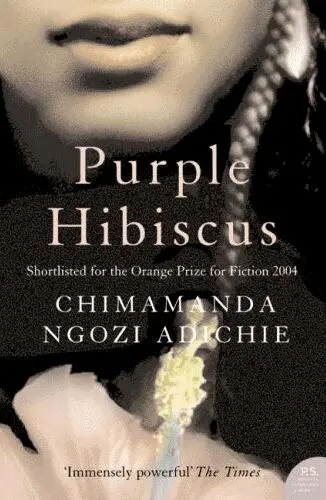
- Название:Purple hibiscus
- Автор:
- Издательство:Algonquin Books of Chapel Hill
- Жанр:
- Год:2003
- ISBN:1-56512-387-5
- Рейтинг книги:5 / 5. Голосов: 1
-
Избранное:Добавить в избранное
- Отзывы:
-
Ваша оценка:
Purple hibiscus: краткое содержание, описание и аннотация
Предлагаем к чтению аннотацию, описание, краткое содержание или предисловие (зависит от того, что написал сам автор книги «Purple hibiscus»). Если вы не нашли необходимую информацию о книге — напишите в комментариях, мы постараемся отыскать её.
Purple hibiscus — читать онлайн ознакомительный отрывок
Ниже представлен текст книги, разбитый по страницам. Система сохранения места последней прочитанной страницы, позволяет с удобством читать онлайн бесплатно книгу «Purple hibiscus», без необходимости каждый раз заново искать на чём Вы остановились. Поставьте закладку, и сможете в любой момент перейти на страницу, на которой закончили чтение.
Интервал:
Закладка:
"Why?"
"Because I need to believe in something that I never question."
He picked up the water bottle, drank deeply from it. I watched the ripples in his throat as the water went down. I wished I were the water, going into him, to be with him, one with him. I had never envied water so much before.
His eyes caught mine, and I looked away, wondering if he had seen the longing in my eyes. "Your hair needs to be plaited," he said.
"My hair?"
"Yes. I will take you to the woman who plaits your aunt's hair in the market."
He reached out then and touched my hair. Mama had plaited it in the hospital, but because of my raging headaches, she did not make the braids tight. They were starting to slip out of the twists, and Father Amadi ran his hand over the loosening braids, in gentle, smoothing motions. He was looking right into my eyes. He was too close. His touch was so light I wanted to push my head toward him, to feel the pressure of his hand. I wanted to collapse against him. I wanted to press his hand to my head, my belly, so he could feel the warmth that coursed through me.
He let go of my hair, and I watched him get up and run back to the boys on the field.
It was too early when Amaka's movements woke me up the next morning; the room was not yet touched by the lavender rays of dawn. In the faint glow from the security lights outside, I saw her tying her wrapper round her chest. Something was wrong; she did not tie her wrapper just to go to the toilet. "Amaka, o gini?"
"Listen," she said.
I could make out Aunty Ifeoma's voice from the verandah, and I wondered what she was doing up so early. Then I heard the singing. It was the measured singing of a large group of people, and it came in through the window. "Students are rioting," Amaka said.
I got up and followed her into the living room. What did it mean, that students were rioting? Were we in danger?
Jaja and Obiora were on the verandah with Aunty Ifeoma. The cool air felt heavy against my bare arms, as if it were holding on to raindrops that were reluctant to fall.
"Turn off the security lights," Aunty Ifeoma said. "If they pass and see the light, they might throw stones up here."
Amaka turned off the lights. The singing was clearer now, loud and resonant. There had to be a least five hundred people. "Sole administrator must go. He doesn't wear pant oh! Head of State must go. He doesn't wear pant oh! Where is running water? Where is light? Where is petrol?"
"The singing is so loud I thought they were right outside," Aunty Ifeoma said.
"Will they come here?" I asked.
Aunty Ifeoma put an arm around me and drew me close. She smelled of talcum powder. "No, nne, we are fine. The people who might worry are those that live near the vice chancellor. Last time, the students burned a senior professor's car."
The singing was louder but not closer. The students were invigorated now. Smoke was rising in thick, blinding fumes that blended into the star-filled sky. Crashing sounds of breaking glass peppered the singing. "All we are saying, sole administrator must go! All we are saying, he must go! No be so? Na so!" Shouts and yells accompanied the singing. A solo voice rose, and the crowds cheered. The cool night wind, heavy with the smell of burning, brought clear snatches of the resonating voice speaking pidgin English from a street away. "Great Lions and Lionesses! We wan people who dey wear clean underwear, no be so? Abi the Head of State dey wear common underwear, see, talkless of clean one? No!"
"Look," Obiora said, lowering his voice as if the group of about forty students jogging past could possibly hear him. They looked like a fast-flowing dark stream, illuminated by the torches and burning sticks they held.
"Maybe they are catching up with the rest from down campus," Amaka said, after the students had passed.
We stayed out to listen for a little while longer before Aunty Ifeoma said we had to go in and sleep.
Aunty Ifeoma came home that afternoon with the news of the riot. It was the worst one since they became commonplace some years ago. The students had set the sole administrator's house on fire; even the guest house behind it had burned to the ground. Six university cars had been burned down, as well. "They say the sole administrator and his wife were smuggled out in the boot of an old Peugeot 404, o di egwu," Aunty Ifeoma said, waving around a circular. When I read the circular, I felt a tight discomfort in my chest like the heartburn I got after eating greasy akara. It was signed by the registrar. The university was closed down until further notice as a result of the damage to university property and the atmosphere of unrest. I wondered what it meant, if it meant Aunty Ifeoma would leave soon, if it meant we would no longer come to Nsukka.
During my fitful siesta, I dreamed that that the sole administrator was pouring hot water on Aunty Ifeoma's feet in the bathtub of our home in Enugu. Then Aunty Ifeoma jumped out of the bathtub and, in the manner of dreams, jumped into America. She did not look back as I called to her to stop.
I was still thinking about the dream that evening as we all sat in the living room, watching TV. I heard a car drive in and park in front of the flat, and I clasped my shaky hands together, certain it was Father Amadi. But the banging on the door was unlike him; it was loud, rude, intrusive.
Aunty Ifeoma flew off her chair. "Onyezi? Who wants to break my door, eh?" She opened the door only a crack, but two wide hands reached in and forced the door ajar. The heads of the four men who spilled into the flat grazed the door frame. Suddenly, the flat seemed cramped, too small for the blue uniforms and matching caps they wore, for the smell of stale cigarette smoke and sweat that came in with them, for the raw bulge of muscle under their sleeves.
"What is it? Who are you?" Aunty Ifeoma asked.
"We are here to search your house. We're looking for documents designed to sabotage the peace of the university. We have information that you have been in collaboration with the radical student groups that staged the riots…"
The voice sounded mechanical, the voice of a person reciting something written. The man speaking had tribal marks all over his cheek; there seemed to be no area of skin free of the ingrained lines. The other three men walked briskly into the flat as he spoke. One opened the drawers of the sideboard, leaving each open. Two went into the bedrooms.
"Who sent you here?" Aunt Ifeoma asked.
"We are from the special security unit in Port Harcourt."
"Do you have any papers to show me? You cannot just walk into my house."
"Look at this yeye woman oh! I said we are from the special security unit!" The tribal marks curved even more on the man's face as he frowned and pushed Aunty Ifeoma aside.
"How you go just come enter like dis? Wetin be dis?" Obiora said, rising, the fear in his eyes not quite shielded by the brazen manliness in his pidgin English.
"Obiora, nodu ani," Aunt Ifeoma quietly said, and Obiora sat down quickly. He looked relieved that he had been asked to.
Aunty Ifeoma muttered to us all to remain seated, not to say a word, before she followed the men into the rooms. They did not look inside the drawers they flung open, they just threw the clothes and whatever else was inside on the floor. They overturned all the boxes and suitcases in Aunty Ifeoma's room, but they did not rummage through the contents. They scattered, but they did not search. As they left, the man with the tribal marks said to Aunty Ifeoma, waving a stubby finger with a curved nail in her face, "Be careful, be very careful."
We were silent until the sound of their car driving off faded. "We have to go to the police station," Obiora said.
Aunt Ifeoma smiled; the movement of her lips did not brighten her face. "That is where they came from. They're all working together."
Читать дальшеИнтервал:
Закладка:
Похожие книги на «Purple hibiscus»
Представляем Вашему вниманию похожие книги на «Purple hibiscus» списком для выбора. Мы отобрали схожую по названию и смыслу литературу в надежде предоставить читателям больше вариантов отыскать новые, интересные, ещё непрочитанные произведения.





![О Генри - Пурпурное платье [The Purple Dress]](/books/405339/o-genri-purpurnoe-plate-the-purple-dress-thumb.webp)






Обсуждение, отзывы о книге «Purple hibiscus» и просто собственные мнения читателей. Оставьте ваши комментарии, напишите, что Вы думаете о произведении, его смысле или главных героях. Укажите что конкретно понравилось, а что нет, и почему Вы так считаете.