Чимаманда Адичи - Purple hibiscus
Здесь есть возможность читать онлайн «Чимаманда Адичи - Purple hibiscus» — ознакомительный отрывок электронной книги совершенно бесплатно, а после прочтения отрывка купить полную версию. В некоторых случаях можно слушать аудио, скачать через торрент в формате fb2 и присутствует краткое содержание. Год выпуска: 2003, ISBN: 2003, Издательство: Algonquin Books of Chapel Hill, Жанр: Современная проза, на английском языке. Описание произведения, (предисловие) а так же отзывы посетителей доступны на портале библиотеки ЛибКат.
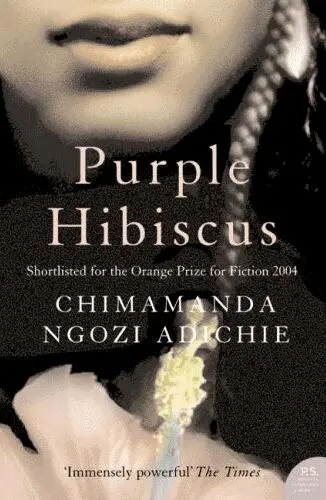
- Название:Purple hibiscus
- Автор:
- Издательство:Algonquin Books of Chapel Hill
- Жанр:
- Год:2003
- ISBN:1-56512-387-5
- Рейтинг книги:5 / 5. Голосов: 1
-
Избранное:Добавить в избранное
- Отзывы:
-
Ваша оценка:
Purple hibiscus: краткое содержание, описание и аннотация
Предлагаем к чтению аннотацию, описание, краткое содержание или предисловие (зависит от того, что написал сам автор книги «Purple hibiscus»). Если вы не нашли необходимую информацию о книге — напишите в комментариях, мы постараемся отыскать её.
Purple hibiscus — читать онлайн ознакомительный отрывок
Ниже представлен текст книги, разбитый по страницам. Система сохранения места последней прочитанной страницы, позволяет с удобством читать онлайн бесплатно книгу «Purple hibiscus», без необходимости каждый раз заново искать на чём Вы остановились. Поставьте закладку, и сможете в любой момент перейти на страницу, на которой закончили чтение.
Интервал:
Закладка:
"You and the children," Mama said. "Did you not say the children were coming soon, okwia?"
"You should not have bothered, really. We bought okpa on our way and just ate it."
"Then I will put the chin-chin in a bag for you," Mama said. She turned to leave the room. Her wrapper was dressy, with yellow print designs, and her matching blouse had yellow lace sewn onto the puffy, short sleeves. "Ntvunye m," Aunty Ifeoma called, and Mama turned back.
The first time I heard Aunty Ifeoma call Mama "nwunye m," years ago, I was aghast that a woman called another woman "my wife." When I asked, Papa said it was the remnants of ungodly traditions, the idea that it was the family and not the man alone that married a wife, and later Mama whispered, although we were alone in my room, "I am her wife, too, because I am your father's wife. It shows that she accepts me."
"Nivunye m, come and sit down. You look tired. Are you well?" Aunty Ifeoma asked.
A tight smile appeared on Mama's face. "I am well, very well. I have been helping the wives of our umunna with the cooking."
"Come and sit down," Aunty Ifeoma said again. "Come and sit down and rest. The wives of our umunna can look for the salt themselves and find it. After all, they are all here to take from you, to wrap meat in banana leaves when nobody is looking and then sneak it home." Aunty Ifeoma laughed.
Mama sat down next to me. "Eugene is arranging for extra chairs to be put outside, especially on Christmas day. So many people have come already."
"You know our people have no other work at Christmas than to go from house to house," Aunty Ifeoma said. "But you can't stay here serving them all day. We should take the children to Abagana for the Aro festival tomorrow, to look at the mmuo."
"Eugene will not let the children go to a heathen festival," Mama said.
"Heathen festival, kwa? Everybody goes to Aro to look at the mmuo."
"I know, but you know Eugene."
Aunty Ifeoma shook her head slowly. "I will tell him we are going for a drive, so we can all spend time together, especially the children."
Mama fiddled with her fingers and said nothing for a while. Then she asked, "When will you take the children to their father's hometown?"
"Perhaps today, although I don't have the strength for Ifediora's family right now. They eat more and more shit every year. The people in his umunna said he left money somewhere and I have been hiding it. Last Christmas, one of the women from their compound even told me I had killed him. I wanted to stuff sand in her mouth. Then I thought that I should sit her down, eh, and explain that you do not kill a husband you love, that you do not orchestrate a car accident in which a trailer rams into your husband's car, but again, why waste my time? They all have the brains of guinea fowls." Aunty Ifeoma made a loud hissing sound. "I don't know how much longer I will take my children there."
Mama clucked in sympathy. "People do not always talk with sense. But it is good that the children go, especially the boys. They need to know their father's homestead and the members of their father's umunna."
"I honestly do not know how Ifediora came from an umunna like that."
I I watched their lips move as they spoke; Mama's bare lips were pale compared to Aunty Ifeoma's, covered in a shiny bronze lipstick.
"Umunna will always say hurtful things," Mama said. "Did our own umunna not tell Eugene to take another wife because a man of his stature cannot have just two children? If people like you had not been on my side then…"
"Stop it, stop being grateful. If Eugene had done that, he would have been the loser, not you."
"So you say. A woman with children and no husband, what is that?"
"Me." Mama shook her head. "You have come again, Ifeoma. You know what I mean. How can a woman live like that?" Mama's eyes had grown round, taking up more space on her face.
"Nwunye m, sometimes life begins when marriage ends."
"You and your university talk. Is this what you tell your students?" Mama was smiling.
"Seriously, yes. But they marry earlier and earlier these days. What is the use of a degree, they ask me, when we cannot find a job after graduation?"
"At least somebody will take care of them when they marry."
"I don't know who will take care of whom. Six girls in my first-year seminar class are married, their husbands visit in Mercedes and Lexus cars every weekend, their husbands buy them stereos and textbooks and refrigerators, and when they graduate, the husbands own them and their degrees. Don't you see?"
Mama shook her head. "University talk again. A husband crowns a woman's life, Ifeoma. It is what they want."
"It is what they think they want. But how can I blame them? Look what this military tyrant is doing to our country." Aunty Ifeoma closed her eyes, in the way that people do when they want to remember something unpleasant. "We have not had fuel for three months in Nsukka. I spent the night in the petrol station last week, waiting for fuel. And at the end, the fuel did not come. Some people left their cars in the station because they did not have enough fuel to drive back home. If you could see the mosquitoes that bit me that night, eh, the bumps on my skin were as big as cashew nuts."
"Oh." Mama shook her head sympathetically. "How are things generally at the university, though?"
"We just called off yet another strike, even though no lecturer has been paid for the last two months. They tell us the Federal Government has no money." Aunty Ifeoma chuckled with little humor. "Ifukwa, people are leaving the country. Phillipa left two months ago. You remember my friend Phillipa?"
"She came back with you for Christmas a few years ago. Dark and plump?"
"Yes. She is now teaching in America. She shares a cramped office with another adjunct professor, but she says at least teachers are paid there." Aunty Ifeoma stopped and reached out to brush something off Mama's blouse. I watched every movement she made; I could not tear my ears away. It was the fearlessness about her, about the way she gestured as she spoke, the way she smiled to show that wide gap. "I have brought out my old kerosene stove," she continued. "It is what we use now; we don't even smell the kerosene in the kitchen anymore. Do you know how much a cooking-gas cylinder costs? It is outrageous!"
Mama shifted on the sofa. "Why don't you tell Eugene? There are gas cylinders in the factory…"
Aunty Ifeoma laughed, patted Mama's shoulder fondly.
"Nwunye m, things are tough, but we are not dying yet. I tell you all these things because it is you. With someone else, I would rub Vaseline on my hungry face until it shone."
Papa came in then, on his way to his bedroom. I was sure it was to get more stacks of naira notes that he would give to visitors for igba krismas, and then tell them "It is from God, not me" when they started to sing their thanks.
"Eugene," Aunty Ifeoma called out. "I was saying that Jaja and Kambili should spend some time with me and the children tomorrow."
Papa grunted and kept walking to the door.
"Eugene!" Every time Aunty Ifeoma spoke to Papa, my heart stopped, then started again in a hurry. It was the flippant tone; she did not seem to recognize that it was Papa, that he was different, special. I wanted to reach out and press her lips shut and get some of that shiny bronze lipstick on my fingers.
"Where do you want to take them?" Papa asked, standing by the door.
"Just to look around."
"Sightseeing?" Papa asked. He spoke English, while Aunty Ifeoma spoke Igbo.
"Eugene, let the children come out with us!" Aunty Ifeoma sounded irritated; her voice was slightly raised. "Is it not Christmas that we are celebrating, eh? The children have never really spent time with one another. Imakwa, my little one, Chima, does not even know Kambili's name."
Читать дальшеИнтервал:
Закладка:
Похожие книги на «Purple hibiscus»
Представляем Вашему вниманию похожие книги на «Purple hibiscus» списком для выбора. Мы отобрали схожую по названию и смыслу литературу в надежде предоставить читателям больше вариантов отыскать новые, интересные, ещё непрочитанные произведения.



![О Генри - Пурпурное платье [The Purple Dress]](/books/405339/o-genri-purpurnoe-plate-the-purple-dress-thumb.webp)






Обсуждение, отзывы о книге «Purple hibiscus» и просто собственные мнения читателей. Оставьте ваши комментарии, напишите, что Вы думаете о произведении, его смысле или главных героях. Укажите что конкретно понравилось, а что нет, и почему Вы так считаете.