John Lanchester - Capital
Здесь есть возможность читать онлайн «John Lanchester - Capital» весь текст электронной книги совершенно бесплатно (целиком полную версию без сокращений). В некоторых случаях можно слушать аудио, скачать через торрент в формате fb2 и присутствует краткое содержание. Жанр: Современная проза, на английском языке. Описание произведения, (предисловие) а так же отзывы посетителей доступны на портале библиотеки ЛибКат.
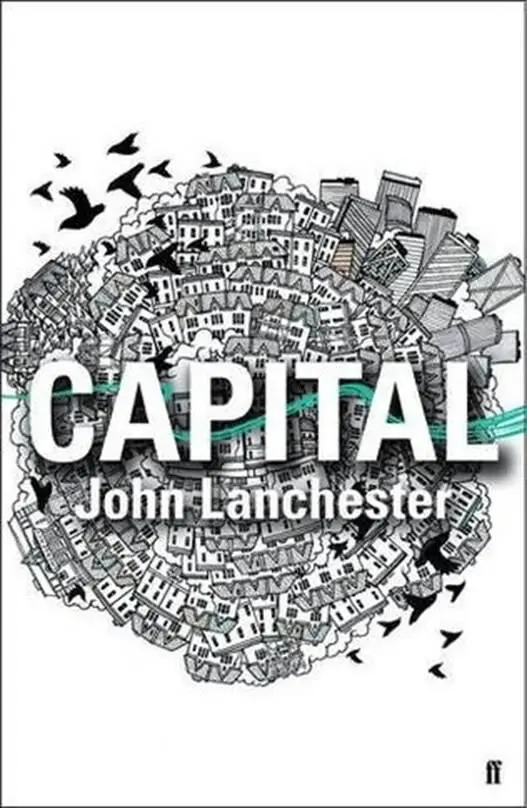
- Название:Capital
- Автор:
- Жанр:
- Год:неизвестен
- ISBN:нет данных
- Рейтинг книги:4.5 / 5. Голосов: 2
-
Избранное:Добавить в избранное
- Отзывы:
-
Ваша оценка:
Capital: краткое содержание, описание и аннотация
Предлагаем к чтению аннотацию, описание, краткое содержание или предисловие (зависит от того, что написал сам автор книги «Capital»). Если вы не нашли необходимую информацию о книге — напишите в комментариях, мы постараемся отыскать её.
Pepys Road: an ordinary street in the capital. Today, through each letterbox along this ordinary street drops a card with a simple message: We Want What You Have. At forty, Roger Yount is blessed with an expensively groomed wife, two small sons and a powerful job in the city. Freddy Kano, teenage football sensation, has left a two-room shack in Senegal to follow his dream. Traffic warden Quentina has exchanged the violence of the police in Zimbabwe for the violence of the enraged middle classes. Elsewhere in the Capital, Zbigniew has come from Warsaw to indulge the super-rich in their interior decoration whims. These are just some of the unforgettable characters in Lanchester's unputdownable masterpiece novel of contemporary urban life.
Capital — читать онлайн бесплатно полную книгу (весь текст) целиком
Ниже представлен текст книги, разбитый по страницам. Система сохранения места последней прочитанной страницы, позволяет с удобством читать онлайн бесплатно книгу «Capital», без необходимости каждый раз заново искать на чём Вы остановились. Поставьте закладку, и сможете в любой момент перейти на страницу, на которой закончили чтение.
Интервал:
Закладка:
78
Roger was sitting in his office, not thinking about anything much, which these days meant he was half-entertaining a half-fantasy about what it would be like to go off with Matya and live somewhere else, Hungary even, her home town, him the exotic sexy British man who had thrown it all up to go and live with his hot sexy Hungarian, eating goulash and making love all morning… or somewhere warm perhaps, yes, that was better, somewhere with palm trees and a hammock, he’d run a little restaurant out of a shack serving nothing but grilled fish, everyone had always said his barbecues were brilliant, yes, that was the one, serving his lovely grilled fish, living in a bungalow near the beach, the shutters open, Matya not wearing anything much except a T-shirt and a bikini and maybe a grass skirt, which was a cliché but what the hell it was his fantasy, and making love all morning, and then a nap in the hammock after the lunchtime rush… and then his deputy Mark appeared framed in the doorway of Roger’s office. This was no mean feat, given Roger’s field of view over the rest of the open-plan trading floor, but Mark seemed to pride himself on his ability to creep up on Roger when he wasn’t expecting it. Roger’s attention came back to the day and the place he was actually in: a set of figures needing to be prepared, a Wednesday morning in the City of London, of course raining, every built and living thing in sight a different shade of grey.
Mark tapped the door frame with his knuckle, a gesture he made into a kind of fidget, and asked, ‘Am I disturbing you?’ This was something he always asked at the start of any conversation at work, and its ritual nature was borne out by the fact that he did not wait for an answer and came straight into Roger’s office.
‘The figures,’ said Roger, not meaning to make it sound like a sigh but finding that he had.
‘The figures,’ said Mark, who came round to Roger’s side of the workstation – this was their routine – and laid out a spread of papers. He began to talk and to go through the numbers, which were neither good nor bad, pointing things out with his red marker pen. Roger grunted and let Mark talk through the data. His attention faded in and out and he kept his end of the analysis up with grunting, nodding, and occasionally pointing at some numbers. He was more and more like this at work these days. It wasn’t a desperate need to be somewhere else, or someone else, it was more a mild longing, a gentle absence; he was partly not there, more or less all the time. After Mark had talked and crunched numbers and made points for about twenty minutes, Roger looked at his watch and said, ‘Time for the show.’ The two men collected their papers and left for the conference room. Roger knew that if there were any difficult points at the meeting, he could bounce the questions over to his deputy.
And as for that deputy, and what he was thinking, well…
79
Mark, looking over Roger’s shoulder while he himself, as usual, did all the work – Mark whose great preoccupation was, and had been ever since childhood, his feeling that he needed the world to acknowledge him as the heroic main character in his own story – Mark was thinking that he, Mark, had been a naughty boy. In fact those very words would sometimes run through his mind, like a nursery jingle or a pop-music ear worm, a tune you’d got stuck in your mind and couldn’t get rid of. I’ve been a naughty boy, I’ve been a naughty boy…
The fright with Jez, when he had nearly been caught at his monitor, had been a real fright. It still wasn’t something Mark liked to think about. Jez might have gone to his boss; might have done anything. And physically, at an animal level, Mark was frightened of Jez. But a strong man with a definite purpose did not over-dwell on such minor setbacks, and all Mark had done was lie low for a month or two and not do any rummaging around other people’s desks or terminals – though, because he was a strong man acting on a plan, he stuck to the plan, and kept on coming in to the office before anyone else. That way there would be no change in his behaviour when he went back to his scheme. This was how you had to think if you wanted to get things done.
After six weeks, Mark had gone back to work on his plan, and had immediately had a breakthrough. One of his old mates from back-office days now worked in Compliance, the section of the bank which monitored staff’s adherence to the various laws and codes of practice and risk-control models. Dropping in to visit him one day, Mark found him out of the room, having left behind on his desk a Post-it pad covered in numbers. The string of digits was, Mark guessed, the strongly encrypted password to something. Taking a big risk, Mark came round to the terminal and checked the log-in and found that while his colleague had a weekly changing password he also – because those passwords were impossible to remember – kept a file of passwords, to which he now, he found, had the key. It was really as easy as that, if you knew what you were doing. Mark had already found an old account which had once been used to balance trades at the end of the day and which was supposed to be for short-term, twenty-four-hour-only use; but precisely because it hadn’t been used in so long, he was now able to delete it from Compliance’s systems without any discrepancies appearing. So now he could log on to colleagues’ accounts without their knowledge, trade, park the profits (and losses, if there were any, though that was unlikely) in the no-longer-dormant account. The system was supposed to flag anything which seemed statistically anomalous – but he could use his access to Compliance to track any alerts, and sign off on them, before anyone else noticed. He was in business.
The plan was simple. Trade, not on his own account, obviously – he was no thief, thank you very much! – but on the bank’s, until he had made, say, £50 million. Serious money. An amount which didn’t risk the bank but which was irrefutable evidence of his talents. Then, fess up. Tell them what he had done and let them draw the obvious conclusion: that he was a risk-taker with a proven talent for delivering spectacular returns, and there were fifty million reasons for giving him what he wanted – which, in the short term anyway, was Roger’s job.
Mark had this very week made his first trades. The City was going through an anxious phase, with rumours of all sorts of nasties emerging from the US derivatives market, but Mark had always believed that it was during bad weather that you found out how good a sailor you were. He had bought some derivatives taking a long – optimistic – position on the Argentine peso, measured against the yen. Within seventy-two hours, there had been a 6 per cent movement in the currency in the right direction. Thanks to the magnifying effect of derivatives and leveraging, Mark had come close to doubling this bet, which meant doubling the bank’s money. He had closed the position and hidden the profit in the no-longer-dormant account. Then he had gone on to make a big bet on the dollar, the highly out-of-fashion dollar, against a basket of other currencies, and that was going so well that he was still running an open position, and was well on his way to doubling his money again. This was not mere evidence that he might have a talent for this kind of thing: it was not an indication: it was the thing itself. This was what genius looked like.
It had been difficult getting to the position where he was able to do what he wanted. That was fine with Mark, the difficulty was part of the point. This wasn’t supposed to be the sort of thing most people were capable of thinking of, or capable of doing. His face, his mask, his Thomas Pink shirt and Gieves & Hawkes suit and Prada shoes might not be exceptional (though to the person who studied them, there were signs that this City uniform was more carefully put together, more thought through, than most), but the person inside them was a once-in-a-generation talent. Given that, it had to be admitted that Roger was a grievous disappointment. Mark deserved a better figure to outwit, surpass and overtake. He had once seen Roger as a worthwhile antagonist, someone who merited his efforts to outdo. But it was increasingly clear that his boss wasn’t that person. He just wasn’t up to the role of Mark’s enemy; he wouldn’t even be a footnote in his biography.
Читать дальшеИнтервал:
Закладка:
Похожие книги на «Capital»
Представляем Вашему вниманию похожие книги на «Capital» списком для выбора. Мы отобрали схожую по названию и смыслу литературу в надежде предоставить читателям больше вариантов отыскать новые, интересные, ещё непрочитанные произведения.








Обсуждение, отзывы о книге «Capital» и просто собственные мнения читателей. Оставьте ваши комментарии, напишите, что Вы думаете о произведении, его смысле или главных героях. Укажите что конкретно понравилось, а что нет, и почему Вы так считаете.