John Lanchester - Capital
Здесь есть возможность читать онлайн «John Lanchester - Capital» весь текст электронной книги совершенно бесплатно (целиком полную версию без сокращений). В некоторых случаях можно слушать аудио, скачать через торрент в формате fb2 и присутствует краткое содержание. Жанр: Современная проза, на английском языке. Описание произведения, (предисловие) а так же отзывы посетителей доступны на портале библиотеки ЛибКат.
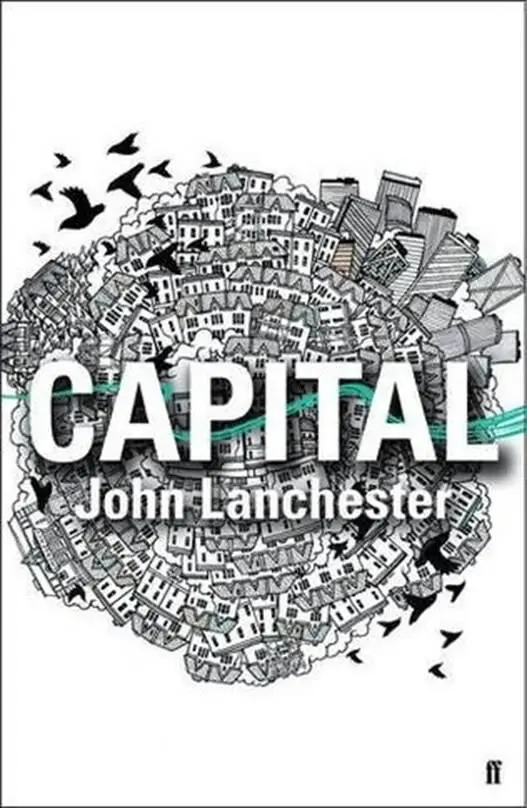
- Название:Capital
- Автор:
- Жанр:
- Год:неизвестен
- ISBN:нет данных
- Рейтинг книги:4.5 / 5. Голосов: 2
-
Избранное:Добавить в избранное
- Отзывы:
-
Ваша оценка:
Capital: краткое содержание, описание и аннотация
Предлагаем к чтению аннотацию, описание, краткое содержание или предисловие (зависит от того, что написал сам автор книги «Capital»). Если вы не нашли необходимую информацию о книге — напишите в комментариях, мы постараемся отыскать её.
Pepys Road: an ordinary street in the capital. Today, through each letterbox along this ordinary street drops a card with a simple message: We Want What You Have. At forty, Roger Yount is blessed with an expensively groomed wife, two small sons and a powerful job in the city. Freddy Kano, teenage football sensation, has left a two-room shack in Senegal to follow his dream. Traffic warden Quentina has exchanged the violence of the police in Zimbabwe for the violence of the enraged middle classes. Elsewhere in the Capital, Zbigniew has come from Warsaw to indulge the super-rich in their interior decoration whims. These are just some of the unforgettable characters in Lanchester's unputdownable masterpiece novel of contemporary urban life.
Capital — читать онлайн бесплатно полную книгу (весь текст) целиком
Ниже представлен текст книги, разбитый по страницам. Система сохранения места последней прочитанной страницы, позволяет с удобством читать онлайн бесплатно книгу «Capital», без необходимости каждый раз заново искать на чём Вы остановились. Поставьте закладку, и сможете в любой момент перейти на страницу, на которой закончили чтение.
Интервал:
Закладка:
‘Aha!’ said the second nanny, another Hungarian from her accent, shorter than Matya, with short hair cut to curve under her chin and bright flirting happy eyes. ‘A man! Perhaps he will eat pizza!’
‘Pizza is horrible!’ said the younger of the two Yount boys, who, like the other three children, was hiding under the dining-room table.
‘They said they wanted pizza. Now they say they don’t want it,’ said Matya, addressing herself to Zbigniew, the first time she had spoken to him. Zbigniew put his set of house keys and the note for Mrs Yount on the table by the telephone, where messages and letters were left, and saw, sitting next to the lamp, a set of car keys and Matya’s phone, a Nokia N60. He had the same model phone. They were meant for each other. Zbigniew had an idea.
‘We want baked beans,’ said a voice from under the table.
‘Perhaps you can help us eat all this pizza?’ said Matya’s friend.
He made gestures to indicate polite refusal and then, since both the girls were eating, said, ‘Just a slice.’ Then he introduced himself.
‘I thought your name was Bogdan,’ said Matya.
‘Bogdan the Builder. A little joke of Mrs Yount’s.’ He saw this register with her.
‘My name is Matya,’ she said, ‘but the children called me Matty.’ She had a nice undertone to her words and eyes – lively and a little sad at the same time. That body too. Zbigniew was convinced. He made some chat with the girls, helped joke the boys out from under the table, and left with his brushes and paints and, in his jacket pocket, Matya’s mobile phone.
75
There was no clock in Shahid’s cell, and no natural light, and he wasn’t wearing a watch when he was taken to jail, so his sense of passing time was limited to the point when his lights were turned out and then turned on a stretch of time later – which, he assumed, meant that a day had passed. That had happened five times now, which meant that five days and nights had gone by. Shahid had not spoken to anybody apart from – he presumed this is what they were even though the thought of what it meant was difficult to process – his interrogators.
Not that they called themselves that. They did not call themselves anything. They were all men and there were four of them, two significantly older than Shahid – in their fifties or so – and two about the same age. One of the thirtysomething men was Asian, a police inspector, and he was the only one of them who wore a uniform. The others all wore suits. They all of them kept asking the same set of questions, over and over again, mainly about Iqbal, but also about his own past, about Chechnya and people he’d known there. Sometimes they showed him photographs, and asked him if he could recognise any of the people in them. When he truthfully said that he couldn’t, they looked as if they didn’t believe him.
Iqbal, however, was the main subject, and the question they asked most often was ‘Where is he?’ Today, the sixth morning after he had been arrested and therefore his seventh day in prison, was no different. It began with the lights being turned on and with breakfast being pushed through a hole in the door: a single poached egg, cold burnt toast, and the most over-sugared tea he had ever tasted. He had a shit, which was the most humiliating thing about the whole experience since it was degrading and defiled to have the open toilet so close to the bed. There was an inspection hole in the window, so anybody could look at him on the bog, which was bad enough. The smell was worse. It wasn’t a chemical toilet, but it had a persistent chemical smell, and the metal washbasin also gave off a faint scent of industrial perfume. He had had an upset stomach, surely caused by stress, and his bowels were loose. The frequent semi-liquid shitting and the toilet and the sink combined together to make a shaming cocktail of odours, which hit him hard when he returned from interrogations.
Shahid washed his hands, brushed his teeth, and waited. About fifteen minutes later, a police officer came in and took the tray, and then another two policemen came in, put handcuffs on him, and led him along the corridor and round two corners to the interrogation room where the Asian policeman and one of his colleagues were waiting. The white policeman was a man who gave an impression of heaviness. It wasn’t that he was fat, but he sagged as if with a moral or psychic burden; his shoulders sagged, his eyes sagged, his suit sagged and he sat sagged in his chair, as if his disappointments with the world were bearing down on him. He made it clear that Shahid was one of these disappointments.
‘Well rested?’ asked the Asian officer. Shahid, who had not lied about a single thing as yet, saw no reason to answer with anything other than a shrug. The interrogators had a varying set of props and tools; sometimes they read files that came in plain brown folders, over the top of which Shahid couldn’t quite see. They might be looking at their horoscopes – you couldn’t tell. Sometimes they had turned on the tape recorder, sometimes they took notes. Sometimes they had cups of coffee, bottles of water (always Volvic; there must be a dispenser somewhere). Once one of the older officers came in drinking a Diet Coke. But the times Shahid found most disconcerting were the occasions, like today, when his interrogators were entirely empty-handed: no folders, no drinks, nothing. They just sat there with their hands in their laps and asked questions. The fact that they made no attempt to record his answers made it seem as if they weren’t listening to him. His answers were being discounted. So he was being grilled and ignored at the same time; Shahid found that hard to take.
The two policemen just sat there and looked at him.
‘I want to see a lawyer,’ said Shahid.
‘Tell us how you know Iqbal Rashid,’ said the other officer.
‘I’ve told you about three hundred times already. I want to see a lawyer. I’m entitled to see a lawyer and I want to see one now.’
‘Iqbal Rashid,’ said the other officer.
‘I want to see a lawyer.’
‘There were just a couple of details we wanted to check.’
‘I want to see a lawyer.’
‘It was in Chechnya, wasn’t it?’
‘You know perfectly well, because I’ve told you a hundred times, that it was on the way there’ – and Shahid was, because it was finally easier than having the same fight all over again, telling the story. They kept interrupting, checking details, going over things, and whenever he resisted or showed how sick he was of going over the same ground, they kept asking the same question over and over again until he gave in and answered. With part of him, Shahid knew that the whole point was that he be as demoralised and shamed and tired and compliant as possible; but this knowledge didn’t seem to help him fight his interrogators. He knew he was innocent. He knew that his intentions were good and that that should be enough. For what felt like the thousandth time he recounted the details of the trip to Chechnya and the people he’d met there and had the sense that he wasn’t being listened to – that nothing he said would ever be listened to.
‘… and no he didn’t always go to mosque or if he did I didn’t see him there.’
Without showing any sign that he was changing gear or changing the subject, without sitting up or showing any increased attention, the policeman said,
‘So where were you going to get the Semtex?’
At which Shahid was so surprised he found he couldn’t speak. They waited for him.
‘What Semtex?’
‘The Semtex you’re planning to use to set off an explosion in the Channel Tunnel.’
76
At the offices of Bohwinkel, Strauss and Murphy, Mrs Kamal sat on a straight-backed chair with her handbag in her lap, her sari tight around her, and the gleam of battle in her eye. Rohinka, whose feelings about her mother-in-law were what they were, was impressed. Ahmed and Usman were both also present but were making only occasional contributions. There was no ambiguity about the fact that Mrs Kamal was in charge.
Читать дальшеИнтервал:
Закладка:
Похожие книги на «Capital»
Представляем Вашему вниманию похожие книги на «Capital» списком для выбора. Мы отобрали схожую по названию и смыслу литературу в надежде предоставить читателям больше вариантов отыскать новые, интересные, ещё непрочитанные произведения.








Обсуждение, отзывы о книге «Capital» и просто собственные мнения читателей. Оставьте ваши комментарии, напишите, что Вы думаете о произведении, его смысле или главных героях. Укажите что конкретно понравилось, а что нет, и почему Вы так считаете.