John Lanchester - Capital
Здесь есть возможность читать онлайн «John Lanchester - Capital» весь текст электронной книги совершенно бесплатно (целиком полную версию без сокращений). В некоторых случаях можно слушать аудио, скачать через торрент в формате fb2 и присутствует краткое содержание. Жанр: Современная проза, на английском языке. Описание произведения, (предисловие) а так же отзывы посетителей доступны на портале библиотеки ЛибКат.
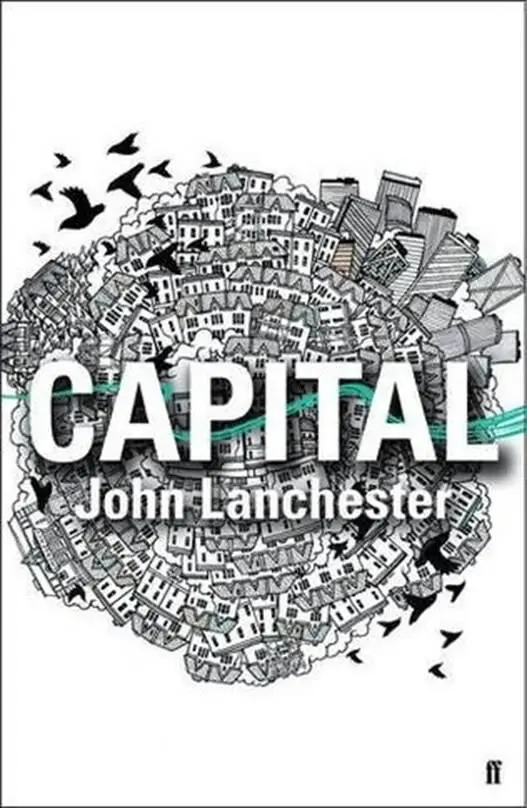
- Название:Capital
- Автор:
- Жанр:
- Год:неизвестен
- ISBN:нет данных
- Рейтинг книги:4.5 / 5. Голосов: 2
-
Избранное:Добавить в избранное
- Отзывы:
-
Ваша оценка:
Capital: краткое содержание, описание и аннотация
Предлагаем к чтению аннотацию, описание, краткое содержание или предисловие (зависит от того, что написал сам автор книги «Capital»). Если вы не нашли необходимую информацию о книге — напишите в комментариях, мы постараемся отыскать её.
Pepys Road: an ordinary street in the capital. Today, through each letterbox along this ordinary street drops a card with a simple message: We Want What You Have. At forty, Roger Yount is blessed with an expensively groomed wife, two small sons and a powerful job in the city. Freddy Kano, teenage football sensation, has left a two-room shack in Senegal to follow his dream. Traffic warden Quentina has exchanged the violence of the police in Zimbabwe for the violence of the enraged middle classes. Elsewhere in the Capital, Zbigniew has come from Warsaw to indulge the super-rich in their interior decoration whims. These are just some of the unforgettable characters in Lanchester's unputdownable masterpiece novel of contemporary urban life.
Capital — читать онлайн бесплатно полную книгу (весь текст) целиком
Ниже представлен текст книги, разбитый по страницам. Система сохранения места последней прочитанной страницы, позволяет с удобством читать онлайн бесплатно книгу «Capital», без необходимости каждый раз заново искать на чём Вы остановились. Поставьте закладку, и сможете в любой момент перейти на страницу, на которой закончили чтение.
Интервал:
Закладка:
In the car on the way home – there had been extended discussions about how to get in to the appointment, and the non-desirability of paying the congestion charge, versus the unthinkability of Mrs Kamal taking the Underground – Rohinka said, ‘Well. That lady lawyer is quite a piece of work.’
Mrs Kamal said, ‘I liked her.’
77
Doctors and lawyers. Lawyers and doctors and men from the insurance company. That, now, was Patrick and Freddy’s life – and because Mickey always came to meetings with them, it was his life too. For the doctors – doctors plural, because they saw several different specialists – they went to surgeries in and around Harley Street. For the lawyers they went to three different sets of offices. The club’s lawyers were in a tall block in the City of London, with a view of other tall City blocks. The fittings were modern, steel and glass and sophisticated coloured plastic. The insurance company’s lawyers were in offices in Mayfair, a Regency building with, again, modern fittings, except in the big conference room where the two sides met, Freddy and Patrick and Mickey and one or two of their lawyers at one end of an oval oak table, which was polished so brightly that the gleam of reflected halogen spotlights made it hard to look at. As for Freddy, his lawyers were in Reading: it was a firm Mickey had briefly worked for and still trusted. The drive out of London to the lawyers’ offices was a relief, even if the only countryside they saw was the fields on either side of the M4.
The whole process felt like a form of torture. It didn’t begin that way – in fact it had begun with a strong sense of optimism-in-the-face-of-hard-times. After the first meeting at the insurance company, Mickey had turned to Patrick and Freddy and had said, ‘Well, that went well.’ He ought to have known better, he thought now, he really ought to have known better. He ought to have known that any case which had so many lawyers and doctors in attendance was a carcass, around which the professionals were clustering to gorge like vultures. But he had allowed himself to believe in the atmosphere of confidence, the sense given that all those present were men of good will whose only interest was in solving the unfortunate problem to the mutual satisfaction of all parties. What had happened to Freddy was tragic, but the system existed to provide a remedy, and only the details were left to be determined.
But what had happened to Freddy? That was the first problem. The doctors didn’t agree. Doctor number one, an orthopaedic surgeon, was a very formal man in his middle fifties with enormous dark-framed glasses who always seemed to be passing judgement on whoever he was speaking to. He had the weirdest body language of anyone Mickey could remember seeing, because he had so little of it: talking or listening, he sat completely immobile. He had done the initial remedial surgery and therefore was the only person actually to have looked not just at Freddy’s knee, but inside it. He was, they were told, the leading specialist in this kind of surgery not just in London or Britain but in Europe; there were, arguably, men his equal or superior in America, but only arguably. He was Mr Anterior Cruciate. His judgement was that Freddy would never play football again; he would never again run or kick a ball with intent. The very best he could hope for was that he might, if he were lucky, walk without a discernible limp.
The second doctor, visited at the insistence of the insurance company, was much nicer. He was a younger, more casual man, handsome and confident and not more than forty, and they saw him on a warm day when he’d taken off his jacket and tie. When they came into his office, he’d been listening to a Bob Dylan CD that he turned off by remote control. He took care to put Freddy at his ease, to smile and say how sorry he was for his trouble. Even his hands, touching and very very carefully manipulating the knee, were gentle. He told them that he had looked extensively at X-rays and at the surgical notes of his distinguished colleague – for whom he had the highest regard – and that in his opinion, Freddy had a 50 per cent chance of being able to play professional sport again. At that point, he gestured to a photograph on the wall behind him of a professional cricket player, a bowler in mid-delivery stride, jumping half a metre in the air, his whole weight – and to Freddy’s eye, he looked a bit fat – about to land on his left, front, leg. The doctor said that he had used a new technique to operate on the cricketer’s left anterior cruciate ligament, which had been in the same condition as Freddy’s after he broke his leg, and that photo, taken over a year ago, was the result. The cricketer was still playing cricket, and bowling quicker than ever. He did not say that the other doctor was wrong but he made it very clear that he believed he himself was right.
So they had to go and talk to a third doctor, one agreed on by both of the other two – a third opinion which both of them could see as an acceptable second opinion. This involved a train trip to Manchester, Freddy playing Championship Manager on his PSP, Mickey driving everyone within earshot crazy by making calls on his iPhone until the battery ran out, and Patrick looking out the window at this country he knew so little about. The countryside looked so empty, the city- and townscapes so old, so crowded, so thick with history and long habitation, and so impossible to know.
This third surgeon was amiable, crisp, and made it evident that in his own judgement he was the clear first choice to provide the opinion and when time came to do the surgery. He had light-coloured hair and fair skin and seemed to have been freshly scrubbed; he radiated cleanness. He listened briskly, asked questions briskly, and examined Freddy’s knee with a brisk air too, as if he thought Freddy might be malingering. Then after all this briskness he would not give them a verdict then and there, not even a provisional one, not even a hint. He would think about it and write to them in a day or two’s time.
The letter, when it came, agreed with the first surgeon. Freddy in his judgement would never play football again. He said that he was very sorry.
All that was the positive, practical, forward-moving part of the experience. It got worse from there, because it was at this point that the insurance company and the lawyers took over. Mickey couldn’t believe it. He knew perfectly well that if you left the taps running in the bath, and water came through the ceiling of the downstairs flat and trashed it, the insurance company would niggle and carp and look for exclusions and exemptions and generally seek every way they could to weasel out of paying. Everyone knew that, it was a fact of life. Or they would screw you so hard by raising the premiums that you would have been better off not claiming in the first place. No-claims bonuses, no-fault car insurance: all these were giant conspiracies against the public. Everybody knew that. But seeing that this was a young man’s whole life – not just his livelihood (though that as well) but his whole life, the thing which was at the centre of his seventeen-year-old existence – Mickey thought they might have shown a bit of ordinary human decency. He thought they might have had the common humanity to treat the case on its merits and pony up. The insurance was for a rainy day, and Freddy’s knee was that rainy day. It was as rainy as it fucking well got.
Well, you might have thought that, but if you did, you were dead wrong. It had become clear that the insurers had no intention of simply paying up. Every letter was answered with the maximum possible delay, every phone call was bounced around between the various senior executives who were ‘handling’ the case, and every opportunity was taken for pissiness or evasiveness or stalling. They sought to explore the possibility of a legal challenge against the player who had tackled Freddy; that was a whole series of meetings between them and their lawyers and Freddy’s lawyers and the club. They then sought to look into the possibility that Freddy himself had been reckless, that his own behaviour – which meant reaching for the ball after he’d turned and spun and flicked it on – was a piece of contributory recklessness. Then they tried to look into the possibility that the first piece of surgery after the tackle, done by Mr Anterior Cruciate himself, had been botched, and had made things worse, and therefore that it was the surgeon – or rather his insurer – who was legally responsible for paying for the damage to Freddy’s knee. They did anything and everything they could to stall, frustrate, delay, and block any resolution of Freddy’s case. The fact that Freddy’s case wasn’t a case, it was Freddy, his whole life, seemed to weigh on them not at all.
Читать дальшеИнтервал:
Закладка:
Похожие книги на «Capital»
Представляем Вашему вниманию похожие книги на «Capital» списком для выбора. Мы отобрали схожую по названию и смыслу литературу в надежде предоставить читателям больше вариантов отыскать новые, интересные, ещё непрочитанные произведения.



Обсуждение, отзывы о книге «Capital» и просто собственные мнения читателей. Оставьте ваши комментарии, напишите, что Вы думаете о произведении, его смысле или главных героях. Укажите что конкретно понравилось, а что нет, и почему Вы так считаете.