John Lanchester - Capital
Здесь есть возможность читать онлайн «John Lanchester - Capital» весь текст электронной книги совершенно бесплатно (целиком полную версию без сокращений). В некоторых случаях можно слушать аудио, скачать через торрент в формате fb2 и присутствует краткое содержание. Жанр: Современная проза, на английском языке. Описание произведения, (предисловие) а так же отзывы посетителей доступны на портале библиотеки ЛибКат.
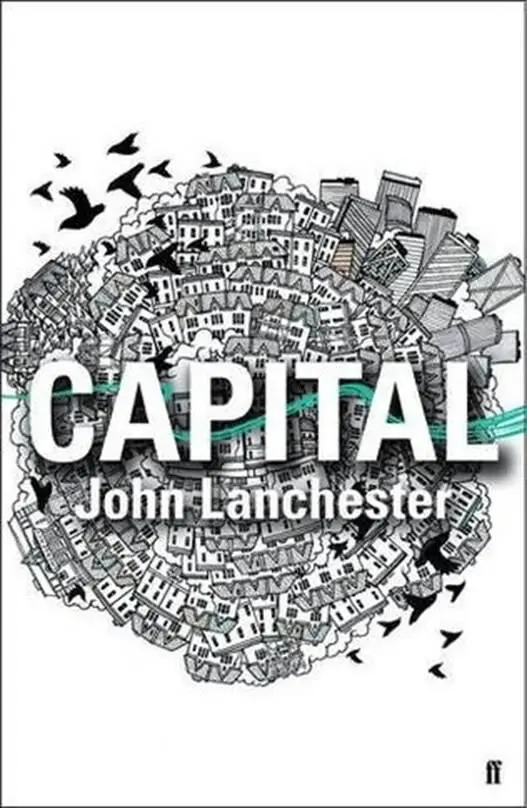
- Название:Capital
- Автор:
- Жанр:
- Год:неизвестен
- ISBN:нет данных
- Рейтинг книги:4.5 / 5. Голосов: 2
-
Избранное:Добавить в избранное
- Отзывы:
-
Ваша оценка:
Capital: краткое содержание, описание и аннотация
Предлагаем к чтению аннотацию, описание, краткое содержание или предисловие (зависит от того, что написал сам автор книги «Capital»). Если вы не нашли необходимую информацию о книге — напишите в комментариях, мы постараемся отыскать её.
Pepys Road: an ordinary street in the capital. Today, through each letterbox along this ordinary street drops a card with a simple message: We Want What You Have. At forty, Roger Yount is blessed with an expensively groomed wife, two small sons and a powerful job in the city. Freddy Kano, teenage football sensation, has left a two-room shack in Senegal to follow his dream. Traffic warden Quentina has exchanged the violence of the police in Zimbabwe for the violence of the enraged middle classes. Elsewhere in the Capital, Zbigniew has come from Warsaw to indulge the super-rich in their interior decoration whims. These are just some of the unforgettable characters in Lanchester's unputdownable masterpiece novel of contemporary urban life.
Capital — читать онлайн бесплатно полную книгу (весь текст) целиком
Ниже представлен текст книги, разбитый по страницам. Система сохранения места последней прочитанной страницы, позволяет с удобством читать онлайн бесплатно книгу «Capital», без необходимости каждый раз заново искать на чём Вы остановились. Поставьте закладку, и сможете в любой момент перейти на страницу, на которой закончили чтение.
Интервал:
Закладка:
The imam at Usman’s mosque was an angry man, but he was not stupid, and society had given him one overwhelmingly powerful advantage: the first thing he said on most subjects was true. He railed against capitalism and the cheapening of sex and the degradation of women through the pornographic imagery which was, in this country at this time, now, everywhere. He spoke about things that had become so taken for granted it was as if people literally did not see them any more. But Usman, who had after all grown up in this country, who was no alien – he saw them.
Usman had come to believe that the imam was right: these were symptoms of decadence. Sex being used to sell things, the corruption of the fundamental human impulse to love, sex being turned into a vehicle of yet more capitalist debasement – sex was everywhere. It was never real sex, as Usman understood it to be, an ecstatic state such as that enjoyed in paradise, a transcendent experience; instead it was naked women, coupled with an attempt to sell something. Sex was fundamentally linked with money. And then the imam would start in on the subject of an intoxicated society. Here, too, he was saying something that everyone knew to be truthful. Usman had done holiday jobs as a hospital porter, and had seen with his own eyes that any A &E unit on a Saturday night was like an encyclopedia of all the different things you could do to yourself when drunk. Men and women fighting, puking, men hitting each other, men hitting their women or being hit by them, men raping and women being raped, both sexes contracting diseases, hurting their children, crashing vehicles, killing themselves, killing themselves with drink. And why did this society have such a deep need for intoxication? Because it knew it was lost, it was on the wrong path, and it had to blot out that knowledge with all the means at its disposal.
And then the imam, having said these true things, would move on to some other truths. He didn’t care about the spies who would certainly be listening, the spies in the pay of the kafr government of Britain; he was above that. The imam simply told the truth. He was too intelligent to say that there was a global war against Islam. In Usman’s opinion, actually, there was, you could prove that there was, from Palestine to Kosovo to Afghanistan to Iraq, and then through the subtler examples of suppression in Egypt and Pakistan and Indonesia and everywhere else that Islam was not allowed to express itself democratically and fully – but you didn’t need to prove that. All you needed to do was ask a simple question. Was a Muslim life worth the same as a Christian or Jewish life? In the order of the world, did a dead Muslim child count for as much as a dead Jew? Was a Muslim death worth as much attention as a Christian death?
The answer was so obvious, it barely needed to be spoken. In the scales of the West – which meant according to the value system that ran the world – a Muslim life was worth a fraction of other people’s. A war on Islam – you could argue about that. The manifest truth that Muslims counted for less – that was not possible to challenge. Much followed from this.
Usman came to the mosque, pulled over onto the pavement and dismounted before his bike could ride up on it, because that would be discourteous. He chained his wheels to a rack – this was a high-risk spot, he realised, because a thief seeing a bicycle locked up outside a mosque would guess where the owner was and how long he would be likely to be in for, but inshallah, either it would be stolen or it wouldn’t – and he joined the men heading into the building for the ablutions before prayer.
46
Smitty liked to go against the grain, so where he might have been expected to have no desk, or something very modern – a workstation, with a sloped surface to sketch on and a laptop stand – instead he had a huge old Victorian partners’ desk made out of oak. He had no partner, of course, so both sides of the desk were his, and both were dominated by his filing system, which consisted of stacks of paper arranged by theme. On one side of the studio there was also a blackboard with curtains, so that whatever was being worked on could be hidden from casual view. There was also a £5,000 music system and a sixty-inch plasma flat-screen TV. Smitty was no Luddite. His assistant, his Nigel – who was always a ‘he’, because Smitty believed in a strict absence of sexual tension at work; he had no trouble pulling and didn’t need the extra hassle – had a corner of the office with a desk and phone and PC; he was allowed to roam around in the course of doing his business, but he wasn’t encouraged to allow his stuff to spread out and colonise Smitty’s space.
Sometimes the desk had ten or twelve huge mountains of paper, to do with either pieces Smitty was thinking about or what he called ‘admin crap’, a category which covered more or less anything that did not directly involve making art. At other times there was only a single pile. Today there were two stacks of paper on the desk, and both of them had been there for two weeks. One of them was the stuff he had taken from his nan’s house, the We Want What You Have postcards and DVD. He had been flicking through these on and off all day since he got back from Pepys Road. The cards were a little like an installation, an artwork. The DVD, which was still in the player underneath the TV, was sort of the same thing as the cards, only in moving pictures. It consisted of lingering close-ups of houses in Pepys Road, shots of particular details of houses, tracking shots moving up and down the street. It looked as if it had been filmed in the early summer morning over two or three occasions. The DVD was about forty minutes long.
When he’d seen that, he Googled 42 Pepys Road and after a bit of clicking around found himself looking at a picture of his nan’s front door. The blog was, of course, called We Want What You Have. It had a list of numbers and when you clicked on the numbers you were taken to a photo of the house – sometimes the front door, sometimes a detail from the door such as a close-up of the number, or of the letter box, or the steps, or the doorbell. Some of the photos were taken from across the road, to frame the whole house; some of them were colour, indeed some of them were in heightened, super-real colour; others were black and white and amateurish. One or two of them seemed to have been taken with a pinhole camera held at waist height. In those photographs, the spy-like ones, you could just catch a glimpse of part of a person – a leg disappearing out of show, somebody’s shadow falling across a front gate. Other than that there were no people to be seen. Whoever was behind We Want What You Have was going to some trouble to leave the people out of it.
So that was part of what was on Smitty’s mind. The other thing was more immediately troubling, because the other thing was not a thing at all but a person. Smitty’s assistant. Smitty’s about-to-be-ex-assistant, who had been his about-to-be-ex-assistant in Smitty’s head for many weeks now, but who was no closer to being simply Smitty’s ex-assistant because Smitty hadn’t got round to firing him.
Smitty’s art was all about confrontation. It was about shocking people, jolting them out of their well-grooved perceptions. Parodies, defacements, obscenities, spray-painted graffiti of Picasso being sucked off by an octopus – that was what Smitty was all about. Right up in your face. No prisoners. In person, though, Smitty did not like confrontation. He was a peacemaker, an accommodator, a finder of the common ground. It was a yin-and-yang thing. Balance was the key.
His art was about extremes, his life was about balance. The ideal thing for Smitty would have been if he could get an assistant to sack his assistant. Get a new Nigel to get rid of the old Nigel. That would be perfect. No point dreaming about that, though. This had been going on for long enough, and Smitty had decided that today was the day. On his desk, to the right of the pile of stuff from his nan’s, was a Post-it note with ‘GET IT DONE’ written on it. That note had been there for a week; which was too long. In his head, he had given the assistant a second and then a third chance, both of which he had blown. Now it was over. The decisive factor was his assistant’s way of making it clear that in his judgement, he and not Smitty was the person who should be treated as the famous artist. The fact that he hadn’t actually made any art since leaving St Martin’s, the fact that all he did was chores for Smitty, seemed in his mind to be a minor, disregardable detail. It was only a question of time before the world realised its mistake in being interested in Smitty rather than in him, and it was tiresome of Smitty to insist on the current hierarchical order of their relationship, which was so soon and so inevitably to be reversed. That was how he acted. Well, thought Smitty, he can piss right off with that. He thinks it should be about him. Today is the day when he learns that right here, right now, it is all about me.
Читать дальшеИнтервал:
Закладка:
Похожие книги на «Capital»
Представляем Вашему вниманию похожие книги на «Capital» списком для выбора. Мы отобрали схожую по названию и смыслу литературу в надежде предоставить читателям больше вариантов отыскать новые, интересные, ещё непрочитанные произведения.






Обсуждение, отзывы о книге «Capital» и просто собственные мнения читателей. Оставьте ваши комментарии, напишите, что Вы думаете о произведении, его смысле или главных героях. Укажите что конкретно понравилось, а что нет, и почему Вы так считаете.