John Lanchester - Capital
Здесь есть возможность читать онлайн «John Lanchester - Capital» весь текст электронной книги совершенно бесплатно (целиком полную версию без сокращений). В некоторых случаях можно слушать аудио, скачать через торрент в формате fb2 и присутствует краткое содержание. Жанр: Современная проза, на английском языке. Описание произведения, (предисловие) а так же отзывы посетителей доступны на портале библиотеки ЛибКат.
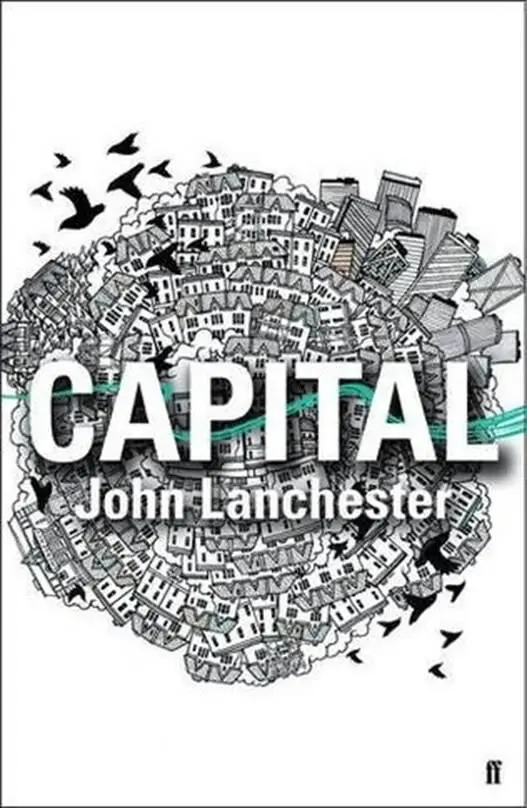
- Название:Capital
- Автор:
- Жанр:
- Год:неизвестен
- ISBN:нет данных
- Рейтинг книги:4.5 / 5. Голосов: 2
-
Избранное:Добавить в избранное
- Отзывы:
-
Ваша оценка:
Capital: краткое содержание, описание и аннотация
Предлагаем к чтению аннотацию, описание, краткое содержание или предисловие (зависит от того, что написал сам автор книги «Capital»). Если вы не нашли необходимую информацию о книге — напишите в комментариях, мы постараемся отыскать её.
Pepys Road: an ordinary street in the capital. Today, through each letterbox along this ordinary street drops a card with a simple message: We Want What You Have. At forty, Roger Yount is blessed with an expensively groomed wife, two small sons and a powerful job in the city. Freddy Kano, teenage football sensation, has left a two-room shack in Senegal to follow his dream. Traffic warden Quentina has exchanged the violence of the police in Zimbabwe for the violence of the enraged middle classes. Elsewhere in the Capital, Zbigniew has come from Warsaw to indulge the super-rich in their interior decoration whims. These are just some of the unforgettable characters in Lanchester's unputdownable masterpiece novel of contemporary urban life.
Capital — читать онлайн бесплатно полную книгу (весь текст) целиком
Ниже представлен текст книги, разбитый по страницам. Система сохранения места последней прочитанной страницы, позволяет с удобством читать онлайн бесплатно книгу «Capital», без необходимости каждый раз заново искать на чём Вы остановились. Поставьте закладку, и сможете в любой момент перейти на страницу, на которой закончили чтение.
Интервал:
Закладка:
‘I must go home,’ said Freddy. ‘I have a lesson at four.’
‘But what about my revenge? OK, I’ll run you back. Adios, guys, be lucky,’ said Mickey. He put his arm on Freddy’s back and steered him towards the door; Freddy, being Freddy, wouldn’t go without shaking hands with everybody. They got into the Aston Martin and set out back to Pepys Road. Mickey was fine to drive, he had had three units of alcohol at most.
Mickey’s tone with Freddy was different when he wasn’t showing off in front of his friends. He was less joshing and more paternal.
‘You won’t need these lessons much longer. It’s amazing, I wouldn’t have believed it. Four months. At this rate you’ll be speaking better English than I am.’
‘Same as snooker.’
Mickey faked a sideways swipe towards Freddy with his left elbow.
‘Any word about Saturday?’
Freddy shrugged and briefly pursed his lips – which given that Mickey was driving wasn’t the most helpful way of giving his opinion, but Mickey knew what he meant. Freddy had yet to start a game. The manager kept bringing him on in the second half, often when they were in control but had yet to score, or yet to open enough of a gap between them and their opponents. Freddy had been on the field nine times and had scored four goals and was becoming a favourite with the crowd – a ‘cult figure’ he was told, which sounded very strange to his ears but apparently meant something good. At the level of the Premiership, new players often have an impact that lasts only until opponents have them worked out: a winger who can cut in only in one direction, a striker with strong physical presence but a weak first touch, a disturbingly quick player who can be put off by being given a kicking early on. Opponents suss this out and a player’s impact diminishes. Very good players learn new tricks, or learn to extract full value from the ones they have. Mickey thought that was the reason the manager was holding Freddy back for the latter stages of games – he wanted to prolong the honeymoon period for as long as possible. Freddy felt that the manager’s reservations about him were to do with stamina or strength – he might not last ninety minutes, he might be shoved off the ball. Freddy didn’t feel that was fair; not that it made him angry or resentful, not yet anyway. But he liked to play football, and this was the only time in his life he had ever spent any time on the bench.
Mickey liked hanging out with Freddy on his own. Most of the time they were together, Patrick was there too – and it was a little bit different, because while Mickey could still feel paternal, he had to mediate his paternalness through Patrick’s presence; had to defer to the father’s superior claim on his son. That was fine. Mickey had nothing against Patrick; but Patrick was a hard man to read. His slow and wary English made their exchanges slow and wary too. The more time Mickey spent with him the less surprising it seemed that Patrick was a cop; he had a cop’s judgemental watchfulness, an on-duty lack of small talk. There was a strong sense that there were lines which should not be crossed, and you couldn’t automatically tell where or what those lines were. It did not make Patrick relaxing company. Also, Mickey had the feeling that Patrick disapproved of him.
‘It’s only a matter of time,’ said Mickey. ‘You know it’s only a matter of time. These things take time. Get the right balance. Time.’
‘I like to play,’ said Freddy. Meaning, I want to play for ninety minutes.
‘Yes, OK.’
Freddy kept looking out the window. He had not come close to losing his sense of the newness and wonder of London, and one of his favourite things was exactly this: looking out the window of the car as he was driven somewhere. One or two of the players teased him about not being able to drive yet – sometimes they would claim he wasn’t yet old enough – and Freddy’s official line was that he had enough to learn with the English language, and driving would come next. That wasn’t strictly true, since Freddy was in no hurry to learn; he preferred being driven. London was so rich, and also so green, and somehow so detailed: full of stuff that had been made, and bought, and placed, and groomed, and shaped, and washed clean, and put on display as if the whole city was for sale. It seemed too as if many of the people were on display, behaving as if they were expecting to be looked at, as if they were on show: so many of them seemed to be wearing costumes, not just policemen and firemen and waiters and shop assistants, but people in their going-to-work costumes, their I’m-a-mother-pushing-a-pram costumes, babies and children in outfits that were like costumes; workers digging holes in their costume-bright orange vests; joggers in jogging costume; even the drinkers in the streets and parks, even the beggars, seemed to be wearing costumes, uniforms. Freddy thought it was delightful, every bit of it.
They were stopped at a traffic light near Wandsworth Common. Freddy had what he thought was a vision: a parrot, no two parrots, no a whole small flock of parrots, in one of the thick dark green English trees, the parrots bright electric green shining against the foliage. Then the lights changed and Mickey’s Aston roared very slowly into movement. Freddy blinked.
‘Mickey, I think I just saw some parrots.’
‘The Wandsworth parrots. There are about twenty thousand of them. Some dimwit set some breeding pairs loose, and here we are. Global warming helps. But they must be tough little buggers to get through the winters.’
Freddy, who was in a good mood anyway, felt his heart lift even further. Parrots!
49
Roger hated those creepy cards he’d been getting, the ones with ‘We Want What You Have’ written on them; they were starting to seriously get into his head and mess with it. He felt surveilled, watched over with ill intent. He felt envied, but not in the reassuring, warming way in which he quite liked being envied. The thought of other people wishing they had your level of material affluence was an idea you could sit in front of, like a hearth fire. But this wasn’t like that. This was more like having someone keeping an eye on you and secretly wishing you ill.
Still, it wasn’t all bad. There were times when he managed to put the whole thing entirely out of his mind, and tonight was one of those times. It was the night when, because Roger was the head of his department, he was supposed to take the people who worked for him on a ‘team-building exercise’.
Part of Roger thought this was ridiculous – both the phrase and the idea. If you didn’t have a team you couldn’t build one by going paintballing, white-water rafting, or ‘any other bullshit that they make you do if you’re a dickhead in the East Midlands who wants to get into Al Qaeda’, as Roger put it, privately, to his peers. What was wrong with going to the pub? And yet, this was how it was done. Roger did not invent modern management culture, and he knew it too well not to go along with it. He knew Pinker Lloyd well enough to know the areas in which it paid to be iconoclastic and vociferous, and the areas in which it didn’t. As current management fashions went, this one wasn’t worth fighting.
The part of Roger that went with the corporate flow, that quite enjoyed implementing the policies he was told to implement, was proud of his team-building exercises. Because his people were traders, and because traders were supposed to be competitive, acquisitive, and aggressive – a trader who wasn’t those things would be shit at his job – he made them do things which went with the grain. Nothing co-operative or consciousness-raising, no Buddhist meditation retreats. Roger’s usual method was to pick a competitive activity and use the whole budget for his exercise as the prize, winner takes all. He had done it with go-karting and clay pigeon shooting, with great success. Today’s contest was poker. It was Friday night. The £5,000 budget had gone into the kitty, they had booked a room at a poker club in Clerkenwell, and they wouldn’t be leaving until someone had won it all. Now his crew were in the bar, warming up for the main event. The mood in the City was a little anxious since the collapse of Bear Stearns a few weeks before, and though that didn’t have much to do with Roger’s department at Pinker Lloyd, it was still a good moment to let people get together, blow off a little steam and get trashed.
Читать дальшеИнтервал:
Закладка:
Похожие книги на «Capital»
Представляем Вашему вниманию похожие книги на «Capital» списком для выбора. Мы отобрали схожую по названию и смыслу литературу в надежде предоставить читателям больше вариантов отыскать новые, интересные, ещё непрочитанные произведения.






Обсуждение, отзывы о книге «Capital» и просто собственные мнения читателей. Оставьте ваши комментарии, напишите, что Вы думаете о произведении, его смысле или главных героях. Укажите что конкретно понравилось, а что нет, и почему Вы так считаете.