John Lanchester - Capital
Здесь есть возможность читать онлайн «John Lanchester - Capital» весь текст электронной книги совершенно бесплатно (целиком полную версию без сокращений). В некоторых случаях можно слушать аудио, скачать через торрент в формате fb2 и присутствует краткое содержание. Жанр: Современная проза, на английском языке. Описание произведения, (предисловие) а так же отзывы посетителей доступны на портале библиотеки ЛибКат.
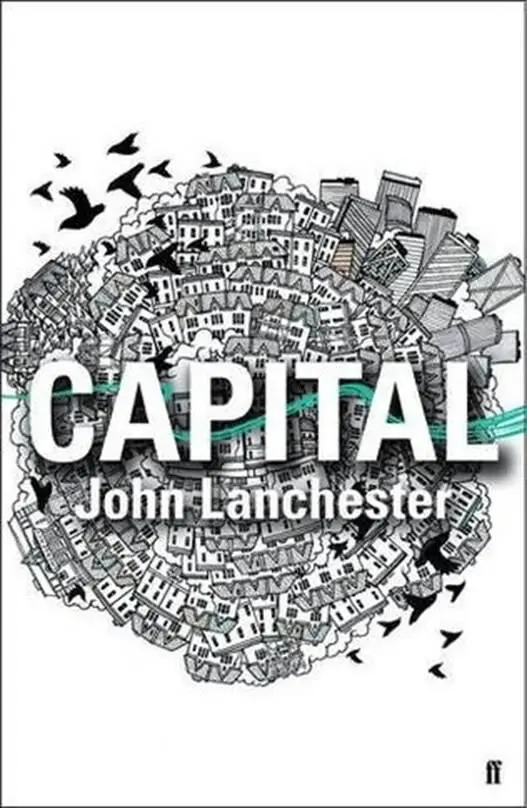
- Название:Capital
- Автор:
- Жанр:
- Год:неизвестен
- ISBN:нет данных
- Рейтинг книги:4.5 / 5. Голосов: 2
-
Избранное:Добавить в избранное
- Отзывы:
-
Ваша оценка:
Capital: краткое содержание, описание и аннотация
Предлагаем к чтению аннотацию, описание, краткое содержание или предисловие (зависит от того, что написал сам автор книги «Capital»). Если вы не нашли необходимую информацию о книге — напишите в комментариях, мы постараемся отыскать её.
Pepys Road: an ordinary street in the capital. Today, through each letterbox along this ordinary street drops a card with a simple message: We Want What You Have. At forty, Roger Yount is blessed with an expensively groomed wife, two small sons and a powerful job in the city. Freddy Kano, teenage football sensation, has left a two-room shack in Senegal to follow his dream. Traffic warden Quentina has exchanged the violence of the police in Zimbabwe for the violence of the enraged middle classes. Elsewhere in the Capital, Zbigniew has come from Warsaw to indulge the super-rich in their interior decoration whims. These are just some of the unforgettable characters in Lanchester's unputdownable masterpiece novel of contemporary urban life.
Capital — читать онлайн бесплатно полную книгу (весь текст) целиком
Ниже представлен текст книги, разбитый по страницам. Система сохранения места последней прочитанной страницы, позволяет с удобством читать онлайн бесплатно книгу «Capital», без необходимости каждый раз заново искать на чём Вы остановились. Поставьте закладку, и сможете в любой момент перейти на страницу, на которой закончили чтение.
Интервал:
Закладка:
This was made very much worse by the fact that a tiny part of Zbigniew thought there might be some truth in Piotr’s view. But knowing that you had gone wrong, and knowing how you had gone wrong, were not the same thing as knowing how to put it right.
The bar was half-full. It was a popular spot with the older generation of London Poles, the ones who had come over during the war – there were even people here who remembered that time first-hand. Favourite fact: one-third of all the planes shot down during the Battle of Britain were shot down by Polish pilots. So it was a place for old men to play cards and watch the Polish TV and generally carry on as if they were still back in the old country. The younger generation hadn’t yet colonised the club, which was one of the things Zbigniew liked about it. Without really examining the feeling, Zbigniew was aware that the club reminded him of his parents, of the evenings when his father had his friends over for Zechcyk and his mother pottered about in the kitchen, pretending to complain about how late they would keep her awake.
Piotr came in, looked over, saw what he was drinking, made a sign with two fingers pointing up in curls at the sides of his head – their private gesture for bison, therefore for bison-grass vodka – and came over from the bar with two more vodkas and two more Żywiecs. They touched glasses and downed the vodkas and then took a shot of beer.
In Polish, Piotr said, ‘This Chelsea job stinks. It’s like that job we did in Notting Hill where Andrzej wanted to leave a dead rat in the cavity wall. Remember them, the fat music producer with the skinny blonde wife? These ones are the same. They’re the kind of rich people who fight you over every penny and because he’s a crook he thinks everyone else is too. She acts as if she has the authority to make decisions, then he comes the next day and reverses everything she said and claims that we shouldn’t have acted on her authority so we should carry the costs. It’s like watching a divorce in slow motion and being expected to pay for the privilege. I was a moron to take the job.’
‘Good money though.’
Piotr gave a sharp shrug which indicated that while this was true it was also obtuse since it wasn’t the point at issue. Zbigniew found it important to have no feeling about his clients one way or another, and was about to say this to Piotr, with some smugness, and for about the hundredth time; but since he was also going to be spending a significant part of the evening complaining about his predicament with Davina, he didn’t feel this was a good moment to point out a philosophical error on Piotr’s part.
There was a burst of noise from one of the card tables; two of the middle-aged men sitting at it had their arms above their heads, in victory or horror. The other two were looking at each other and the noise mixed laughter from one side, protest from the other, and general incredulity. One of the men with his arms in the air lowered them to the table and began raking in money. The man to his left, shaking his head and muttering, began to shuffle the cards. Money, money. Sometimes Zbigniew had to remind himself that that was the whole reason he was here in London, earning more in a month than his father had ever earned in a whole year. His real life was back home in Poland. This was a place he was in order to make money. That thought often brought Zbigniew some ease, when he was fed up with some aspect of his immigrant life; today, it didn’t help. Woman trouble was what it was.
Piotr knew that Zbigniew had been seeing Davina – he could hardly not know – but he was tactful, as he always was; it was one of the things Zbigniew loved about him. He was waiting to be told. So Zbigniew took a deep swig of his new beer and told him the details. It took quite a bit of time.
He had been expecting Piotr to laugh. Perhaps that was even what he was needing to hear from his friend – that the whole thing was ridiculous, and that he’d brought it on himself, and that it served him right, and so on. Piotr did indeed smile a bit, and Zbigniew did the best he could to try and make the story sound funny, the determined non-romantic trapped by great sex in a terrible relationship. But his smile faded as Zbigniew talked on. Then Zbigniew finished and went back to the bar to get another four drinks for the two of them. If nothing else, he’d get drunk tonight.
When he got back to the table Piotr was flipping the beer mat over with his large fingers. Zbigniew raised his glass of vodka and downed it in one. Neither man said anything. Perhaps this confession was going to be received in silence.
‘I suppose you thought I’d think it was funny,’ said Piotr, and from his tone, which didn’t resemble anything Zbigniew was expecting to hear from his old friend, he knew that this was not going to be the comic, consoling, making-light talk he had hoped to have. ‘But I don’t. You know I love you like a brother and always have. But you have a grave fault in your character. You see people not as people but in terms of how useful they are to you. You say I am a romantic, always falling in love, and all that. It’s a joke between us, a set piece. Very well, it’s true enough. But at least I can fall in love. With you, I’m not so sure. You use women. You use them partly for company, when you need it, but you mainly use them for sex. I’ve always known this would cause trouble one day and now it has. You’ve trapped this vulnerable English woman into falling in love with you, and you are going to hurt her very badly; you are doing her real damage. I hear it in the way you talk about her.’
Zbigniew, because he had not been expecting this, and because so much of it was right, felt himself become very angry. His head filled up with blood; he was exalted and exhilarated by rage.
‘You say this because you are a priest? A priest hearing my confession, or giving a denunciation from the pulpit?’
Piotr got up and walked out. And that was that. Zbigniew sat there and drank his beer and vodka, then another round, then another, and went home drunker than he had been for a long time.
45
On Friday evening, after doing a shift in the shop, Usman set out across the Common on his bike, to go to the mosque for evening prayers. This is what he saw.
An advertising poster with a woman lying naked on purple sheets, her hindquarters on full display, with the slogan ‘Does my bum look big in this?’ A poster with a woman eating a chocolate as if she were fellating it. A poster on the side of a bus with an advertisement for a horror film, with a stamp across it saying ‘Banned! To See Full Trailer Go Online’. A poster with a woman bending over and looking back at the camera through her legs, advertising tampons.
Two lesbians holding hands while out walking their dogs.
A young woman with her trousers so low that more than half of her bottom was exposed to the air, bending, while smoking a cigarette, over a pram, and saying as she did so, ‘Where have you hidden it, you little sod?’
Many women whose breasts were almost fully visible under, over or through their thin summer clothes.
A newspaper headline saying ‘Muslim terror cell loose in capital says Met chief’.
Many people outside the public house on the Common, openly drinking alcohol.
As Usman stopped to cross at a red light, he found himself looking at a man standing at a bus stop reading a newspaper. On the page facing out toward Usman was a picture of a completely naked woman, above an advertisement for a car-leasing company. The ad promised a BMW 3 series for a payment of £299 a month.
Usman carried on. Many people were drinking alcohol in the bars beside the Common, women smoking, women and men kissing. Alcohol everywhere. Because it was only six o’clock, most of the people drinking were not yet drunk; it wasn’t the way it would be at ten or afterwards, when, especially at weekends, the whole area would be like a combat zone, a contest between man and alcohol which alcohol won, every time. No, alcohol didn’t just win, alcohol reigned: it presided over weekend evenings like a king, like a malign archangel. And although there was grumbling about this, the occasional complaint, it was the very British kind of complaint that was more like moaning, and expressed a deep accommodation with the thing being complained about; it contained no rage, no outrage, no desire for change. Whereas to Usman, this looked like a society that was turning itself into a version of hell, in the interest of people who made money through selling alcohol.
Читать дальшеИнтервал:
Закладка:
Похожие книги на «Capital»
Представляем Вашему вниманию похожие книги на «Capital» списком для выбора. Мы отобрали схожую по названию и смыслу литературу в надежде предоставить читателям больше вариантов отыскать новые, интересные, ещё непрочитанные произведения.







Обсуждение, отзывы о книге «Capital» и просто собственные мнения читателей. Оставьте ваши комментарии, напишите, что Вы думаете о произведении, его смысле или главных героях. Укажите что конкретно понравилось, а что нет, и почему Вы так считаете.