Philip Roth - My Life As A Man
Здесь есть возможность читать онлайн «Philip Roth - My Life As A Man» весь текст электронной книги совершенно бесплатно (целиком полную версию без сокращений). В некоторых случаях можно слушать аудио, скачать через торрент в формате fb2 и присутствует краткое содержание. Жанр: Современная проза, на английском языке. Описание произведения, (предисловие) а так же отзывы посетителей доступны на портале библиотеки ЛибКат.
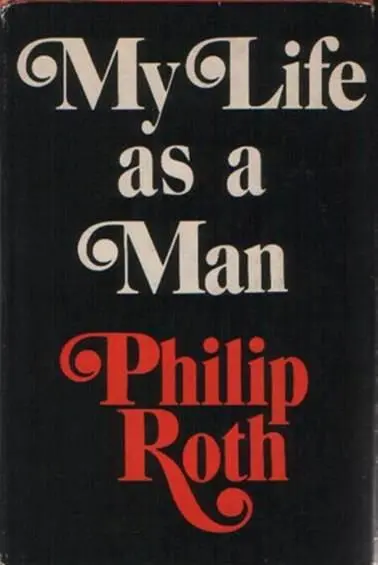
- Название:My Life As A Man
- Автор:
- Жанр:
- Год:неизвестен
- ISBN:нет данных
- Рейтинг книги:5 / 5. Голосов: 1
-
Избранное:Добавить в избранное
- Отзывы:
-
Ваша оценка:
My Life As A Man: краткое содержание, описание и аннотация
Предлагаем к чтению аннотацию, описание, краткое содержание или предисловие (зависит от того, что написал сам автор книги «My Life As A Man»). Если вы не нашли необходимую информацию о книге — напишите в комментариях, мы постараемся отыскать её.
My Life As A Man — читать онлайн бесплатно полную книгу (весь текст) целиком
Ниже представлен текст книги, разбитый по страницам. Система сохранения места последней прочитанной страницы, позволяет с удобством читать онлайн бесплатно книгу «My Life As A Man», без необходимости каждый раз заново искать на чём Вы остановились. Поставьте закладку, и сможете в любой момент перейти на страницу, на которой закончили чтение.
Интервал:
Закладка:
When I came East that June from Wisconsin, ostensibly to participate as a staff member in a two-week writing workshop at Brooklyn College, I was as bereft of will as a zombie-except, as I discovered, the will to be done with my life. Waiting in the subway station for an approaching train, I suddenly found it advisable to wrap one hand around the links of a chain that anchored a battered penny weighing machine to the iron pillar beside me. Until the train had passed in and out of view, I squeezed that chain with all my strength. “I am dangling over a ravine,” I told myself. “I am being hoisted from the waves by a helicopter. Hang on!” Afterward I scanned the tracks, to be certain that I had in fact succeeded in stifling this wholly original urge for Peter Tarnopol to be transformed into a mangled corpse; amazed, terrified, I had also, as they say, to laugh: “Commit suicide? Are you kidding? You can’t even walk out the door.” I still don’t know how near I may actually have come that day to springing across the platform and, in lieu of taking my wife head-on, taking on that incoming IRT train. It could be that I didn’t have to cling to anything, that too could have been so much infantile posturing; then again I may owe my survival to the fact that when I heard blessed oblivion hurtling my way, my right hand fortunately found something impressively durable to hang on to.
At Brooklyn College over a hundred students were present in the auditorium for the opening session; each member of the workshop staff of four was to give a fifteen-minute address on “the art of fiction.” My turn came, I rose-and couldn’t speak. I stood at the lectern, notes before me-audience before me- without air in my lungs or saliva in my mouth. The audience, as I remember it, seemed to me to begin to hum. And all I wanted was to go to sleep. Somehow I didn’t close my eyes and give it a try. Neither was I entirely there. I was nothing but heartbeat, just that drum. Eventually I turned and left the stage…and the job…Once, in Wisconsin, after a weekend of quarreling with my wife (she maintained, over my objections, that I had talked too long to a pretty graduate student at a party on Friday night; much discussion on the relativity of time), she had presented herself at the door of the classroom where I taught my undergraduate fiction seminar from seven to nine on Monday evenings. Our quarrel had ended at breakfast that morning with Maureen tearing at my hands with her fingernails; I had not been back to our apartment since. “It’s an emergency!” Maureen informed me-and the seminar. The ten middle western undergraduates looked first at her, standing so determinedly there in the doorway, and then with comprehension at my hands, marked with mercurochrome-“The cat,” I had explained to them earlier, with a forgiving smile for that imaginary beast. I rushed out into the corridor before Maureen had a chance to say more. There my sovereign delivered herself of that day’s manifesto: “You better come home tonight, Peter! You better not go back to some room somewhere with one of those little blondes!” (This was the semester before I went ahead and did just that.) “Get out of here!” I whispered. “Go, Maureen, or I’ll throw you down those fucking stairs! Go, before I murder you !” My tone must have impressed her-she took hold of the banister and retreated a step. I turned back to the seminar room to find that in my haste to confront Maureen and send her packing, I had neglected to shut the door behind me. A big shy farm girl from Appleton, who had spoken maybe one sentence all semester, was staring fixedly at the woman in the corridor behind me; the rest of the class stared into the pages of Death in Venice-no book had ever been so riveting. “All right,” said the quavering voice that entered the room-an arm had violently flung the door shut in Maureen’s face, I’m not wholly sure it was mine-“why does Mann send Aschenback to Venice, rather than Paris, or Rome, or Chicago?” Here the girl from Appleton dissolved into tears, and the others, usually not that lively, began answering the question all at once…I did not recall every last detail of this scene as I stood yearning for sleep before my expectant audience at Brooklyn College, but it accounts, I think, for the vision that I had as I stepped to the lectern to deliver my prepared address: I saw Maureen, projected like a bullet through the rear door of the auditorium, and shouting at the top of her lungs whatever revelation about me had just rolled off the presses. Yes, to that workshop audience that took me to be an emerging literary figure, a first novelist whose ideas about writing were worth paying tuition to hear, Maureen would reveal (without charge) that I was not at all as I would present myself. To whatever words, banal or otherwise, that I spoke from the platform, she would cry, “Lies! Filthy, self-serving lies!” I could (as I intended to) quote Conrad, Flaubert, Henry James, she would scream all the louder, “Fraud!” But I spoke not a syllable, and in my flight from the stage, seemed to be only what I was-terrified, nothing any longer but my fears.
My writing by this time was wholly at the mercy of our marital confusion. Five and six hours a day, seven days a week, I went off to my office at the university and ran paper through the roller of my typewriter; the fiction that emerged was either amateurishly transparent-I might have been drawing up an IOU or writing the instructions for the back of a detergent box for all the imagination I displayed-or, alternately, so disjointed and opaque that on rereading, I was myself in the dark, and manuscript in hand, would drag myself around the little room, like some burdened figure broken loose from Rodin’s “Bourgeois of Calais,” crying aloud, “Where was I when this was written?” And I asked because I didn’t know.
These pounds and pounds of pages that I accumulated during the marriage had the marriage itself as the subject and constituted the major part of the daily effort to understand how I had fallen into this trap and why I couldn’t get out. Over the three years I had tried easily a hundred different ways to penetrate that mystery; every other week the whole course of the novel would change in midsentence, and within any one month the surface of my desk would disappear beneath dozens of equally dissatisfying variants of the single unfinished chapter that was driving me mad. Periodically I would take all these pages-“take” is putting it mildly-and consign them to the liquor carton filling up with false starts at the bottom of my closet, and then I would begin again, often with the very first sentence of the book. How I struggled for a description. (And, alas, struggle still.) But from one version to the next nothing of consequence ever happened: locales shifted, peripheral characters (parents, old flames, comforters, enemies, and allies) came and went, and with about as much hope for success as a man attacking the polar ice cap with his own warm breath, I would attempt to release a flow of invention in me by changing the color of her eyes or my hair. Of course, to give up the obsession would surely have made the most sense; only, obsessed, I was as incapable of not writing about what was killing me as I was of altering or understanding it.
So: hopeless at my work and miserable in my marriage, with all the solid achievements of my early twenties gone up in smoke, I walked off the stage, too stupefied even for shame, and headed like a sleepwalker for the subway station. Fortunately there was a train already there receiving passengers; it received me-rather than riding over me-and within the hour I was deposited at the Columbia campus stop only a few blocks from my brother Morris’s apartment.
My nephew Abner, surprised and pleased to see me in New York, offered me a bottle of soda and half of his salami sandwich. “I’ve got a cold,” he explained, when I asked in a breaking voice what he was doing home from school. He showed me that he was reading Invisible Man with his lunch. “Do you really know Ralph Ellison, Uncle Peppy?” “I met him once,” I said, and then I was bawling, or barking; tears streamed from my eyes, but the noises that I made were novel even to me. “Hey, Uncle Pep, what’s the matter?” “Get your father.” “He’s teaching.” “Get him, Abbie.” So the boy called the university-“This is an emergency; his brother is very sick!”-and Morris was out of class and home in minutes. I was in the bathroom by this time; Moe pushed right on in, and then, big two-hundred pounder though he is, kneeled down in that tiny tiled room beside the toilet, where I was sitting on the seat, watery feces running from me, sweating and simultaneously trembling as though I were packed in ice; every few minutes my head rolled to the side and I retched in the direction of the sink. Still, Morris pressed his bulk against my legs and held my two limp hands in his; with a rough, rubbery cheek he wiped the perspiration from my brow. “Peppy, ah, Peppy,” he groaned, calling me by my childhood nickname and kissing my face. “Hang on, Pep, I’m here now.”
Читать дальшеИнтервал:
Закладка:
Похожие книги на «My Life As A Man»
Представляем Вашему вниманию похожие книги на «My Life As A Man» списком для выбора. Мы отобрали схожую по названию и смыслу литературу в надежде предоставить читателям больше вариантов отыскать новые, интересные, ещё непрочитанные произведения.







Обсуждение, отзывы о книге «My Life As A Man» и просто собственные мнения читателей. Оставьте ваши комментарии, напишите, что Вы думаете о произведении, его смысле или главных героях. Укажите что конкретно понравилось, а что нет, и почему Вы так считаете.