Hermann Hesse - The Glass Bead Game
Здесь есть возможность читать онлайн «Hermann Hesse - The Glass Bead Game» весь текст электронной книги совершенно бесплатно (целиком полную версию без сокращений). В некоторых случаях можно слушать аудио, скачать через торрент в формате fb2 и присутствует краткое содержание. Год выпуска: 1969, Жанр: Современная проза, Социально-психологическая фантастика, на английском языке. Описание произведения, (предисловие) а так же отзывы посетителей доступны на портале библиотеки ЛибКат.
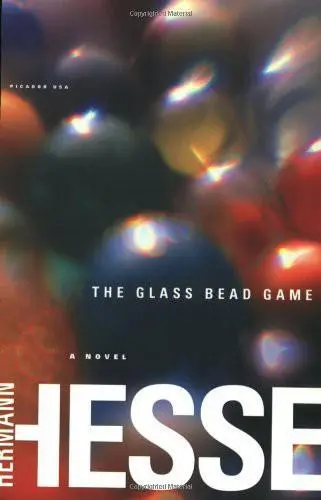
- Название:The Glass Bead Game
- Автор:
- Жанр:
- Год:1969
- ISBN:нет данных
- Рейтинг книги:4 / 5. Голосов: 2
-
Избранное:Добавить в избранное
- Отзывы:
-
Ваша оценка:
The Glass Bead Game: краткое содержание, описание и аннотация
Предлагаем к чтению аннотацию, описание, краткое содержание или предисловие (зависит от того, что написал сам автор книги «The Glass Bead Game»). Если вы не нашли необходимую информацию о книге — напишите в комментариях, мы постараемся отыскать её.
Something like chess but far more intricate, the game of Magister Ludi known as the Glass Bead Game is thought in its purest form, a synthesis through which philosophy, art, music and scientific law are appreciated simultaneously. The scholar-players are isolated within Castalia, an autonomous elite institution devoted wholly to the mind and the imagination…
The Glass Bead Game — читать онлайн бесплатно полную книгу (весь текст) целиком
Ниже представлен текст книги, разбитый по страницам. Система сохранения места последней прочитанной страницы, позволяет с удобством читать онлайн бесплатно книгу «The Glass Bead Game», без необходимости каждый раз заново искать на чём Вы остановились. Поставьте закладку, и сможете в любой момент перейти на страницу, на которой закончили чтение.
Интервал:
Закладка:
Master Alexander’s expression had become even graver and overcast with gloom. But he did not interrupt the Magister.
“The case was not,” Knecht continued, “that in dispatching my petition I seriously hoped for a favorable reply and looked forward joyfully to receiving it; but it is also not the case that I was prepared to accept obediently a negative answer as an unalterable decision from above.”
"… not prepared to accept obediently a negative answer as an unalterable decision from above — have I heard you aright, Magister?” the President broke in, emphasizing every word. Evidently he had only at this point realized the full gravity of the situation.
Knecht bowed slightly. “Certainly you have heard aright. The fact was that I could scarcely believe my petition had much prospect of success, but I thought I had to make it to satisfy the requirements of decorum. By doing so I was, so to speak, providing the esteemed Board with an opportunity to settle the matter in a relatively harmless way. But if it eschewed such a solution, I was in any case resolved neither to be put off nor soothed, but to act.”
“And to act how?” Alexander asked in a low voice.
“As my heart and my reason command. I was determined to resign my office and take on work outside Castalia even without an assignment or leave from the Board.”
The Head of the Order closed his eyes and seemed to be no longer listening. Knecht saw that he was performing that emergency exercise used by members of the Order in moments of sudden danger to regain self-control and inner calm; it consisted in twice emptying the lungs and holding the breath for long moments. As Knecht watched, Alexander’s face paled slightly, then regained color as he inhaled slowly, beginning with the muscles of the stomach. Knecht was sorry to be inflicting psychic distress on a man whom he so highly esteemed, indeed loved. He saw Alexander’s eyes open with a staring, abstracted look, then focus and grow keener. With a faint sense of alarm he saw those clear, controlled, disciplined eyes, the eyes of a man equally great in obeying and commanding, fixed upon him now, regarding him with cool composure, probing him, judging him. He withstood that gaze in silence for what seemed long minutes.
“I believe I have now understood you,” Alexander said at last in a quiet voice. “You have been weary of your office or weary of Castalia for a long time, or tormented by a craving for life in the world. You chose to pay more heed to this mood than to the laws and your duties. You also felt no need to confide in us and ask the Order for advice and assistance. For the sake of form and to relieve your conscience, you then addressed that petition to us, a petition you knew would be unacceptable, but which you could refer to when the matter came up for discussion. Let us assume that you have reasons for such unusual conduct and that your intentions are honorable — I really cannot conceive them to have been otherwise. But how was it possible that with such thoughts, cravings, and decisions in your heart, inwardly already a defector, you could keep silent and remain in your office for so long a time, continuing to conduct it flawlessly, so far as anyone can see?”
“I am here,” the Magister Ludi replied with unaltered friendliness, “to discuss all this with you, to answer all your questions. And since I have resolved upon a course of self-will, I have made up my mind not to leave Hirsland and your house until I know that you have gained some understanding of my situation and my action.”
Master Alexander considered. “Does that mean you expect me to endorse your conduct and your plans?” he asked hesitantly.
“Oh, I have no thought of winning your endorsement. But I hope that you will understand me and that I shall retain a remnant of your respect when I go. This will be my one and only leave-taking of our Province. Today I left Waldzell and the Vicus Lusorum forever.”
Again Alexander closed his eyes for a few seconds. He felt battered by the revelations coming all at once from this incomprehensible man.
“Forever?” he said. “Then you are thinking of not returning to your post at all? I must say, you are a master of surprises. One question, if I may ask it: Do you still regard yourself as Magister Ludi?”
Joseph Knecht picked up the small casket he brought with him.
“I was until yesterday,” he said, “and consider myself liberated today by returning to you, as representative of the Board, the seals and keys. The insignia are intact, and when you go to inspect things in the Players’ Village you will find everything in order.”
Slowly, the President of the Order rose. He looked weary and suddenly aged.
“Let us leave your casket standing here for the present,” he said drily. “If by receiving the seals I am supposed to be accepting your resignation, let me remind you that I am not so empowered. At least a third of the Board would have to be present. You used to have so much feeling for the old customs and forms that I cannot adjust so quickly to this new mode of doing things. Perhaps you will be kind enough to give me until tomorrow before we go on with our conversation?”
“I am completely at your disposal, your Reverence. You have known me and known my respect for you for a good many years. Believe me, that has not changed in the slightest. You are the only person I am bidding good-by to before leaving the Province, and I am addressing you now not only in your capacity as President of the Order. Just as I have returned the seals and keys to your hands, I also hope you will release me from my oath as a member of the Order, once we have discussed everything fully, Domine .”
Alexander met his eyes with a sorrowful, searching look, and stifled a sigh. “Leave me now. You have given me cares enough for one day and provided material enough for reflection. Let that do for today. Tomorrow we shall speak further; return here about an hour before noon.”
He dismissed the Magister with a courteous gesture, and that gesture, full of resignation, full of deliberate politeness of the kind no longer meant for a colleague, but for a total stranger, pained the Glass Bead Game Master more than anything he had said.
The attendant who fetched Knecht for the evening meal a while later led him to a guest table and informed him that Master Alexander had withdrawn for meditation and assumed that the Magister would not wish company tonight, and that a guest room had been prepared for him.
The Magister Ludi’s visit and announcement had taken Alexander completely by surprise. Ever since he had edited the Board’s reply to the circular letter, he had of course counted on Knecht’s turning up sooner or later, and had thought of the ensuing discussion with faint uneasiness. But that Magister Knecht, noted for his exemplary obedience, his cultivated formalities, his modesty and profound tact, could one day descend on him without warning, resign his office on his own initiative and without previously consulting the Board, and throw over all usage and tradition in this startling manner — these were acts he would have considered absolutely impossible. Granted, Knecht’s manner, tone, and language, his unobtrusive courtesy, were the same as ever; but how appalling and offensive, how novel and surprising, and above all how totally un-Castalian were the substance and the spirit of everything he said. No one hearing and seeing the Magister Ludi would have suspected him of being ill, overworked, irritated, and not completely master of himself. The scrutiny which the Board had recently ordered in Waldzell had turned up not the slightest vestige of disturbance, disorder, or neglect in the life and work of the Players’ Village. And nevertheless this appalling man, until yesterday the dearest of his colleagues, now stood here and deposited the chest with the insignia of office as if it were a suitcase, declaring that he had ceased to be Magister, had ceased to be a member of the Board, a brother of the Order and a Castalian, and had dropped in only to say good-by. This was the most disturbing situation his office as President of the Order had ever involved him in, and he had had great difficulty in preserving his outward composure.
Читать дальшеИнтервал:
Закладка:
Похожие книги на «The Glass Bead Game»
Представляем Вашему вниманию похожие книги на «The Glass Bead Game» списком для выбора. Мы отобрали схожую по названию и смыслу литературу в надежде предоставить читателям больше вариантов отыскать новые, интересные, ещё непрочитанные произведения.










Обсуждение, отзывы о книге «The Glass Bead Game» и просто собственные мнения читателей. Оставьте ваши комментарии, напишите, что Вы думаете о произведении, его смысле или главных героях. Укажите что конкретно понравилось, а что нет, и почему Вы так считаете.